Meth contamination is a measurement problem before it is a cleaning problem. One number decides almost everything that follows: what the property is worth, what the work costs, whether a tenancy survives, and whether a sale goes ahead.
Meth contamination is methamphetamine residue left on and inside the surfaces of a building by smoking or manufacture. In Australia a property is considered contaminated once indoor surfaces read above 0.5 micrograms per 100 square centimetres. Nothing about that is visible, which is why it gets missed.
This page is the overview. It covers what contamination is, how the problem looks nationally, the signs that justify a test, what the 0.5 figure means, what residue does to people, and where owners, tenants, buyers and sellers stand legally. Each stage of the actual work has its own page, linked as we go.

Most properties we attend look completely ordinary. That is the whole difficulty.
Key takeaways
- The threshold is 0.5 µg/100cm² on indoor residential surfaces, from the Commonwealth Clandestine Drug Laboratory Remediation Guidelines. It applies whether the meth was cooked or just smoked.
- Smoking alone routinely breaches it. WA Health puts average smoking residue at 2.7 µg/100cm². That is more than five times the limit.
- Residue does not decay. It has been found in properties years after the activity stopped. Painting over it changes nothing a swab will find.
- Children are who the number was built around, specifically infants from six months to two years.
- No licence exists for this work in Australia. Accreditation is voluntary, so the vetting burden sits with you.
- Disclosure rules differ by state and none of them currently cover smoking. That gap is the reason pre-purchase testing exists.
What meth contamination actually is
Methamphetamine is smoked as a vapour. Vapour settles. It lands on walls, ceilings, the tops of door frames, inside cupboards and, most stubbornly, in anything porous: carpet, underlay, curtains, upholstery, unsealed timber. It also travels through the air conditioning, which is how one room becomes a whole house.
Manufacture is a different animal. A cook produces far higher concentrations plus a list of precursor chemicals that a standard methamphetamine wipe will not even look for. Those properties get handled as clandestine laboratories, and the signs are different enough to warrant their own page: what inspectors look for in a former meth lab.
Fixing either one is a four part job. Test, scope, remediate, then test again and prove it. Miss the last step and you have not decontaminated a property. You have cleaned it, which is a different service that produces no document anyone will accept.
How big the problem is in Australia
Bigger every year, and the figures are not marketing. The Australian Criminal Intelligence Commission’s National Wastewater Drug Monitoring Program, Report 25 estimated 15.7 tonnes of methylamphetamine consumed nationally in the year to August 2025. That is a record since the program began, and a 23% rise on the year before. Meth accounted for roughly 59% of combined consumption across the four main drug types measured.
All of that consumption happens somewhere, and mostly it happens in houses and units.
The older laboratory detection data tells you where the severe end lands. In 2015-16 the ACIC recorded 575 clandestine laboratory detections nationally, around two thirds of them in residential locations, with Queensland carrying 234. The Illicit Drug Data Report has not been updated past 2020-21, so that residential split remains the most recent verified figure available. A decade old, and the industry still works from it.
Worth knowing: cook houses are the minority of what we attend. Most jobs are ordinary rentals where somebody smoked in the lounge room for a year. Fewer chemicals, far less drama, still a failing laboratory result.
How to tell a property might be contaminated
Short version: chemical smells that do not belong, staining that keeps coming back, and health symptoms that improve when people leave the building. Those three cover most cases we get called to.
An odour that does not fit
Described as cat urine, ammonia or rotten eggs. Usually strongest in bathrooms, laundries and behind kitchen cupboards.
Yellow or brown staining
On walls and ceilings, worst above where someone habitually sat and around light fittings. It bleeds back through fresh paint.
A film on high surfaces
Whitish or brownish, on the tops of door frames, ceiling fans and picture rails. Contamination settles high because it arrives as vapour.
Symptoms that clear on leaving
Coughing, a burning throat, headaches, disturbed sleep, skin irritation. Settling within an hour of getting out of the house is the tell.
What the neighbours mention
Heavy foot traffic at odd hours, very short visits, chemical smells at night. Neighbours notice considerably more than agents do.
A discount nobody explains
A price or rent well under the local market sometimes reflects a history that never made it onto paper.
Tampered ventilation, discarded glassware, blister packs and tubing point at manufacture rather than use, and they change the whole approach. Those belong with the former meth lab indicators, not here.
Every sign above is a reason to test. None of them is proof. Plenty of houses smell strange and come back clean, and plenty of houses that present beautifully return 8 µg/100cm².
The number everything turns on: 0.5 µg/100cm²
Australia’s remediation trigger for methamphetamine on indoor surfaces is 0.5 micrograms per 100 square centimetres. Above it, remediation is indicated. Below it, the property is considered acceptable to occupy.
The figure comes from the Commonwealth Clandestine Drug Laboratory Remediation Guidelines (2011), and enHealth’s 2017 guidance confirms it as a Health Investigation Level derived to protect children aged six months to two years. That tells you who it was written for.
| Setting | Methamphetamine investigation level |
|---|---|
| Residential indoor surfaces | 0.5 µg/100cm² |
| Residential roof and ceiling spaces | 10 µg/100cm² |
| Commercial and industrial premises | 10 µg/100cm² |
| New Zealand residential, for comparison | 1.5 µg/100cm² |
Source: Australian Voluntary Code of Practice, Environmental Health Australia (2019).
The WA Department of Health 2026 guidance is the most useful document in the country here, because it puts numbers against both scenarios. Smoking alone averages around 2.7 µg/100cm², with single readings to 30. Manufacture frequently runs 10 to 100 and beyond. And from the same document: the national level “apply regardless of whether residues found are from smoking or manufacture”.
Read the smoking average once more. 2.7 is more than five times the limit. So the familiar reassurance, that it was only used and therefore fine, fails on arithmetic before anyone gets to the argument.
What a specific reading means for your property, why two labs can disagree about the same house, and what the bands above 0.5 look like in practice are all covered in meth testing levels explained.
What residue does to the people living with it
Acute effects reported by enHealth include skin, eye and respiratory irritation, dizziness, headache and insomnia. Longer exposure has been associated with neurochemical changes in areas of the brain linked to learning, and with irritability, mood swings and disrupted sleep.
Children in former clan lab properties commonly present with respiratory problems and behavioural changes, alongside skin rashes, sore and watering eyes, headaches and poor sleep.
The best documented Australian case is a Victorian family studied by Wright, Kenneally, Edwards and Walker, published in the US CDC’s MMWR in January 2017. Surface methamphetamine in that house measured 11.7 to 26.0 µg/100cm², roughly 23 to 52 times the guideline. The seven year old had the worst of it: asthma-like symptoms, trouble sleeping, behavioural changes. Hair testing found methamphetamine in every family member, highest in the two youngest children. Symptoms largely resolved over the twelve months after they moved out.
One family is not an evidence base. It is the clearest picture Australia has of what a heavily contaminated home does to the people inside it, and the pattern of children being worst affected shows up consistently.
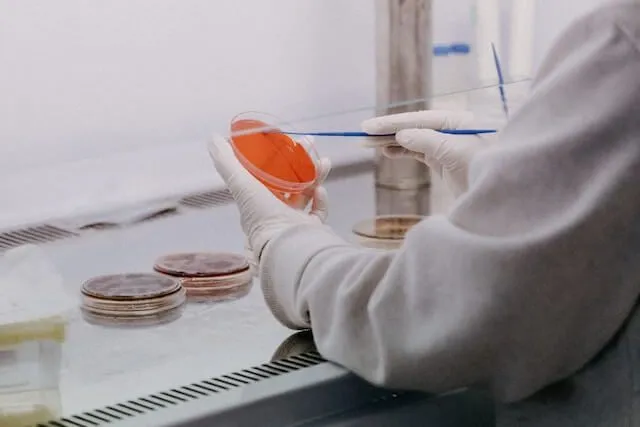
Results come back in micrograms per 100cm². That figure, not a smell or an opinion, is what sets the scope.
The counterargument, which deserves airtime
We are not going to pretend the science is settled. The Alcohol and Drug Foundation’s factsheet on methamphetamine exposure and remediation states that for properties where meth has only been used recreationally, “there are no published (or robust, unpublished) data relating to health risks”, and that remediation in those cases “is not required, as the research does not demonstrate a health risk”.
That is the peak Australian drug information body, and it belongs on this page rather than buried in a footnote.
So where does that leave an owner?
Somewhere practical. The health evidence for use-only contamination is genuinely thin. The regulatory and commercial consequences are not thin at all. A result over 0.5 still shows up in a pre-purchase report, still hands a buyer leverage, still sits behind a council public health order, and still ends a tenancy.
You may well be remediating a compliance problem rather than a medical one. That is a legitimate reason to do the work, and a more honest one than frightening people.
What actually happens, in four stages
Each stage has its own page with the detail. This is the shape of it.
Test
Surface wipe samples collected over a measured template and analysed by a NATA accredited laboratory. Screening swabs, composite sampling and room by room discrete sampling answer different questions and cost very different amounts. How meth testing actually works.
Scope, then prepare
The report determines what gets removed and what gets treated. Before the crew arrives there is a short list of things an owner needs to do, and a shorter list of things not to do, cleaning being the big one. The owner’s checklist before meth removal.
Remediate
Containment, removal of porous materials, chemical treatment of hard surfaces, ductwork, then sealing where replacement is not proportionate. Air conditioning is the most commonly skipped part and the most common reason clearance fails. What happens on site, step by step.
Clear and document
Fresh samples, same method, same laboratory. Below 0.5 and the property clears. The sampling plan, laboratory reports, waste dockets and clearance certificate are the deliverable with commercial value. Keep them permanently.
On price, the honest answer is that a real number comes after a real test. Initial testing generally runs $200 to $500, a light targeted clean $1,500 to $5,000, and a badly contaminated house past $20,000. What meth decontamination costs works through a real quote line by line and the eight factors that move it.
For a worked example with hours behind it, our 12 unit apartment block case study ran to more than 700 hours across the building.
Where landlords, tenants, buyers and sellers stand
There is no single Australian meth law. There is a national guideline, state public health legislation, and separate tenancy and property rules on top. Here is the honest map.
| Jurisdiction | What actually applies |
|---|---|
| National | Clandestine Drug Laboratory Remediation Guidelines (2011) and enHealth guidance (2017). Recommended, not binding. Enforcement is state and local. |
| Queensland | The strongest statutory hook. A former lab site is a prescribed public health risk under the Public Health Regulation 2018 s 27A, and councils can issue a public health order under the Public Health Act 2005. See Queensland Health. |
| New South Wales | Managed by councils through land use planning and section 10.7 certificates. A landlord must disclose manufacture or cultivation of a prohibited drug in the last two years (NSW Government). The same two year history is a prescribed material fact on sale. |
| Victoria | Councils act through nuisance provisions of the Public Health and Wellbeing Act 2008. Rental providers must disclose trafficking or cultivation in the last five years (Consumer Affairs Victoria). |
| Western Australia | The most current guidance in the country: WA Health’s 2026 guide for testing and remediation companies. |
| South Australia | The only state with a dedicated statutory instrument, the South Australian Public Health (Clandestine Drug Laboratories) Policy 2016. |
Three things worth noticing in that table
None of the tenancy disclosure rules cover smoking. New South Wales covers manufacture and cultivation. Victoria covers trafficking and cultivation. A property where meth was heavily smoked for two years, now reading 4 µg/100cm², triggers no automatic disclosure duty under either. That is a real gap, and it is the reason pre-purchase and pre-lease testing exists at all.
In Queensland the cost of complying with a public health order falls on the owner, and the property is generally vacated until remediation is finished. The Residential Tenancies Authority sets out the tenant side, including the ability to issue a Notice of Intention to Leave where premises are not fit to live in.
Nothing here requires a licence to perform the work. Anyone can print a shirt.
Please note: this is general information about how the rules are structured, not legal advice. Obligations turn on your circumstances and your state. Check with your state authority or a solicitor before relying on it.
If you are the landlord or the agent
Do this
- Test before you scope. Nobody can quote this honestly without a result in hand.
- Check the insurance position early. Policies vary widely and nearly all require prompt notification.
- Manage the tenancy properly. Where premises are not fit to live in, tenants have rights and timeframes.
- Keep the clearance certificate permanently. It protects you at the next lease, the next sale and the next dispute.
- Test between tenancies on higher risk portfolios. Three hundred dollars at turnover is cheap against a twelve thousand dollar remediation found eighteen months late.
Do not do this
- Do not enter and start cleaning. If police have attended, the notification to the registered owner is the start of your paper trail.
- Do not send your regular commercial cleaner. Different training, different chemistry, different waste stream.
- Do not accept a fixed price quoted over the phone before any testing. It is a guess, or it is padded.
- Do not assume insurance covers it, and do not assume it does not. Read the wording.
- Do not repaint over staining to get a property re-let. It hides nothing a swab will find.
Choosing who does the work
Because nobody licenses this in Australia, the vetting sits with you. The two questions that sort operators fastest are which NATA accredited laboratory they use and whether methamphetamine sits inside that laboratory’s scope, and who pays if the first clearance test fails.
What accreditation actually covers, what a clearance certificate is worth, the conflict of interest when the tester and the remediator are the same company, and the other four questions worth asking are all set out in what certified meth decontamination really means.
Biological contamination rather than chemical residue is a separate discipline with its own standard and process: forensic and trauma cleaning in Australia. And residue in a car behaves differently again, because a vehicle is a sealed box lined with fabric: meth cleaning in vehicles.
Frequently asked questions
What counts as meth contamination in an Australian property?
Indoor residential surfaces reading above 0.5 micrograms of methamphetamine per 100cm². That is the Health Investigation Level in the Commonwealth guidelines and it applies nationally. Roof spaces and commercial premises use a higher figure of 10 µg/100cm².
Does smoking meth in a house actually contaminate it?
Usually yes. WA Health puts average residue from smoking alone at around 2.7 µg/100cm², over five times the national limit, with individual readings recorded up to 30. The guidelines apply the same threshold whether residue came from smoking or manufacture, so the distinction matters less than owners hope.
How long does meth residue stay in a house?
Indefinitely, unless it is remediated. Methamphetamine residue is chemically stable, does not break down on its own, and has been detected in properties years after the activity stopped. Painting over it does not remove it.
Is meth residue dangerous to children and pets?
Children are the group the 0.5 guideline was built to protect, specifically infants from six months to two years, because they crawl, put their hands in their mouths and breathe closer to the floor. Reported effects in contaminated homes include respiratory symptoms, skin rashes, disturbed sleep and behavioural changes. Pets show similar respiratory and skin problems.
Does insurance cover meth decontamination?
Sometimes. Some landlord and home policies respond to contamination or malicious damage by tenants, many specifically exclude illicit drug contamination, and nearly all require prompt notification with documented evidence. Read the policy wording before committing to a scope of works.
Do I have to tell a buyer or a tenant that a property was contaminated?
It depends on your state and on what happened there. In New South Wales, manufacture or cultivation in the last two years must be disclosed to tenants and is a prescribed material fact on sale. In Victoria, trafficking or cultivation in the last five years must be disclosed to renters. Neither rule captures smoking. Get advice on your specific situation.
The bottom line
Meth contamination is a measurement problem before it is a cleaning problem. Test first, because the result sets the scope, the price, and whether there is anything to fix at all. Then remediate to 0.5 µg/100cm² with an accredited laboratory verifying the outcome, and keep the clearance report somewhere you will find it in five years.
Be sceptical of a price quoted before any testing, of a licence that does not exist in this country, and of anyone telling you smoking contamination is automatically harmless. The health evidence on use-only contamination is genuinely unsettled. What a failed result does to a sale, a tenancy or a council order is not unsettled at all.
Dealing with a suspected contamination right now? AllAces has been doing this work in Australia for more than 35 years across more than 65,000 jobs, as an IICRC Certified Firm with 24/7 response in Brisbane, Sydney, Melbourne and Ballarat. Call 1800 00 10 10, or get in touch here.
Reviewed every six months. Last updated September 2026 with ACIC Report 25 consumption data, the 2026 WA Health remediation guidance and current state disclosure rules.
The rest of this guide. Each stage in full: how meth testing works, what a reading means, what happens on site, the owner’s prep checklist, and what it costs.
Suspect manufacture rather than smoking? Start with the signs of a former meth lab. Vetting a contractor? Read what certified actually means first.
Ready to book testing and remediation with clearance reporting: meth decontamination and testing. Call 1800 00 10 10.