There is no single licence to work as a hoarding cleaning technician in Australia. Competence is assembled from three layers: the work health and safety training an employer is legally required to provide, nationally recognised cleaning qualifications, and voluntary industry certification, most commonly through the IICRC.
That gap is the reason this page exists. Anyone can print “hoarding specialist” on a van. Working out whether the crew standing in the driveway has actually been trained takes about four questions, and they are further down this page.
What follows is the full training stack, what each part covers, what is law and what is not, and how to check any of it.
Key Takeaways
- No licence exists, so credentials are the only signal. Australia regulates this work through WHS law and waste law, not through a hoarding cleaner's licence.
- Certificate III in Cleaning Operations does not cover hoarding. The nationally recognised qualification is a solid base, but the biohazard, sharps and psychological content comes from elsewhere.
- Training records are legally required for high-risk tasks. A client can ask to see them, and a real operator will produce them.
- Around 12% of NSW fire fatalities have been linked to properties affected by hoarding and squalor. Reading fire risk is a technician skill, not a firefighter-only one.
- One-off clean-outs usually fail. Australian clinical guidance is blunt about it, which is why handover and support planning belong in the training, not just the removal.
- The psychological load runs both ways. Trained crews get structured debriefing. Untrained crews get turnover, and clients feel that as inconsistency.
Is There a Licence to Be a Hoarding Cleaning Technician in Australia?
No. There is no hoarding cleaning licence in Australia, and any company claiming to hold one is describing something that does not exist. What exists is a stack of legal obligations and voluntary credentials that a competent operator assembles.
Worth flagging early, because it appears in a lot of Australian-facing content on this topic: OSHA regulations do not apply here. OSHA is American.
In Australia the framework is the model Work Health and Safety Act, supported by Safe Work Australia and enforced by the state and territory regulators. If a provider’s safety documentation cites OSHA, it was copied from an overseas template and nobody checked it. That is a useful thing to know before you hire anyone.
The Three Layers of Hoarding Cleaning Technician Training
Separating these three is the single most useful thing anyone hiring a crew can do. They are not equivalent, and a provider can be fully compliant with the first and still be undertrained for this specific work.
Layer one: legally required
Under WHS law an employer must provide information, training, instruction and supervision, and must keep training records for high-risk tasks. Safe Work Australia is explicit that training is not a one-off event and that newer workers need closer supervision.
Layer two: nationally recognised
CPP30321 Certificate III in Cleaning Operations is the Australian trade qualification, delivered by registered training organisations. It covers safe work practices, chemical handling and equipment. It does not contain a hoarding unit.
Layer three: industry certification
This is where the specialised competence lives. The IICRC is the international standards body for the inspection, cleaning and restoration trades, and its certifications are issued to individual technicians rather than claimed by companies.
Hoarding Clean Up Technician Qualifications, Component by Component
This is the table to hold up against a provider’s claims. Note which rows are law and which are not.
| Component | Where it comes from | What it covers | Legally required? |
|---|---|---|---|
| WHS induction, SWMS and toolbox talks | The employer | Site-specific risk assessment, safe work method statements, hazard reporting, supervision | Yes, under WHS law |
| CPP30321 Certificate III in Cleaning Operations | A registered training organisation | Safe work practices, chemical handling, equipment, infection control basics | No, but it is the recognised trade qualification |
| IICRC Trauma and Crime Scene Technician (TCST) | IICRC, no prerequisites | Blood and other potentially infectious material, hazard assessment, work plans, safe transport and disposal of contaminated material. Built on the ANSI/IICRC S540 standard | No, voluntary certification |
| IICRC Applied Microbial Remediation (AMRT) | IICRC | Mould growth, containment and remediation. Relevant because damp and hoarding travel together | No |
| Asbestos awareness | An RTO or accredited provider | Identifying likely asbestos-containing materials, stopping work, escalating. Critical in pre-1990 housing | Yes, where work may disturb asbestos |
| First aid and CPR | St John, Red Cross or an RTO | HLTAID011 or equivalent, plus needle-stick response | Effectively yes for field crews |
| Standard Mental Health First Aid | Mental Health First Aid Australia | 12 hours. Recognising and responding to mental health problems and crises. Accreditation valid three years | No, and it is the layer most often skipped |
| Police check and worker screening | Police, NDIS Worker Screening | Suitability to work in occupied homes and alongside vulnerable people | Depends on the client and funding stream |
The pattern worth noticing: the layers carrying the most legal weight are the employer’s own, and the layers carrying the most specialised skill are entirely voluntary. That is the whole reason accredited hoarding cleanup training varies so widely between operators.
The Five Hazards the Training Exists to Manage
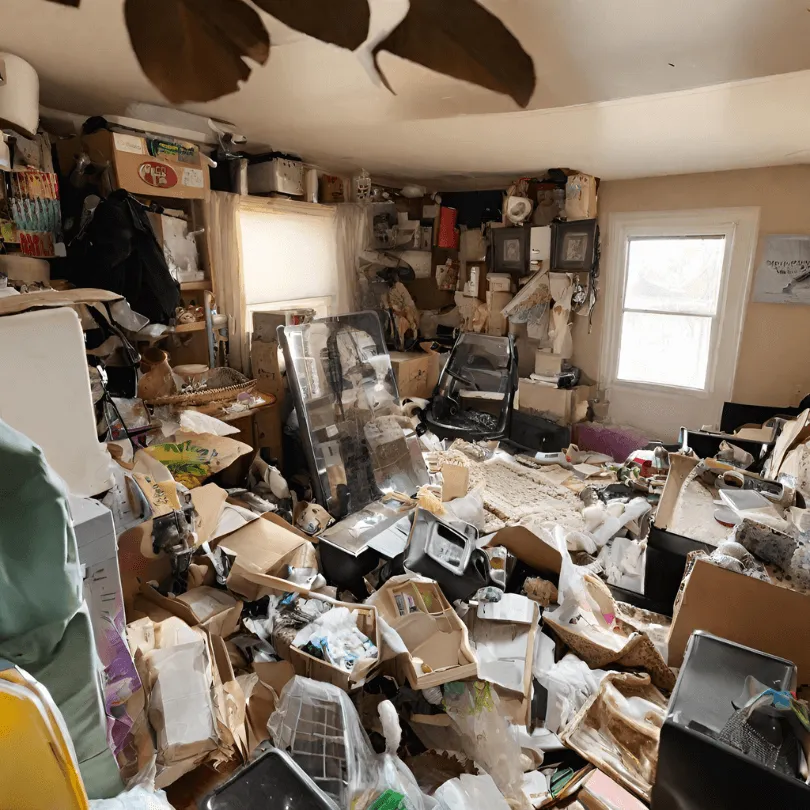
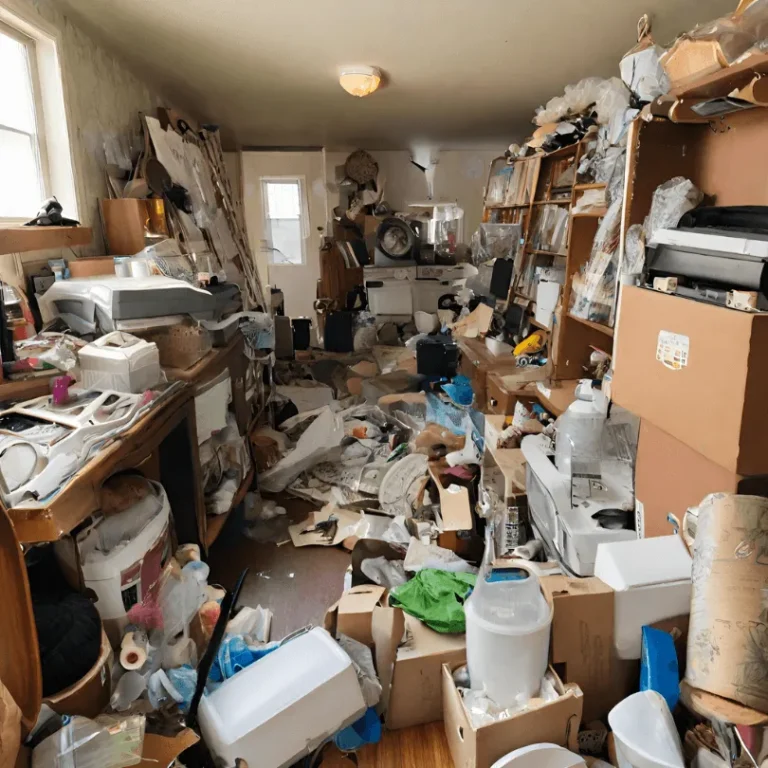
Hoarding clean-up is not deep cleaning with more bins. It is a hazardous-materials job performed inside someone's home while they watch. Each hazard below maps to a specific piece of training, and that mapping is the point.
Faeces, urine, decomposition, rodent droppings and blood. In animal hoarding cases, zoonotic disease risk sits on top of all of it.
This is Trauma and Crime Scene Technician territory, and it drives three decisions: PPE selection, containment, and how waste is classified and moved. Contaminated material is not general waste, and disposal routes differ by state. At the point where a property needs full biohazard decontamination rather than cleaning, the certification held by the attending technician stops being a nice-to-have.
The animal-specific side is covered in our article on how hoarder cleaning services handle animal hoarding situations.
Used needles turn up in hoarded homes for entirely ordinary reasons, insulin use among them.
Sharps handling training is short and it is non-negotiable. Never reach into a pile blind. Use tools, not hands. Carry a rigid sharps container on the job rather than fetching one after the fact. Know the post-exposure procedure before you need it, not while you are bleeding.
A crew that cannot describe its needle-stick procedure in one sentence has not rehearsed it.
Dust, mould spores, ammonia off decomposed urine, and asbestos fibres where a pre-1990 property has degraded.
The Asbestos and Silica Safety and Eradication Agency notes that asbestos is still in millions of Australian homes and that damaged asbestos is the dangerous kind. A hoarded pre-1990 house is a house where nobody has been able to see the eaves, the vinyl or the fibro sheeting for years.
Respiratory protection selection is a trained decision rather than a preference. The fuller breakdown is in our guide to the PPE trauma cleaners use.
Floor loading under stacked material, collapsing piles, concealed sharp edges and blocked egress.
Technicians are trained to work from the doorway inwards and never to create a path they cannot reverse out of. On a suspended timber floor or a second storey, load assessment comes before the first box moves.
Severity matters here. Our piece on level 4 hoarding covers what changes when access itself becomes the problem.
Decades of accumulated cleaning products, pool chemicals, fuels, expired medication and unlabelled containers, often stored together and often degraded.
The training here is identification, segregation, and knowing what must never be combined. Ammonia and chlorine products stored beside each other in a collapsed cupboard is a real scenario, not a hypothetical one.
Anything that cannot be identified gets treated as hazardous and disposed of through a licensed route.

What a Hoarded Property Does to a Fire
This is the hazard people underestimate most, and there is Australian data on it.
Fire and Rescue NSW reports that approximately 12% of fire fatalities in NSW have been associated with properties reportedly affected by hoarding and squalor conditions. The mechanisms they describe are exactly the ones a technician has to read on arrival: abnormally high fuel load, blocked exits and narrow pathways, and clutter that limits access.
What a trained technician checks before stepping inside
- Two ways out, always. If the only exit is the one you came in through, the entry plan changes before anyone commits.
- Utilities. Disconnected, altered or improvised power and gas are a documented ignition risk in these properties.
- Fuel load overhead. Material stacked above head height near a heat source is the first thing to come down.
- Ignition sources buried in the pile. Heaters, chargers and powerboards under paper.
- Floor loading. Especially on a suspended timber floor or above ground level.
South Australia’s health department points environmental health officers towards two formal tools here: the Severe Domestic Squalor Assessment Scale and the Metropolitan Fire Service’s Hoarding Fire Risk Scale.
A technician trained on these can hand a case manager a defensible assessment rather than an opinion. That difference decides whether a multi-agency response gets funded, and it is the assessment step that opens most hoarding clean up services jobs before any material is moved.
Hoarding Disorder Awareness Training: The Part Most Programmes Miss
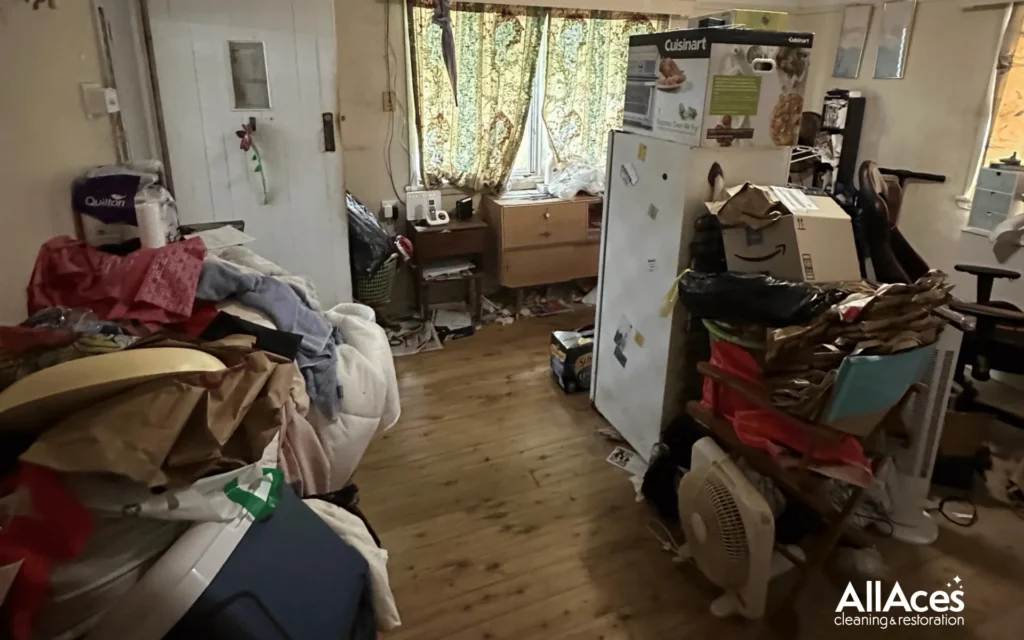
Technical training gets the property clean. It does not stop the job going wrong. Hoarding disorder is a recognised condition, not a housekeeping failure, and the client is usually present for the entire clean-up.
Healthdirect describes hoarding disorder as finding it very hard to discard things regardless of their value, and notes it often begins early in life. Australian clinical guidance puts the prevalence at 1.5 to 5.8% of the population, with at least one in a thousand people over 65 living in squalor.
That same guidance makes the point that matters most for anyone training a crew: one-off cleaning is usually inadequate and does not address excessive acquisition. An ongoing management plan with follow-up is what prevents recurrence.
Read that as an operational instruction. If training stops at “remove everything efficiently”, the job is being measured on the wrong outcome. Trained crews are taught to:
- Work at the client's pace wherever that pace is safe. Sorting with the person, not around them.
- Ask before discarding anything that could be sentimental or valuable. Cash, documents, jewellery and photographs come out of hoarded homes constantly.
- Recognise distress and stop. Standard Mental Health First Aid gives crews a framework for this rather than leaving it to instinct.
- Keep the property's condition confidential. Neighbours, extended family and passers-by are not entitled to a briefing.
- Hand over cleanly. Who is supporting this person on Monday, and does the family or case manager know what was found?

The crew's own wellbeing is part of the training
Hoarding and squalor work is genuinely distressing, and this is the component almost nobody lists on a capability statement.
Structured debriefing after difficult jobs, rotation off consecutive severe sites, and a clear route to employee support are what keep experienced technicians in the trade.
Crews without it burn out, and the client experiences that as inconsistency: a different, greener team every visit.
Assessment Scales a Trained Technician Should Know
Standardised scales let a technician, a case manager and an insurer describe the same property the same way. That is worth considerably more than adjectives.
| Scale | What it measures | Where it is used |
|---|---|---|
| Clutter Image Rating (CIR) | Nine photographs per room, rated 1 to 9, matched against the actual room | Triage and tracking change over time |
| Environmental Cleanliness and Clutter Scale (ECCS) | Separates cleanliness from clutter, which are not the same problem | Research and clinical assessment |
| Severe Domestic Squalor Assessment Scale (SDSAS) | Frames the specific areas of concern within a dwelling | Referenced by SA Health for environmental health officers |
| Hoarding Fire Risk Scale (HFRS) | The overall fire risk the occupant is living with | Fire services and multi-agency case work |
| Hoarding severity levels 1 to 5 | Industry shorthand for scope, access and resourcing | Quoting and crew planning. See our piece on level 4 hoarding |
A technician who can rate a property against a scale can also explain to a family why a two-day estimate became a five-day job. That conversation goes much better with a number in it.
How to Check a Crew Is Actually Trained
Four questions. Any competent operator answers all four without hesitating, and the answers are checkable.
- "What certifications do the technicians on my job hold, not the company?" Company-level claims are marketing. IICRC certification is held by individuals, so ask about the people who will attend.
- "Can I see the safe work method statement for this job?" A SWMS written for your property, rather than a generic template carrying someone else's address, tells you a risk assessment actually happened.
- "Are your technicians police checked, and do you carry public liability insurance?" Both should be immediate yes answers with evidence available. This matters more than usual, because the work happens inside an occupied home.
- "How do you handle items you think might be valuable?" The answer should describe a process rather than make a promise. Set aside, show the client, document.
Two further signals worth reading. A provider that gives you a fixed price sight-unseen has not assessed the property. And a provider whose safety paperwork references OSHA has not written it for Australia.
Scope matters too. Hoarding and squalor are related but not identical problems, and the training emphasis shifts between them. Where the issue is contamination and sanitation rather than accumulation, that is squalor cleaning services territory, and the crew composition changes accordingly.
For context on the adjacent discipline, our article on what training forensic cleaners go through covers the crime scene and unattended death pathway, which shares certifications with hoarding work but not scope.
How to Become a Hoarding Cleaner in Australia
Start with a police check and first aid, build general restoration experience, add CPP30321 or a structured employer programme, then layer asbestos awareness, IICRC certification and Mental Health First Aid on top. Expect two to three years of supervised site hours before running severe jobs alone.
For anyone considering the work rather than hiring it, this is the honest sequence.
Both are entry conditions almost everywhere in this trade, and neither is expensive.
A national police check is standard because the work happens in occupied homes. If you expect to work on NDIS-funded jobs, an NDIS Worker Screening Check is a separate process and takes longer, so start it early.
For first aid, HLTAID011 Provide First Aid is the current unit. Make sure the CPR component stays current, because it expires faster than the rest.
Nobody sensible puts a new starter into a severe hoarding site on week one.
Water damage, carpet restoration and general commercial cleaning build equipment fluency, site discipline and pace. You learn to read a room without also managing a distressed occupant and a biohazard at the same time.
This step is not a formality. Most of the technicians who leave the trade early were pushed into complex sites before they had the basics.
Some operators put staff through CPP30321 Certificate III in Cleaning Operations with a registered training organisation. Others run internal programmes mapped to the same competencies.
Either is legitimate. What matters is that it is documented, because WHS law requires training records for high-risk tasks and you will want yours if you ever change employer.
Ask for it in writing at the start, not at the exit interview.
These two prevent the injuries that end careers.
Asbestos awareness teaches you to recognise likely asbestos-containing materials, stop work and escalate. In pre-1990 housing, which is most of the severe hoarding stock in Australian cities, this comes up regularly.
Manual handling is the unglamorous one. Hoarding clean-outs involve thousands of repetitive lifts in constrained spaces. Backs go, and they do not fully come back.
Trauma and Crime Scene Technician has no prerequisites and maps most directly to the biohazard side of hoarding work: blood and other potentially infectious material, hazard assessment, work plans, and safe transport and disposal.
Add Applied Microbial Remediation if you work in humid states, because damp and hoarding arrive together far more often than not.
IICRC certifications require continuing education credits to stay current, which is the mechanism that stops a 2015 certificate from meaning 2015 practice.
Twelve hours, accredited for three years, delivered by Mental Health First Aid Australia.
It will change how you work more than any technical course on this list. The skill it teaches is not therapy. It is recognising when someone is in crisis, responding without escalating, and knowing where to hand off.
On a hoarding site that is a daily requirement, not an occasional one.
This is the part that cannot be shortcut, and it is why experience shows up in a quote.
Reading a room, sequencing a clean-out, judging what to open first, knowing when to stop for the day, deciding what to raise with the family and what to leave alone. All of it comes from a supervisor beside you on real jobs.
Expect two to three years before you are running severe sites unsupervised. Anyone promising faster is describing a different job.

Bringing It Together
The short version: there is no licence, so the credentials are the whole signal. WHS training is the employer’s legal duty, CPP30321 is the recognised trade qualification, and IICRC certification plus Mental Health First Aid are the voluntary layers that separate a hoarding crew from a rubbish removal crew.
If you are hiring, ask about the individuals attending rather than the company, ask to see a safe work method statement written for your address, and treat any reference to OSHA as a sign the paperwork came from somewhere else.
If you are considering the work, the technical certifications are the easy part. The supervised hours and the mental health training are what make someone good at it, and neither can be rushed.
Frequently Asked Questions
What qualifications does a hoarding cleaning technician need in Australia?
There is no mandatory licence. In practice a competent technician holds a police check, a current first aid certificate, asbestos awareness training, and their employer’s documented WHS induction and safe work method statements. Beyond that, the two credentials that signal real specialisation are CPP30321 Certificate III in Cleaning Operations and IICRC certification, most relevantly the Trauma and Crime Scene Technician certification, which covers biohazard assessment, handling and disposal.
Is IICRC certification required for hoarding clean up work?
No, it is voluntary. It is also the closest thing the industry has to an objective standard, because it is issued to individuals against published standards rather than claimed by a company about itself. The Trauma and Crime Scene Technician certification has no prerequisites and is built on the ANSI/IICRC S540 standard, which is why it is the common entry point for technicians moving into biohazard and hoarding work.
Do hoarding cleaners need mental health training?
Not by law, and that is exactly why it is a useful thing to ask about. Hoarding disorder is a recognised condition and clients are frequently present throughout the clean-up. Standard Mental Health First Aid is a 12-hour accredited course from Mental Health First Aid Australia, and crews who have completed it handle distress, refusal and mid-job breakdowns far better than crews relying on instinct.
How can I tell whether a hoarding cleaning company's technicians are properly trained?
Ask four things: what certifications the attending technicians hold as individuals, whether you can see a safe work method statement written for your property, whether the technicians are police checked and the company carries public liability insurance, and what the process is for items that might be valuable. Also check whether their safety documentation refers to Australian WHS law rather than OSHA, which is a reliable sign of copied overseas templates.
Does the training cover what happens after the clean up?
It should. Australian clinical guidance is clear that one-off cleaning usually fails without follow-up and ongoing support, because it does not address the acquisition behaviour. Training that stops at removal produces a property that looks resolved and re-fills within months. Competent crews are trained to hand over to whoever is providing continuing support, whether that is family, a case manager or a health service.