Meth residue does not wash off. It settles into seat foam, carpet backing, the headliner and the air-conditioning system, and a standard interior detail barely touches it.
This is the Australian version of the problem: how a vehicle gets tested, what a real decontamination involves, and how you prove the car is clear afterwards. It also covers the three other things that keep turning up in the same car.
Key takeaways
- Meth residue does not wash off. It settles into seat foam, carpet backing, the headliner and the air-conditioning system, and standard interior detailing barely touches it.
- Australia has no vehicle-specific contamination standard. Professionals apply the same 0.5 µg/100cm² health investigation level used for houses, because it is the only defensible benchmark we have.
- Smell is not a test. A car can smell fine and still fail a swab. It can also smell chemical for reasons that have nothing to do with meth.
- A contaminated car is rarely one problem. Cars we are called to for meth cleaning routinely turn up mould, cigarette residue and old water damage in the same inspection.
- Five stages get a vehicle clean: containment and gross removal, hard surfaces, deep extraction of soft furnishings, flushing the HVAC system, then clearance testing.
- Selling a contaminated car without disclosing it is a problem. Documentation protects the seller as much as the buyer.
The short answer
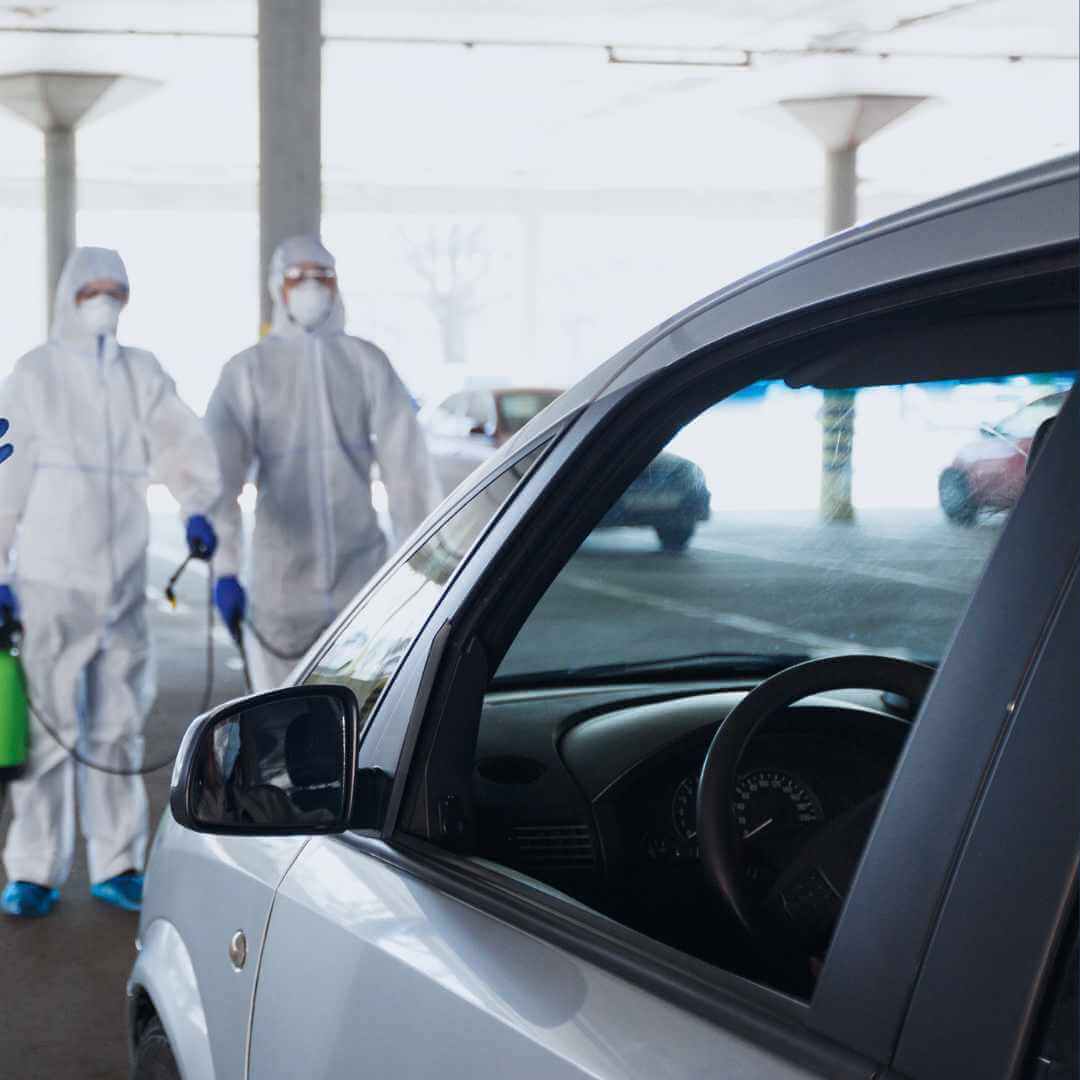
Meth cleaning in vehicles is a decontamination job, not a detailing job. It means HEPA vacuuming every surface, wiping down hard surfaces with a purpose-made decontamination agent, hot water extracting the carpet and upholstery, flushing the ventilation system, and then swab testing to prove the residue is below 0.5 µg/100cm².
Everything after this is detail on how each stage works, what else tends to be wrong with the same vehicle, and where DIY genuinely gets you there versus where it does not.

Why this matters more than it used to
The Australian Criminal Intelligence Commission’s wastewater program has methylamphetamine sitting at the highest annual consumption level it has ever recorded, roughly 12.8 tonnes nationally in the year to August 2024. Two things in that data matter for vehicles.
First, regional consumption per capita runs higher than in capital cities. Second, most of that is use, not manufacture.
That second point gets missed constantly. People picture a clan lab in a boot. The far more common scenario is someone smoking in a car for months. Use contamination is the everyday version of this problem, and it is the reason a perfectly ordinary looking second-hand ute can swab positive.
There is a peer-reviewed case series in the International Journal of Environmental Research and Public Health covering 25 properties where occupants reported health effects at residue levels close to the Australian guideline, and it found no meaningful difference between contamination from former manufacture and contamination from use. A car is a smaller, less ventilated box than a house. Draw your own conclusion.
How to tell if a vehicle has been contaminated
The signs worth paying attention to
A smell that comes back
Sharp, chemical or ammonia-like, and it returns a week or two after the car was cleaned.
Staining up high
Yellow or brown marks on the headliner, sun visors or the upper door cards.
Film on the glass
A greasy layer on the inside of the windscreen and windows that keeps coming back.
Burn marks
Scorching on seats, carpet or the centre console.
Paraphernalia
Discarded items under the seats, in door pockets or down the side of a seat base.
A history with gaps
A cheap second-hand buy with missing paperwork, or an interior that has been very recently and very heavily deodorised.
That last one is worth flagging. Heavy air freshener in a car being sold quickly is a reason to ask questions, not a reassurance.
Why smell alone will not get you an answer
Here is the honest version: odour is a terrible diagnostic. Meth residue well above the investigation threshold can be completely odourless, particularly months after the fact. And plenty of cars smell chemical for reasons that have nothing to do with drugs, including a leaking heater core, a failing evaporator, or a previous owner’s enthusiastic use of solvent-based cleaners.
If you need to know, you test. There is no shortcut around it.
What testing actually looks like
A composite wipe sample is taken over a defined surface area, sealed, and sent to a NATA-accredited laboratory. In a vehicle, five sampling points do most of the work.
Headliner
Smoke rises and settles here first. Often the highest reading in the car.
Driver’s seat
Fabric holds far more than it gives up to a wipe, so this result gets read carefully.
Driver’s footwell
Carpet and the foam underneath it, where residue works its way down and stays.
Steering wheel
Hard surface, constant hand contact. The transfer route to the next driver.
Air-conditioning vents
If the system has been running on recirculation, this is where it shows up.
Presumptive field kits exist and they are useful for triage. They are not clearance. If the result is going to be attached to a sale, an insurance claim or a fleet compliance record, it needs lab confirmation.
Our meth decontamination service covers testing, remediation and clearance certification as one job, which matters, because the same team that cleans should not be the only party interpreting the result.

The Australian standard, and the gap vehicles fall into
Australia’s benchmark comes from the Clandestine Drug Laboratory Remediation Guidelines: 0.5 micrograms of methamphetamine per 100 square centimetres of surface. WA Health’s guidance on clandestine drug laboratories sets out how that investigation level is applied in practice, and the same figure has been picked up across the states.
Now the gap. That guideline was written for buildings. There is no vehicle-specific standard in Australia. No state requires a meth swab before a car changes hands, and no roadworthy inspection looks for it.
So the industry does the sensible thing and applies the residential benchmark to vehicles. It is conservative, it is defensible, and it is what a court or an insurer will recognise. But you should know it is an adopted standard rather than a written-for-purpose one.
The bit most operators will not volunteer
Porosity skews readings. A 0.3 µg/100cm² result off porous seat fabric can represent a bigger total residue load than a 0.5 off a hard plastic dashboard, because the wipe only lifts what is on the surface. Fabric holds more than it gives up to a swab. Any assessor who ignores surface type is handing you an incomplete picture.
The five-stage decontamination process
Stage 1. Containment, PPE and gross removal
Nitrile gloves, eye protection and a properly fitted P2 respirator, minimum. Not a dust mask.
Strip the vehicle of everything loose. Floor mats, boot liner, child seats, anything in the glovebox. Child restraints are almost always a disposal item rather than a cleaning item, because you cannot verify a clearance result on webbing and foam without destroying the restraint’s certification.
Then HEPA vacuum every surface, top down. Domestic vacuums without HEPA filtration will re-aerosolise fine particulate straight back into the cabin, which is worse than not vacuuming at all.
Stage 2. Hard surfaces
Dashboard, steering wheel, door cards, console, seat rails, seatbelt buckles, roof handles, glass. A purpose-formulated decontamination agent, applied with dwell time, agitated, then wiped away with a clean cloth on every pass. Not the same cloth. Re-using a cloth just redistributes residue.
Seatbelt webbing is a genuine weak point. It is porous, it is handled constantly, and it is routinely skipped.
Stage 3. Carpet, upholstery and the soft stuff
This is where the residue actually lives, and it is the stage that separates a real clean from a cosmetic one.
Hot water extraction with a truck-mounted or high-lift extraction unit, multiple passes, working in an overlapping grid. Foam under the carpet holds solution and needs repeated extraction cycles to release it. On the sour milk job further down this page we ran three full extraction cycles through the underlay foam before we were satisfied, and that was for a food spill.
Leather gets a different treatment path and a conditioner afterwards, because aggressive cleaning strips it and it will crack within a season.
If extraction fails to bring a reading down, the material comes out. Seat foam and carpet backing are replaceable. Occupant health is not.
Stage 4. The ventilation system
The step most DIY attempts skip entirely, and the reason odour comes back three weeks later.
Cabin air filter out and binned. Vents and ducts treated with a foaming automotive duct cleaner sprayed through the outlets. Evaporator housing accessed and treated where the vehicle allows it. Then the fan run on full to dry the system out.
Recirculation mode is the culprit here. A car that has been smoked in with the recirc on has effectively been running its contaminated air through the same ducting hundreds of times.
Stage 5. Clearance testing
Re-swab, re-lab, and get a written clearance result. Without this, all you have is a cleaner-looking car and an opinion.
If you want the fuller commercial picture before booking, our meth decontamination cost guide breaks down what drives the price.

DIY versus professional: an honest comparison
Swipe to see all columns
| DIY approach | Professional decontamination | |
|---|---|---|
| Suitable for | Known, light, smoking-only exposure | Any confirmed contamination, unknown history, resale, insurance, fleet |
| Vacuuming | Domestic HEPA vacuum, surface only | Commercial HEPA extraction, top-down containment method |
| Soft furnishings | Consumer spray and a brush | Truck-mounted hot water extraction, multiple passes |
| HVAC system | Rarely attempted | Filter replacement, duct flushing, evaporator treatment |
| Verification | None. You are guessing | NATA lab clearance against 0.5 µg/100cm² |
| Documentation | None | Written clearance certificate for a sale, an insurer or a fleet record |
| Realistic outcome | Visible residue reduced, odour improved | Verified clearance, or a documented decision to replace materials |
The genuinely honest answer: DIY reduces residue. It does not prove anything. If the car is yours, the exposure was light and known, and nobody is asking you to certify it, a careful DIY clean is a reasonable thing to do. The moment the car is being sold, insured, put on a fleet, or driven by kids, guessing stops being good enough.
What else is usually wrong with the same vehicle
Cars do not get contaminated in tidy categories. When we are called out for meth cleaning in vehicles, the inspection almost always turns up two or three of the following.
Mould in cars
Contributed by Nick Roth, IICRC-certified Mould Remediation Specialist
Mould in a vehicle needs three things: moisture, darkness and warmth. An Australian car parked in a driveway through a Queensland wet season supplies all three without any help.
Five signs a car needs mould removal now:
- A musty smell that returns after cleaning. Usually the first indicator, and it means airborne spores, not just a stale cabin.
- Visible colonies. Black, white or green spotting on seats, the headliner, carpet or in the boot. What looks like a small patch is generally the visible edge of something larger.
- Passengers reacting. Sneezing, itchy eyes or a runny nose that starts in the car and stops outside it. NSW Health’s guidance on mould notes exposure can trigger respiratory irritation and worsen asthma, and children and older people feel it first.
- Interior moisture. Windows fogging for no reason, damp floor mats, a general clamminess when you open the door.
- Any evidence of water ingress. Roof lining stains, wet carpet, a boot well holding water. Blocked sunroof drains and perished door seals are the two most common causes we find.
Removing it properly: dry the vehicle out completely first, because cleaning a wet interior just relocates the problem. HEPA vacuum. Treat with a purpose-made antimicrobial rather than a household spray, and spot-test on a hidden section first, since a lot of retail products will bleach automotive fabric. Then dry again, thoroughly. Residual moisture is how it comes straight back.
White vinegar diluted 1:1 has a place for very light surface growth. It is not a remediation. If spores have reached the seat foam or the HVAC system, you need professional mould removal and testing, because you cannot reach either with a cloth.
Prevention that actually works: fix the leak first, ventilate the car weekly if it is sitting unused, park in light and dry where you can, deal with spills the day they happen, and keep silica gel or a moisture absorber under a seat through the wet season.

Odour: neutralising versus masking
An air freshener is a decision to smell two things instead of one. Find the source or you are wasting your time.
Common sources, in order of how often we see them: spilled food and drink under seats, pet accidents, cigarette residue in the headliner, mould in the HVAC, and old water damage in the carpet underlay.
Once the source is gone, the treatment options split into two camps.
Absorbers and consumer products
Bicarb soda left on carpet overnight then vacuumed, activated charcoal in the cabin for a few days, enzyme cleaners for anything organic. Genuinely useful for mild, recent smells.
Professional equipment
Hydroxyl generators, safe to run with the vehicle occupied and low-impact on materials. Ozone generators for rapid knockdown, not safe to run occupied and needing proper airing afterwards. Carbon and HEPA air scrubbing. VaporShark essential oil membranes for the final pass.
Our car odour removal service runs these as a staged process rather than one blast of ozone, because ozone will strip the smell and also age the rubber and plastics if you let it run long enough.
Cigarette residue is its own category. Tar bonds to the headliner and the inside of the glass, and it re-emits every time the cabin heats up. It needs surface cleaning before any odour treatment, which is why cigarette smoke odour removal is priced and scoped differently.

A real job: the sour milk BMW
A customer delivered a BMW to our Murarrie facility with a smell under the front passenger seat that you could pick up from outside the car.
Milk had run down onto the speaker under the seat. The speaker was finished and had to be replaced. Between the metal subfloor and the foam underlay we found maggots, which meant insecticide before anything else, and then removal of what they had left behind.
The subfloor and foam underlay were both cleaned with an active enzyme cleaner. We ran hot water extraction through the foam three separate times to be confident the milk protein was gone. The car then went into our drying chamber over a weekend with a hydroxyl unit and air movers running inside the cabin.
It went back to the owner dry, clean and neutral. We vacuumed the rear seats and washed the exterior on the way out, which was not part of the job.
Two things that story illustrates. Organic spills go further down than you think, and drying is part of odour removal, not a step after it.
Fire, smoke and soot
Contributed by Stefano Giannotti, Fire & Soot Restoration
A vehicle fire is never only soot. You get heat damage, smoke residue, odour, and usually water from putting it out, all arriving together.
Order of operations:
- Safety first. Vehicle cooled, in a safe location, disconnected from power. Eye protection, gloves and respiratory protection before you touch anything, because soot carries carcinogens and irritants.
- Document everything before cleaning. Photos and video from multiple angles, interior and engine bay. Your insurer will want it and you cannot recreate it later.
- Industrial vacuum only. A domestic vacuum will fling soot back into the air and spread it through the cabin.
- Chemical sponges on hard surfaces. Dry sponges, no water. Household cleaners smear soot and make it substantially harder to remove, which is the single most common mistake we see.
- Specialised cleaners on fabric, spot-tested first.
- Auto electrician on the wiring. Non-negotiable. Heat-damaged looms fail later, not immediately.
- Odour treatment last, once the residue is gone.
Soot is acidic, and it does not wait
It corrodes metal, degrades electronics and etches trim, and it keeps doing that for as long as it sits there. Speed matters more than thoroughness in the first 48 hours.
Full scope for the bigger jobs sits with our fire damage restoration and soot cleaning services.
Water damage in a vehicle
Contributed by Carly Sutton, Water Damage Restoration
Wet carpet in a car follows exactly the same rules as wet carpet in a house, with one difference: the vehicle has no drainage path and far worse airflow.
The 24 to 48 hour window is the whole game. Past that, mould starts colonising the underlay, and drying alone stops being a fix.
Swipe to see all columns
| Category | Source in a vehicle | Outcome |
|---|---|---|
| Category 1, clean | Rain through a seal, spilled water, a burst washer bottle | Salvageable with fast extraction and drying |
| Category 2, grey | Aircon condensate overflow, drink spills left to sit | Underlay usually replaced, carpet often saved |
| Category 3, black | Floodwater, sewage, water standing for days | Porous materials come out and go in the bin |
A flood-affected vehicle is a different conversation entirely, and honestly, often an insurance write-off rather than a cleaning job.
The mechanics of drying are the same as any structural job: extract the liquid water first, because removing it as liquid takes a fraction of the energy of evaporating it, then move air across the surface, then dehumidify to capture the vapour. Skip the dehumidification and you have just moved the moisture from the carpet into the headliner.
Our full method for wet flooring is covered in how to get water out of carpet and, in more technical depth, water removal and carpet drying techniques. Both are written for homes, and the physics carries straight over.
Vehicle carpet and upholstery: which method for what
Vehicle carpet is carpet. The same five techniques apply, they just get applied in a much more awkward space.
Swipe to see all columns
| Method | How it works | Best for in a vehicle | Drying time |
|---|---|---|---|
| Hot water extraction | High-pressure hot solution injected, then vacuum recovery | Deep contamination, meth residue, organic spills, odour source removal | Hours with air movers |
| Steam cleaning | High-temperature steam to kill bacteria, mites and mould | Sanitising, mould, a general hygiene reset | Hours |
| Encapsulation | Chemical crystallises around soil, then vacuumed out | Light commercial fleet maintenance, low downtime | Under an hour |
| Bonnet cleaning | Low-moisture detergent, rotary pad agitation | Quick appearance clean, rideshare turnaround | 30 minutes |
| Dry powder | Micro-sponges absorb soil, then vacuumed away | Surface refresh where moisture is a risk | Immediate |
For decontamination work, only the first two are relevant. Encapsulation and bonnet cleaning are appearance methods. They make a car look better without removing what is in the backing.
The full breakdown of each sits in our professional carpet cleaning guide, and for seats specifically, upholstery cleaning.
One for the classic car owners: if your vehicle has genuine wool carpet, which plenty of British and older luxury cars do, you have a pest risk that synthetic carpet does not. Carpet moth larvae eat keratin, and wool is full of it. A car stored in a dark garage for months is exactly the warm, dark, undisturbed environment they want. Getting moths out of wool carpet covers identification and eradication, and the short version is that it is the larvae doing the damage, not the moths you can see.
What it costs, and what your insurer wants
Cost drivers, roughly in order of impact:
- Contamination level. A marginal result over the threshold and a heavily contaminated vehicle are different jobs.
- Whether testing and clearance are included. Lab work is a real line item.
- Vehicle size and interior complexity. A van with a fitted-out rear is not a hatchback.
- Material replacement. Once seat foam or carpet has to come out, labour climbs.
- Turnaround. Same-day emergency response costs more than a scheduled booking.
On insurance: policies vary enormously on whether meth contamination is covered at all, and many exclude it outright. Where it is covered, insurers want documented evidence, meaning pre-clean test results, a scope of works, and a post-clean clearance. “We cleaned it thoroughly” is not evidence.
For the sale side, the ACCC’s guidance on consumer guarantees is the starting point on your obligations when selling goods. Knowingly selling a contaminated vehicle without disclosure exposes you to more than a bad review. A clearance certificate is cheap protection, and it is a selling point rather than an admission.
See our pricing page for the general structure, or call for a scoped quote.
Why choose AllAces
We have been doing this since 1988, and we are one of the few Australian operators qualified to handle testing, decontamination and clearance certification as a single scope. That matters more than it sounds. Chasing a testing company, a cleaning company and a clearance provider separately is how jobs stall.
IICRC-certified technicians
Across meth decontamination, mould remediation, fire and water damage.
24/7 emergency response
Burst pipes and vehicle fires do not wait for business hours.
Commercial equipment
Truck-mounted extraction and a purpose-built drying chamber, not portable consumer gear.
Odour treatment matched to the material
Hydroxyl, ozone and air scrubbing, rather than blasting everything with one method.
We deal with the insurer
Including the documentation they ask for, in the format they ask for it.
Servicing four states
Brisbane, Sydney, Melbourne, Ballarat and surrounds.
You can read about the people who would actually be working on your vehicle on our meet our experts page. If you would rather just talk it through, contact us or call 1800 00 10 10.
Broader scope of what we handle sits under vehicle decontamination and biohazard decontamination.
Frequently asked questions
Can I clean meth residue out of my car myself?
For light, known, smoking-only contamination, a careful DIY clean with a HEPA vacuum and a purpose-made decontamination product will reduce residue meaningfully. What it will not do is prove the vehicle is below the clearance benchmark. If the car is being sold, insured or driven by children, get it tested.
Is there an Australian standard for meth contamination in vehicles?
Not a vehicle-specific one. Professionals apply the 0.5 µg/100cm² health investigation level from the Clandestine Drug Laboratory Remediation Guidelines, which was written for buildings but is the most established and defensible benchmark available.
How do I know if a second-hand car has been contaminated?
You cannot tell reliably by looking or smelling. Warning signs include a chemical odour that returns after cleaning, yellow staining on the headliner, a greasy film on the glass and burn marks on interior surfaces. A swab test sent to a NATA-accredited lab is the only definitive answer.
How long does professional meth cleaning in a vehicle take?
Most vehicles are a one to three day job including drying time, with lab clearance results typically adding a few days on top. Heavily contaminated vehicles requiring material replacement take longer.
Does meth cleaning remove the smell as well?
Decontamination and deodorisation are related but separate. The decontamination removes the residue, and any residual odour is then treated with hydroxyl or ozone equipment. Most vehicles need both, which is why we scope them together.
Can mould come back after the car has been cleaned?
Yes, if the moisture source is still there. A leaking sunroof drain or a perished door seal will regrow mould within weeks of the cleanest remediation. Fixing the water ingress is part of the job, not a follow-up.
Is it illegal to sell a contaminated vehicle in Australia?
Laws differ by state, but knowingly selling a contaminated vehicle without disclosing it can create consumer law and liability exposure separate from the health risk to the buyer. Testing and documenting the vehicle protects both sides of the transaction.
Related guides
Vehicles are one part of this. These cover the rest of the process.
- How the meth decontamination process works: step by step, from first test to clearance.
- Meth testing services: what gets sampled, and what the numbers mean.
- What meth decontamination costs: pricing and the factors that move it.
- DIY versus professional meth removal: where home kits stop working.
- Warning signs of meth contamination: what to look for in a property or a car.
- The vehicle decontamination checklist: the wider job, beyond meth residue.
Where this leaves you
Meth cleaning in vehicles sits in an awkward spot: a serious health issue with no vehicle-specific regulation behind it, which means the standard of work varies wildly depending on who you call.
The parts that do not vary are the ones worth remembering. Residue lives in the soft furnishings and the air-conditioning, not on the dashboard. Cleaning without testing is an opinion. And a car with one contamination problem usually has two, because whatever caused someone to neglect the meth is usually the same reason the sunroof drain is blocked.
If you have bought a car with a history you are unsure about, or you are managing a fleet where this could turn up, testing costs a fraction of what remediation does and it settles the question either way.
Call AllAces Cleaning & Restoration on 1800 00 10 10, or get in touch here.
This guide is reviewed every six months. Last updated August 2026 with current ACIC consumption data and revised sampling guidance.