Most people ring us and ask what the clean costs. It is the wrong question, and it is the reason so many Sydney owners end up comparing two quotes that look like they are for different planets. One is $6,400. One is $24,000. Same house, same suburb, same week.
Neither company is ripping anyone off. They have simply been handed different information about how much of the house is contaminated, because the testing that came first was done differently.
That is what this guide is really about. Not a price list you cannot hold anyone to, but the handful of decisions that actually set the number on your meth remediation quote, and which of them you still have control over.

Every price starts with a scope, and every scope starts with a laboratory result. Anything quoted before that is a guess.
Key takeaways
- Typical Sydney range in 2026: $1,000 to $5,000 for light smoking residue, $5,000 to $10,000 for moderate contamination, and $10,000 or more where a property has been used as a clandestine lab.
- Testing is a separate line item, and it happens twice. You pay for a baseline meth screening before the work and post remediation clearance testing after it. Budgeting for one is the most common mistake we see.
- The cleaning is rarely the expensive part. Strip out, disposal and reinstatement usually account for more of the invoice than the chemical decontamination wash does.
- Spending more on testing usually reduces the total bill. A discrete, room by room assessment often shrinks the remediation footprint enough to save five figures.
- The Australian remediation threshold is 0.5 micrograms of methylamphetamine per 100cm². Below it, a property is generally considered fit for habitation. Above it, remediation is expected.
- Sydney inspections at AllAces start from $120, with a minimum work order from $440. Every job gets a written scope before anyone picks up a spray wand.
What does meth decontamination cost in Sydney in 2026?
Meth decontamination in Sydney typically costs $1,000 to $5,000 for light smoking residue in a small property, $5,000 to $10,000 for moderate contamination across a standard three bedroom home, and $10,000 or more where the property has been used to manufacture. Testing sits outside those figures and adds a further $2,000 to $4,500 across baseline and clearance stages.
Here is how that breaks down in practice.
| Contamination level | What it usually looks like | Indicative Sydney cost | Typical duration |
|---|---|---|---|
| Light | Occasional smoking, one or two rooms, readings just over 0.5 µg/100cm² | $1,000 to $5,000 | 1 to 3 days |
| Moderate | Sustained smoking, residue through soft furnishings and HVAC, whole of property readings elevated | $5,000 to $10,000 | 3 to 7 days |
| Heavy or clan lab | Manufacturing, precursor chemical contamination, staining, gyprock and framing affected | $10,000 to $40,000+ | 1 to 4 weeks |
Those bands are indicative and they cover buildings.
Even within buildings they only go so far. A two bedroom unit in Marrickville with light residue and a five bedroom house in Kellyville with the same reading will not cost the same, because square metreage, contents and access all move the number.
Which brings us to the part almost nobody prices in.
Why two identical houses get quotes $18,000 apart
Here is the thing that catches people out. The size of your remediation bill is not decided by how contaminated the property is. It is decided by how the sampling was designed.
A pooled composite sample answers one question: is this property above the threshold. It cannot say whether the reading came from one bedroom or all six. A remediator holding that report has no choice but to scope and price the whole property, because nothing in the document lets them exclude anything.
Room by room discrete sampling costs more up front, often $800 to $1,500 more. What it buys is a detailed site characterisation report that says the two back bedrooms and the hallway are hot and the rest of the house is clean. The remediation footprint becomes three rooms instead of eleven, and that is where the money is.
Common belief: testing is a formality, so pay as little as possible for it.
Reality: on a positive property, testing is the cheapest lever you have on the final invoice.
Why it matters: we have seen an extra $1,200 of assessment work take $19,000 off a scope. Not every time. But often enough that going straight from a positive screen to a remediation quote is, in our view, the most expensive shortcut in this industry.
The mechanics of how each test is run, what the laboratory does and what a defensible report contains are set out in the meth testing process, and how to read the number that comes back is covered in meth testing levels explained.
What you are actually paying for, line by line
A meth remediation quote in Sydney is a stack of separate costs. Ask for it itemised. If a contractor will not break it down, that tells you something.
| Line item | What it covers | Indicative Sydney range |
|---|---|---|
| Initial inspection and scoping | Site attendance, visual assessment, sampling plan | From $120 |
| Baseline meth screening | Surface wipe sample collection, NATA accredited laboratory analysis, chain of custody protocol | $400 to $1,200 |
| Detailed site characterisation | Room by room discrete sampling, contamination mapping, written report | $1,200 to $3,000 |
| Contents assessment and disposal | Triage of soft furnishings, contaminated contents disposal fees, transport | $500 to $4,000 |
| Strip out demolition | Carpet and underlay removal, gyprock drywall replacement, cornice, skirting | $2,000 to $15,000 |
| Chemical decontamination wash | Triple wash protocol, chemical neutralisation wash pricing, structural framing washdown | $1,500 to $12,000 |
| HEPA vacuuming and air scrubbing | HEPA vacuuming of all surfaces, air scrubber filtration during works | Usually bundled |
| HVAC ductwork decontamination | HVAC duct cleaning cost, filter replacement, register cleaning | $600 to $3,500 |
| Hazardous waste disposal Sydney | EPA compliant transport and tipping of contaminated material | $400 to $2,500 |
| Post remediation clearance certificate | Independent clearance testing fees, habitation clearance certificate | $800 to $2,500 |
| Property restoration estimates | Replastering, painting, new flooring, making good | Quoted separately |
Two things are worth noticing in that table.
First, the chemical decontamination wash is not the biggest number. Strip out demolition costs usually are. Meth residue binds readily to porous materials, and porous materials cannot be reliably washed. Gyprock, carpet, underlay, curtains, mattresses, upholstered lounges: those come out. Non porous surface sanitisation on tile, glass, sealed timber and metal is comparatively cheap.
Second, restoration is a separate trade. A meth remediation contractor decontaminates. Putting the house back together, the new gyprock, the paint, the flooring, is a builder’s job in most cases, and plenty of quotes stop at the clearance certificate. Ask where the line sits before you sign.
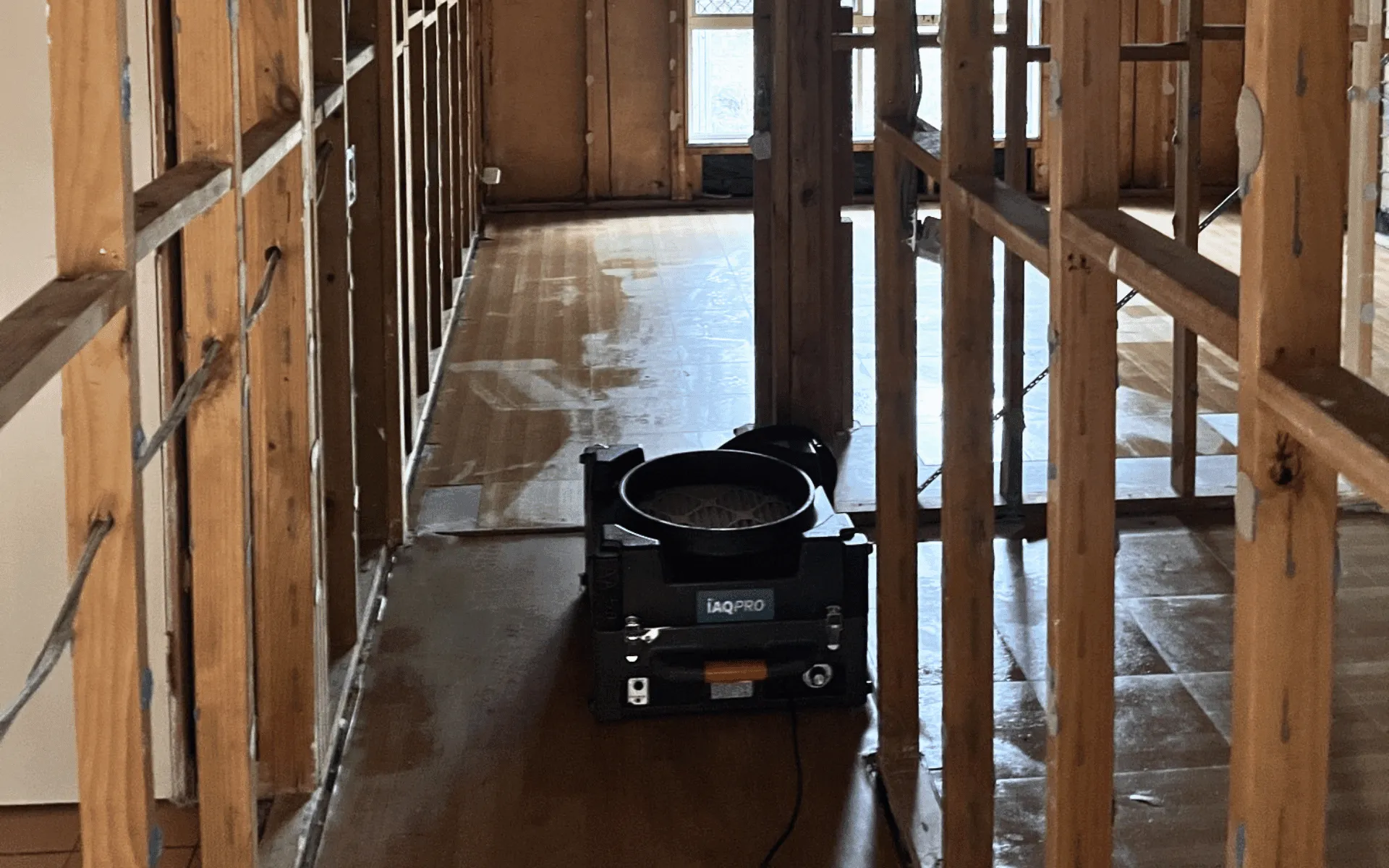
Air scrubber filtration and containment run for the duration of the works. On an itemised quote they are usually bundled into the labour rate.
Meth testing cost in Sydney, and why it happens twice
Meth testing cost in Sydney generally runs $400 to $1,200 for a baseline screening and $1,200 to $3,000 for a detailed room by room assessment. Post remediation clearance testing adds a further $800 to $2,500, and it must be carried out independently of the company that did the decontamination.
That last clause is not a formality. A clearance test signed by the same crew that did the cleaning carries very little weight with an insurer, a purchaser’s solicitor or the NSW Civil and Administrative Tribunal.
The reason testing lands on the invoice twice is that the two rounds do different jobs. The baseline sets the scope and therefore the price. The clearance proves the scope worked, and it is the document with resale and insurance value. Budgeting for one and being surprised by the other is the most common costing mistake we see in Sydney.
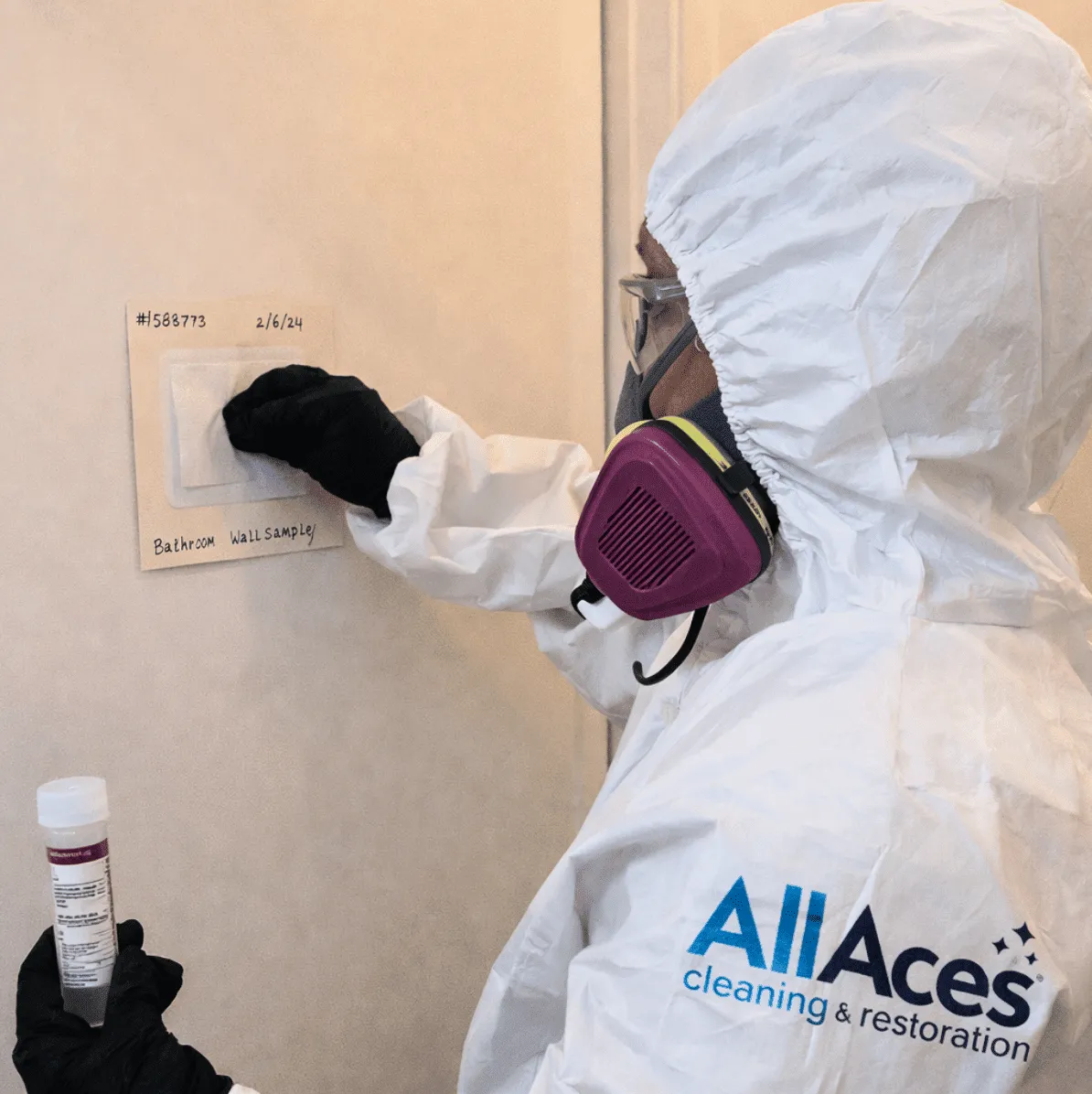
A surface wipe sample taken over a measured 100cm² template. The result comes back as a number, not an opinion.
One costing note on cheap kits. A presumptive kit runs about $150 and is worth buying to decide whether to spend $400 to $1,200 on a laboratory screen. It is not worth anything as a basis for a remediation decision, because it reports presence rather than a concentration you can price against.
What each test type involves, how the sample is taken and what a defensible report has to contain are covered in the meth testing process. If you are weighing doing part of the work yourself to save the testing fee, read what DIY meth cleaning can and cannot fix first, because cleaning before the baseline is the one move that reliably increases the final number.
Smoking versus cooking: why a clan lab costs three times more
The short answer is that a clan lab is not a bigger version of the same job. It is a different scope, and three parts of it cost more.
The testing is broader
You are no longer only looking for methylamphetamine. A precursor panel and, on some sites, vapour testing sit on top of the standard wipe sampling. That is more laboratory work and more assessor time before anyone quotes the clean.
The demolition is deeper
Structural framing washdown, subfloor treatment and occasionally partial reframing. Ceilings and wall cavities may need a dwell time foam system rather than a surface wash, which is slower and more labour.
The waste stream is dearer
Precursor contaminated material is classified differently under the NSW EPA Waste Classification Guidelines, and that classification drives the tipping fee.
As a rule of thumb from jobs we have scoped: a heavy smoking property costs what a moderate one costs plus contents. A confirmed clan lab costs three to five times a comparable smoking job. The average meth lab remediation in a Sydney house starts roughly where a bad smoking job finishes.
Telling the two apart before you commission anything matters, because the sampling brief is different. What inspectors look for in a former meth lab sets out the indicators.
The rules that set the price in NSW
Nobody enjoys the compliance section, but in this trade the regulations are the cost, so it is worth knowing what is driving the invoice.
Waste transport
Contaminated building material and contents leaving a Sydney site are regulated waste. EPA NSW rules govern who can carry it and where it can go. Licensed transport and tip fees are a genuine line, not padding.
Worker safety
SafeWork NSW requirements apply to the crew. Full personal protective equipment, respiratory protection and decontamination stations are built into the hourly rate.
Council orders
A clean up notice or an unfit for human habitation order forces a timeline, and a timeline removes your ability to shop around. That alone can move the price.
Planning certificates
A contamination history can end up as a section 10.7 notation through the NSW Planning Portal, which is a resale consideration rather than a remediation one.
All of it hangs off the national remediation trigger of 0.5 µg/100cm². Where that figure comes from, what it does and does not mean, and the state by state disclosure position are covered in meth contamination in Australian property.
Who pays: insurance, tenants and NCAT
Landlord insurance meth contamination cover exists but is not universal, and where it applies it is usually written as a malicious damage insurance claim rather than as a named meth benefit. Sub limits of $10,000 to $65,000 are common. Read the actual wording, not the brochure.
Practical notes from the claims we work on:
Do this
- Get the baseline test before you clean. Insurers pay on evidence. A remediation with no pre works testing is very hard to substantiate.
- Check whether loss of rental income coverage is included. On a heavy job, the rent you lose over three weeks can rival the remediation cost.
- Budget the insurance excess. Some policies apply a higher excess to contamination claims than to standard damage.
- Treat it as a capital event. A rental property biohazard clean is not a bond clean with extra steps, and investment property remediation costs are usually coded differently to repairs. Worth a call to your accountant.
Do not assume
- A tenancy bond will not cover it. Under the Residential Tenancies Act 2010 (NSW), a bond is capped at four weeks’ rent. On a $9,000 remediation that is a rounding error.
- Pursuing the balance means NCAT. A claim at the NSW Civil and Administrative Tribunal is won on evidence from a NATA accredited lab with chain of custody, not on photographs.
- Strata adds a layer. In a unit block, strata property decontamination liability for common property, ducts and shared walls is often contested. Sort that out before works start, not after.
Our 12 unit block decontamination case study walks through how a multi lot job gets sequenced. NSW Fair Trading’s guidance on repairs, maintenance and damage in a tenancy is the starting point for the legal liability question, though contamination sits awkwardly inside the standard damage framework.
Hidden remediation costs owners routinely miss
The quote is not the budget. These are the items that show up later.
Contents
A house full of upholstered furniture, mattresses and clothing can add thousands in soft furnishings disposal that the building quote never mentioned.
Reinstatement
Clearance is the finish line for the remediator, not for the property. New gyprock, cornice, paint and flooring are a separate build cost.
Accommodation
You cannot live in a property mid remediation. Three weeks of alternative accommodation in Sydney is a real number.
A second round
If clearance testing fails, you pay for another pass and another clearance test. Good cross contamination assessment during scoping is what prevents this.
HVAC
Ducted systems distribute residue through the whole building. HVAC ductwork decontamination is often quoted as an optional extra and is very rarely optional.
The excess
Where a claim applies, some policies carry a higher excess on contamination than on standard damage. Check the figure before you rely on the cover.
And time. Laboratory turnaround is typically three to five business days each way. Two rounds of testing means roughly two weeks of calendar time before you are finished, even on a small job.
How to keep the cost down without cutting corners
Five things that genuinely move the number, in order of impact.
Pay for discrete testing on a positive property
Covered above. Biggest single lever available, and the one most owners skip.
Empty the property first if you can
Contents triage is cheaper when the crew is not working around furniture, and anything you remove before scoping is one less item in the disposal line.
Stage the work
Reputable operators will quote in stages, especially on multi room or multi lot jobs, so you can spread cost across a financial year. Our pricing page sets out how staged and budget constrained scopes are handled.
Do not clean before testing
A well meaning wipe down does not remove residue from porous materials, but it does contaminate your baseline reading and can weaken an insurance claim.
Compare scopes, not prices
Two quotes are only comparable if both are working from the same characterisation report. Get one report, then send it to everyone.
Regional differences matter too. The same scope quoted in regional NSW usually lands lower on labour than Sydney and higher on travel and disposal, because the waste still has to come back to a licensed facility.
Before you sign anything
The quote itself needs reading, and that is a separate skill to understanding the price bands on this page. What a scope of works has to name, the five red flags worth walking away from, and who should carry the cost of a failed clearance are all set out in how to compare meth removal quotes.
AllAces has been doing restoration and decontamination work in Australia for more than 35 years, across more than 65,000 jobs, as an IICRC Certified Firm with 24/7 response. Our Sydney team operates out of Chatswood. Inspections start from $120 and every job gets a written quote before anyone starts.
Frequently asked questions
How much does meth decontamination cost per square metre in Sydney?
Meth cleanup cost per square metre in Sydney generally falls between $40 and $150, though the figure is unreliable on its own. Per square metre pricing works for a straightforward chemical wash of non porous surfaces. It breaks down as soon as gyprock replacement, contents disposal or HVAC work enter the scope, because those costs scale with materials rather than floor area.
Do I need a clearance certificate, and how much is it?
Yes, if you intend to rent, sell or reoccupy the property. A habitation clearance certificate confirms readings have fallen below 0.5 µg/100cm² after remediation. In Sydney it usually costs $800 to $2,500 depending on the number of samples, and it should be issued off independent testing rather than by the remediation contractor.
Will my landlord insurance cover meth contamination?
Sometimes, and usually under the malicious damage section rather than a named meth benefit. Cover is common in specialist landlord policies but frequently sub limited, with $10,000 to $65,000 a typical range. Test before you clean, keep the chain of custody documentation, and lodge the claim with the laboratory report attached. Policies without a specific contamination extension often exclude it entirely.
Is a $150 test kit good enough for a pre purchase check?
It is good enough to decide whether to test properly, and nothing more. Presumptive kits detect presence rather than concentration, so there is no number to price a scope against. For a pre purchase decision on a Sydney property, budget $400 to $1,200 for a composite screen from an accredited laboratory instead. On anything with a rental history, that is cheap against inheriting someone else’s remediation bill.
How long does meth decontamination take, and does time cost money?
One to three days for light contamination, three to seven days for moderate, and one to four weeks for a clan lab. Add roughly three to five business days each for baseline and clearance laboratory turnaround. Most Sydney jobs run two to three weeks from first inspection to clearance certificate, and on a tenanted property that calendar time is lost rent, which is often the larger number.
Is it cheaper outside Sydney?
On labour, usually yes. On the total, often not. Regional NSW rates are lower for crew time but travel, accommodation and waste transport all rise, because contaminated material still has to come back to a licensed facility. On a small job the travel component can wipe out the labour saving entirely.
The short version
Meth decontamination in Sydney is not one price. It is a chain of decisions, and the two that matter most both happen before anyone starts cleaning: how the property is tested, and how tightly the scope is drawn off that testing.
Get a proper characterisation report. Insist on NATA accredited laboratory analysis with chain of custody. Compare scopes rather than headline numbers. Keep the paperwork, because in NSW the documentation is worth as much as the clean.
And if the quote you are holding does not tell you which rooms are contaminated and by how much, it is not a quote yet. It is a guess.
Dealing with a suspected contamination right now? AllAces provides meth testing, decontamination and clearance reporting across Sydney, Brisbane, Melbourne and Ballarat, 24/7. Call 1800 00 10 10, or get in touch here.
Reviewed every six months. Last updated September 2026 with current NSW regulatory references, itemised Sydney quote ranges and revised testing costs. Cost figures are indicative and scope dependent. A real number comes after a real test.
This page is about price. It is one part of meth contamination in Australian property, which covers the signs, the 0.5 µg/100cm² threshold, the health evidence and where landlords, buyers and sellers stand.
A real number comes after a real test, so if you have not tested yet, start there. Get a quote from a professional meth decontamination team on 1800 00 10 10.

