

A car smell almost never lives in the air. It lives in foam, fibre, and the film on every hard surface. That is why air fresheners fail, and why the treatment you choose has to match the material the odour is sitting in.
That one idea explains most of what follows, including why the order you do things in matters more than the equipment you own.
Key Takeaways
- Odour is a residue problem, not an air problem. Until the source is physically removed, gas-phase treatments only buy you a few days.
- Sequence beats equipment. Source removal, then deep cleaning, then gas-phase treatment. Run those in the wrong order and you waste the expensive step.
- Ozone works, but only unoccupied and only with proper aeration. Australia's peak workplace exposure standard for ozone is 0.1 ppm over a 15 minute period, a fraction of what a treatment concentration looks like.
- The air conditioning system is the most commonly missed source in a car. If the smell returns the moment you switch the fan on, the interior was never the problem.
- Some materials do not come back. Saturated seat foam, a soaked headliner, or carpet underlay after a flood usually needs replacing, not cleaning.
What is vehicle odour removal?
Vehicle odour removal is the process of finding and eliminating the source of a smell inside a car, then treating whatever odour molecules remain in the cabin and the air conditioning system. Done properly it involves extraction, chemical or enzymatic breakdown of the residue, and a gas-phase treatment such as ozone or hydroxyl. It is not the same as masking the smell with a fragrance.
That distinction matters more than most people realise, and it is the reason so much DIY effort goes nowhere.
Why the smell always comes back
Here is the part almost everyone gets wrong. You smell a car and assume the air is the problem. So you treat the air. Fragrance, a hanging tree, maybe a can of something that promises to destroy odour at the molecular level.
Two days later it is back.
The air was never the problem. The air was the symptom. Odour molecules are released continuously from a physical reservoir, and in a car that reservoir is almost always one of three things.
1. Soft materials that soaked it up
Seat foam is the worst offender. Open-cell, thick, and liquid travels straight through the fabric into it. Car seat foam odour retention is why a spill that dried out three months ago still smells on a hot afternoon. Carpet, underlay, the headliner, floor mats and boot lining behave the same way.
2. The air conditioning system
The evaporator sits in a dark, permanently damp housing behind the dash. Condensate collects on it every time you run the air conditioning, and dust and organic matter collect with it. That combination grows biofilm, and biofilm smells.
3. The invisible film on hard surfaces
Tar and nicotine condense onto every cool surface in the cabin, including glass, plastic trim, the inside of the vents and the headliner. Sticky, slightly yellow, and invisible until you wipe a section and compare.
Heat makes the first one worse. Every Australian summer afternoon in a parked car is a low-grade reactivation cycle: the cabin hits 60 degrees or more, the residue volatilises, and the smell you thought you had beaten comes straight back.
The second one has a distinctive signature. Car air conditioning mould smell is worst in the first thirty seconds after you turn the fan on, then fades. That timing is a diagnosis. It tells you the source is inside the ducting, not on the seats. HVAC system odour remediation in a car means three things in order: cabin air filter replacement, an evaporator coil cleaning treatment delivered through the drain or the intake, and an antimicrobial treatment of the car vents and duct runs. Skip the filter and you are pushing clean air through a dirty sponge.
The third is why interior surface wiping for smoke residue is not an optional extra on smoke jobs. It is most of the job.

Covering up versus removing car odours
There are four things a product can do to a smell, and they are not equivalent.
Masking
Adds a stronger fragrance over the top. Nothing is removed. This is what most retail air fresheners do.
Absorbing
Pulls molecules out of the air into a medium. An activated charcoal car deodoriser or a moisture absorber in the car interior works this way. Useful, passive, limited by surface area.
Neutralising
Chemically alters the odour molecule so it no longer binds to your olfactory receptors. A good fabric odour neutraliser spray does this.
Encapsulating
Seals residue in place so it can no longer off-gas. Encapsulating car carpet odours is legitimate, but it is containment, not removal.
Only the last two change anything durable, and neither works while the source is still saturated. We go deeper into this in our guide to the difference between masking odours and genuine odour removal.
The vehicle odour removal techniques professionals actually use
Nine techniques cover almost every job. They are not interchangeable, and the good ones are boring.
Hot water extraction
Hot water extraction on auto upholstery injects heated cleaning solution into the fibre under pressure and pulls it back out with a professional extraction vacuum. The most effective way to physically remove soil from carpet and cloth seats, because it takes the contamination out of the vehicle.
Over-wet a car and you have a mould problem in the foam a week later. Proper automotive upholstery shampooing uses controlled moisture, a strong wet vac car carpet extraction pass, then forced drying.
Dry vapour steam cleaning
Dry vapour steam cleaning uses low-moisture steam at high temperature. Excellent for vents, seams, seat rails and the awkward geometry that makes car interior steam cleaning attractive. It sanitises as it goes and adds very little water.
Weaker than extraction on deep contamination. Steam is precision work, extraction is volume work.
Bio-enzymatic treatment
Urine, vomit, milk and blood are protein and organic acid problems. An enzymatic cleaner for organic spills digests the residue itself, which is why protein stain odour removal in a car depends on dwell time, not scrubbing. A good bio-enzymatic car carpet cleaner has to reach the foam, not just the fabric.
The bacteria causing car odours feed on the same residue. Neutralising the pH of car carpet spills after an alkaline urine treatment stops re-soiling.
Surface wiping and headliner work
Unglamorous and non-negotiable on smoke jobs. Every hard surface wiped, vents cleaned, headliner treated with a light low-moisture method.
Headliner smoke smell cleaning is delicate. The fabric is bonded to foam with adhesive that lets go if you saturate it. If a detailer says they will extract your headliner, ask what they are doing about the glue.
Air conditioning remediation
Filter, evaporator, ducting. In that order. This is the step most often skipped, because it does not show up in the before and after photos.
Skipping it is the single most common reason a smell comes back.
Thermal fogging
Thermal fogging of a vehicle interior heats a deodorising solvent into a dense fog that follows the same path the smoke took. The standard answer for fire and smoke odour, because it reaches the same cavities.
Not a cleaning step. Fogging a dirty car locks fragrance over a live source and buys a few weeks.
Chlorine dioxide
Sold as a chlorine dioxide car bomb or a smoke bomb car odour neutraliser. Activated in a sealed vehicle, the gas oxidises odour molecules across the whole cabin including the ducting.
It bleaches. Some dyes, plastics and leathers react badly. Test first, or let someone who has already ruined a few interiors decide.
Hydroxyl generator
Uses UV light to produce hydroxyl radicals, which work by destroying odour molecules in the car at much lower concentrations than ozone requires. Hydroxyl generator car odour treatment can run for extended periods and is far gentler on rubber, vinyl, leather and adhesives.
Slower. On a badly contaminated car it may run a day or more where ozone would take hours.
Ozone shock treatment
The most requested technique and the most misunderstood. An ozone shock treatment on a vehicle runs at high concentration in a sealed, unoccupied car, followed by forced aeration.
Never with anyone inside, and never as routine maintenance. Full detail in the next section.
Comparing the main treatment methods
| Technique | What it targets | Cabin occupied? | Main limitation |
|---|---|---|---|
| Hot water extraction | Soil and residue in carpet and cloth | No | Over-wetting causes mould |
| Dry vapour steam | Vents, seams, hard surfaces, sanitising | No | Limited depth |
| Bio-enzymatic treatment | Urine, vomit, milk, blood, protein residue | No | Needs long dwell time and full contact |
| Thermal fogging | Smoke odour in cavities and ducting | No | Cosmetic if the source is still present |
| Chlorine dioxide | Severe smoke and biological odour, whole cabin | No | Can bleach dyes, plastics and leather |
| Hydroxyl generator | Airborne and surface odour molecules | Yes, in most configurations | Slower than ozone |
| Ozone shock | Airborne and surface odour molecules | Never | Degrades rubber and elastomers, and requires aeration |
Ozone: the technique most people get wrong
There are two completely different conversations about ozone happening at once, and mixing them up is where the confusion starts.
The first is about consumer ozone air cleaners running in occupied spaces. The United States Environmental Protection Agency review of ozone generators sold as air cleaners is blunt about these. At concentrations that comply with public health standards, ozone does not effectively remove odours, and in one cited test on new carpet the reaction produced a range of aldehydes, so the total concentration of organic chemicals in the air went up rather than down. Body odour, the EPA notes, “may be masked by the smell of ozone but is not removed.”
The second conversation is about a commercial grade ozone machine in a car, run at high concentration in a sealed and unoccupied vehicle, for a defined period, followed by forced aeration. That is a different process with a different result. Restoration technicians use it because at those concentrations ozone genuinely does oxidise odour molecules across surfaces and ducting.
Both things are true. The consumer device is a bad idea. The professional shock treatment is a real technique. The difference is concentration, containment and the fact that nobody is breathing it.
The Australian number that matters. In a safety alert issued in February 2025, after two aged care laundry workers fell ill from an ozone generator leak, WorkSafe Victoria restated the Australian peak exposure standard for ozone: 0.1 parts per million, or 0.2 mg/m3, measured over a maximum 15 minute period. WorkSafe also recommends automatic shut-off alarms, monitoring and trained operators. A treatment concentration inside a sealed car is orders of magnitude above that limit.
That is the whole reason for the rules around safe ozone treatment times for vehicles: the car is sealed, the operator is outside, and nobody goes near it until it has been aerated.
Airing out a car after ozone is not a courtesy step, it is part of the treatment. Doors and boot open, fans running, air conditioning cycled on fresh air so the ducting clears too. Most operators allow at least an hour and often longer depending on the dose.
A lingering ozone smell in the car after a day or two usually means one of two things: the aeration was rushed, or the ozone reacted with materials in the cabin and you are smelling the by-products. Either way, more ventilation is the answer, not another treatment.
One more thing detailers rarely mention. Ozone attacks rubber and elastomers. Repeated heavy treatment ages door seals, wiper blades, hoses and some soft-touch plastics. It is a tool for occasional heavy jobs, not a monthly freshen-up.
Matching the technique to the source
The technique follows the source. Not the other way around. Specific source odour removal in a car beats a generic treatment every time, because the material holding the residue decides what will shift it.
| Odour source | Where it actually sits | Treatment that works |
|---|---|---|
| Cigarette smoke | Tar film on every surface, headliner, ducting | Full surface wipe, headliner treatment, filter and vents, then ozone or hydroxyl |
| Pet urine | Seat foam, carpet underlay, seatbelt webbing, seat rails | Enzymatic treatment with long dwell, extraction, pH neutralising |
| Wet dog | Skin oils in carpet fibre and boot lining | Extraction with a degreasing pre-spray, then dry thoroughly |
| Sour milk | Foam and underlay beneath the spill point | Enzymatic treatment through the full depth, then extraction |
| Vomit | Fabric, foam, seat seams, floor pan | Solids removed, enzymatic treatment, extraction, gas-phase finish |
| Dead animal | Ducting, cavity behind the dash or inside a wheel arch | Physical removal of remains, then fogging or ozone |
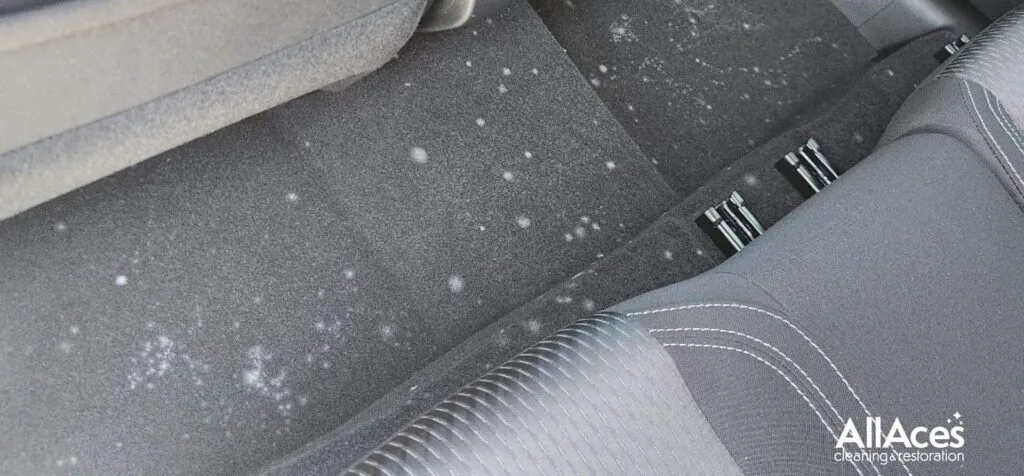
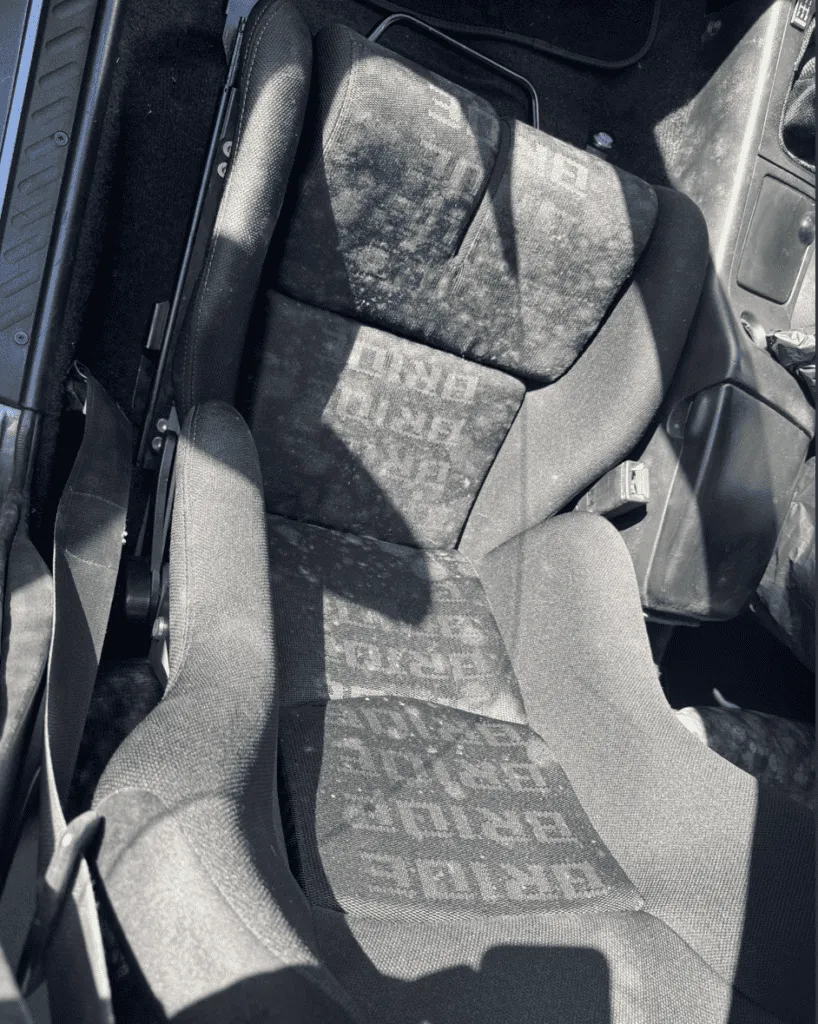
| Mould and mildew | Damp carpet, underlay, spare tyre well, evaporator | Find and fix the water source, dry, remediate, then treat |
| Flood damage | Underlay, seat foam, wiring looms, insulation | Strip out and replace saturated material, dry the shell, then treat |
| New car off-gassing | Adhesives, plastics, foams releasing VOCs | Ventilation and time, with activated charcoal to help |
Smoke, nicotine and the third-hand problem
Removing cigarette smoke smell from a car is the job people most often underestimate, because the residue outlasts almost everything else in the cabin.
Research published in PLOS ONE in 2014 on third-hand cigarette smoke and remediation found that cotton terry cloth still held significant quantities of third-hand smoke chemicals 19 months after the last smoking session, and that active remediation rather than passive airing was needed to shift them.
A car interior is a smaller, hotter, more absorbent version of the same experiment.
That is the reality behind third-hand smoke removal in a vehicle and used car smoke smell removal. Airing it out does not work. Nicotine residue cleaning in a car interior means physically removing the film, replacing the cabin filter, treating the ducting, then finishing with a gas-phase treatment. There is no shortcut, which is exactly why rental car odour fees and the smoking penalties in most hire agreements are as high as they are. A dealership car deodorisation process before resale follows the same steps for the same reason.
Worth noting on the legal side: smoking with a child in the car is prohibited across Australia. In South Australia, for example, SA Health smoke-free car rules apply to anyone in the vehicle, moving or stationary, where a person under 16 is present, and cover e-cigarettes as well as tobacco.
If you are dealing with the property side of a smoke problem rather than a vehicle, our complete guide to cigarette smoke smell removal covers walls, ceilings and soft furnishings in detail.
Damp, mould and mildew in a vehicle
A mildew smell in car carpet is a water problem wearing an odour costume. Before treating anything, find the leak. The usual suspects are a blocked sunroof drain, a failed door or boot seal, a blocked air conditioning drain, or a windscreen seal.
Two signatures worth learning. A damp smell in the spare tyre well almost always means water is getting into the boot, often through a tail light seal or the boot lid gutter. Persistent window condensation and a musty smell means there is standing moisture in the cabin, usually in the underlay where you cannot see it.
Once wet, timing decides the outcome. Australia’s Better Health Channel guidance on mould removal is direct about porous items: soft materials that have been mouldy for weeks may not be able to be cleaned and may need to be disposed of, and people who are pregnant, have chronic lung conditions or weakened immune systems should not carry out mould removal themselves. The same logic applies inside a vehicle. Killing mould spores in a car interior is achievable on hard surfaces and light contamination. Underlay that has been wet for a fortnight is a replacement job.
Flood damaged car odour removal is the extreme version. Once water has been through the carpet, underlay, seat foam and insulation, the honest answer is usually strip-out and replacement of the saturated material, followed by structural drying of the shell.

Everyday smells, and the chemical ones that are not
Lingering fast food smell in a car, gym clothes odour on car seats, a car boot spill, stale air in the vehicle cabin: these are the easy wins. Floor mat deep cleaning, a proper vacuum, a fabric neutraliser and a new cabin filter fix most of them. This is genuine DIY vehicle odour elimination territory, and it is where the best commercial car deodoriser products earn their keep. You do not need a heavy duty automotive odour eater for a spilled coffee. Save the serious equipment for problems that deserve it.
Chemical smell from new car off-gassing is adhesives, plastics and foams releasing volatile organic compounds, and it fades over months. VOC removal from a vehicle cabin is mostly ventilation, shade parking and patience. Activated charcoal helps at the margins.
One exception matters. A sharp chemical or ammonia-like smell that keeps returning after a genuine clean can indicate contamination rather than odour, in which case no amount of neutralising will shift it. Our guide to meth cleaning in vehicles explains how a car gets swab tested and what reading it has to return before it is considered clear.
Odour removal is not vehicle decontamination
Odour removal
- Targets a smell
- Success is measured by your nose
- Extraction, enzymes, fogging, hydroxyl or ozone
- No clearance certificate involved
Vehicle decontamination
- Targets a hazardous residue: meth, biological material, lead, chemicals
- Success is measured by a laboratory result
- Sampling, documented protocol, post-remediation testing
- Produces a clearance report
A car can smell perfectly fine and still fail a swab test, and a car can be certified clean and still smell of the cleaning that got it there. They are different jobs measured different ways.
If you are dealing with a vehicle after a death, a drug seizure, a biohazard incident or a serious chemical spill, that is vehicle decontamination and it follows a different protocol with different documentation. Our complete guide to vehicle decontamination in Australia covers the testing, clearance and reporting side.
Severe vehicle contamination cleanup, biohazard cleaning of a car interior, ride share vomit cleanup and taxi interior sanitisation all sit somewhere between the two. Most start as an odour complaint and turn into a decontamination job once someone looks properly.

DIY versus professional: where the line actually sits
Plenty of vehicle odour work is genuinely DIY. Some of it is not, and the difference is usually depth.
Do it yourself when
- The spill is recent and still on the surface
- The smell is food, gym gear or general staleness
- The fix is a cabin filter and a proper vacuum
- Nothing has soaked through to the foam
Call someone when
- The odour returns after cleaning
- It is worst when the air conditioning starts
- Contamination has soaked into foam or underlay
- The source is smoke, urine, a decomposition event or flood water
- The vehicle is being sold or handed back on a lease
Persistent car smell solutions almost always come down to reach rather than effort. You cannot get a household vacuum into seat foam, and you cannot dry a soaked underlay with the windows down. That gap is the whole reason professional car deodorisation exists as a trade.
What it costs, and what actually drives the price
Nobody can quote car interior detailing cost or a mobile car odour removal service honestly without seeing the vehicle, because the price is set by severity and time on site rather than by the size of the car. Four things move it.
| Cost driver | What it means on the job | Effect on price |
|---|---|---|
| Depth of contamination | A surface spill versus a saturated seat base | Largest single factor |
| Whether material comes out | Pulling seats and carpet to reach underlay | Adds hours of labour |
| Air conditioning involvement | Filter, evaporator and duct treatment | Priced as separate labour |
| Gas-phase treatment chosen | Ozone runs hours, hydroxyl runs a day or more | Machine time, not chemicals |
Ask for a fixed quote after inspection, and ask specifically whether the cabin filter and duct treatment are included. That single question separates a real quote from a detail package with a deodoriser attached.
Common mistakes
- Treating the air first. The most expensive step is wasted if the source is still there.
- Over-wetting the interior. Water that gets into foam and does not come out becomes a mould problem within a week.
- Skipping the cabin filter. A saturated filter re-contaminates the cabin every time the fan runs.
- Repeated ozone treatments as maintenance. Ozone ages rubber and elastomers. It is for occasional heavy jobs.
- Rushing aeration. The treatment is not finished until the car has been properly aired.
- Assuming everything is salvageable. Sometimes replacing the underlay is cheaper than three failed attempts to clean it.
How to choose a vehicle odour removal provider in Australia
Four questions will tell you most of what you need to know.
- How will you identify the source?Anyone who answers with a treatment before an inspection is guessing.
- Is the air conditioning system included?Filter, evaporator and ducting. If it is not in the quote, ask why.
- What equipment are you using, and why that one?A provider who can explain when they choose hydroxyl over ozone understands both.
- What are the technicians trained in?Ask which course or standard they work to. For odour, the relevant IICRC course is Odour Control Technician (OCT). For smoke odour after a fire, the standard is ANSI/IICRC S700. A technician who can name theirs works to a written method rather than habit.
Why AllAces for vehicle odour removal
Odour removal needs specialised equipment and the judgement to know which piece of it to use. Attempting severe odour work without either is often not just ineffective, it can set the problem back.
AllAces Cleaning & Restoration has been operating since 1988. As an IICRC Certified Firm, our technicians carry the full range for complete vehicle cabin deodorisation, including hydroxyl generators, ozone generators, VaporShark essential oil membranes, carbon and HEPA-filtered air scrubbing, and both chemical and eco-friendly treatment options. Having the range matters, because it means the treatment is chosen to suit the vehicle rather than because it is the only machine on the van.

We handle cigarette and fire smoke odours, food odours, pesticide odours, mould odours, pet oil and pet urine odours, deceased site odours and car odour removal across Brisbane, Sydney, Melbourne, Ballarat and surrounds. For non-vehicle work, our odour removal services cover homes and commercial properties, and upholstery cleaning handles soft furnishings that need restoring rather than replacing.
Call 1800 00 10 10 or contact us for an assessment.
Frequently asked questions
Is permanent car smell elimination actually possible?
Yes, provided the source is fully removed. Odour returns only when residue remains in a material that keeps releasing molecules. If the contaminated foam, underlay or duct film is removed or replaced, the smell does not come back. Where material is too saturated to clean, replacement is what makes the result permanent.
How long does an ozone treatment take, and when is the car safe to use?
A typical vehicle ozone shock treatment runs for one to a few hours depending on severity, with the car sealed and unoccupied throughout. Aeration follows, usually at least an hour with doors open and fans running. The car is safe to use once there is no detectable ozone smell. Australia’s peak workplace exposure standard is 0.1 ppm over 15 minutes.
Will an ozone treatment damage my car interior?
Ozone oxidises rubber and elastomers, so repeated heavy treatments can age door seals, hoses, wiper blades and some soft-touch plastics. A single properly dosed treatment on a normal interior is low risk. Ozone as a routine freshen-up is not, and a hydroxyl generator is the gentler option where time allows.
Why does my car smell worse when I turn the air conditioning on?
Because the source is inside the ventilation system rather than the cabin. Condensate on the evaporator coil supports microbial growth in a dark, permanently damp housing, and the fan pushes that air into the cabin. The fix is a new cabin air filter, an evaporator treatment and an antimicrobial application to the ducting.
Can baking soda and vinegar remove car odours?
They help with light, recent surface odours. Baking soda absorbs some airborne molecules and vinegar neutralises some alkaline ones. Neither reaches contamination inside seat foam, carpet underlay or air conditioning ducting, which is where persistent smells live. Treat them as maintenance, not remediation.
Is smoke smell removable from a used car?
Usually, but not by airing it out. Tar and nicotine form a film on every surface including the headliner and ducting, and research has found third-hand smoke residue persisting on fabric more than a year after exposure. Removal requires full surface cleaning, headliner treatment, a cabin filter replacement and a gas-phase treatment.
The takeaway
Find the source, remove the source, then treat what is left. That order is the whole discipline.
Everything else is detail: which extraction method suits the material, whether the job needs hydroxyl or ozone, how long the aeration runs. Get the sequence right and the smell goes for good. Get it backwards and you will be buying air fresheners again by the end of the month.