Summary: Found black mould at home or at work? It can spread fast and become a serious health and property risk if ignored. This guide explains what to do immediately, why professional help matters, and how Sydney property owners can act quickly to prevent long-term damage.
Found Black Mould? Why Immediate Action Matters
If you’ve found black mould in your home, office or commercial building, it’s never just a cosmetic issue. In Sydney’s humid climate, mould can grow rapidly behind walls, ceilings, HVAC systems and carpets, often long before it’s visible.
Black mould releases spores that may trigger respiratory problems and allergies, and the NSW Health mould fact sheet lists who is most at risk. That’s why delaying action can turn a small issue into a costly remediation project. Immediate mould removal protects both health and property value.
First Steps to Take When You Spot Black Mould
If you’ve found black mould, avoid disturbing the affected area. Scrubbing or using household chemicals can spread spores into the air. Instead:
1. Isolate the area and reduce airflow
Close the door and switch off fans or air conditioning that move air through the room.
2. Avoid DIY treatments that mask the issue
Scrubbing and bleach spread spores and leave the moisture source untouched.
3. Call a mould remediation specialist before you start cleaning
A professional assessment finds where the water is coming from.
Professional assessment ensures the source of moisture is identified and treated, not just the surface damage.
Why Professional Mould Removal Is Critical in Sydney
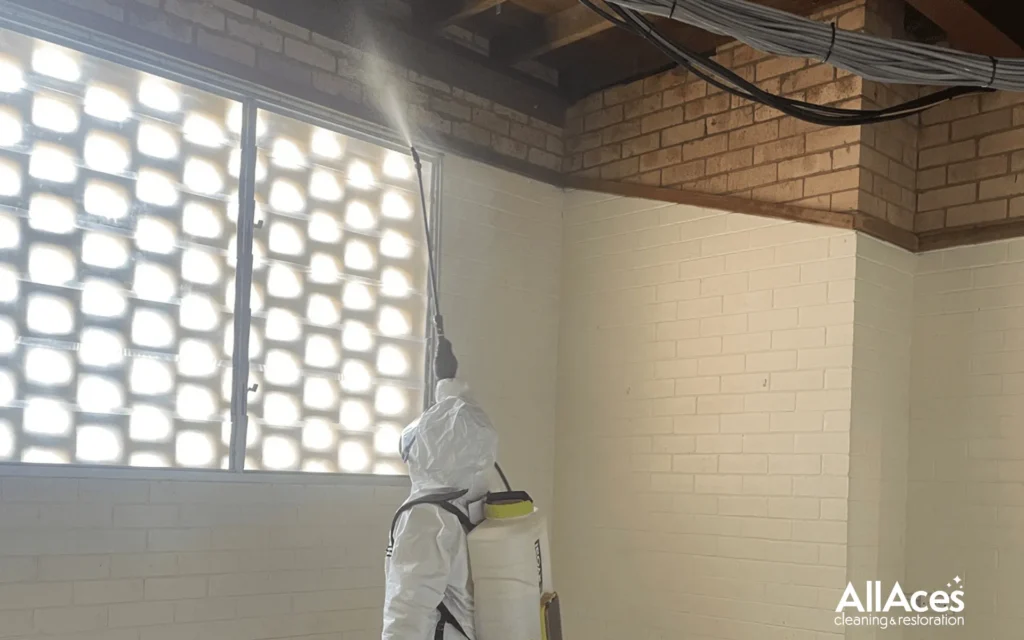
Black mould often grows in places you can’t see. That’s why relying on professional mould cleaning is the safest approach. Trained technicians use containment systems, HEPA filtration, and moisture detection tools to stop cross-contamination.
At this stage, engaging specialists in professional mould removal Sydney services ensures the problem is resolved at its root. This is especially important for strata buildings, workplaces, and rental properties where liability and compliance matter.
When Black Mould Is Beyond a DIY Clean
A patch smaller than a bath mat, on tile or painted plaster, with a leak you’ve already fixed, is usually a careful DIY job. Anything bigger than about a square metre, anything on plasterboard, carpet or ceiling insulation, or anything that comes back within weeks is not. Those signs mean the moisture is coming from inside the wall or roof, and scrubbing only moves the spores around.
In a workplace the call is made for you. WHS law makes an employer manage risks to health, mould included, so a visible outbreak in an office or tenancy needs an assessment, not a cleaner with a spray bottle.
What Happens After the Mould Is Gone
Removal is only half of it. The wet material has to be dried and checked with a moisture meter, anything too far gone gets cut out and replaced, and the original water source has to be fixed. Skip that last step and you’ll be reading this page again next winter.
Real Success Story: Sydney Office Emergency Response
A Sydney CBD office recently experienced severe water damage after a burst pipe over a long weekend. By Monday, black mould had spread across ceiling cavities and workstations.
The team from AllAces responded within hours, implementing full containment and air purification. Their mould remediation Sydney specialists eliminated the contamination, restored indoor air quality, and allowed staff to safely return within days, avoiding weeks of downtime.
Client Testimonial
“We were shocked at how fast mould spread through our building. AllAces handled everything professionally and explained every step. The difference was night and day. I wouldn’t trust anyone else for mould remediation.”
James R., Sydney Facility Manager
Getting Help in Sydney
If you’ve found black mould and it’s past the DIY line, our Sydney team works out of Chatswood and covers greater Sydney. We inspect first, find the water, and quote on what we find. See how we handle mould removal in Sydney, including the strata and rental questions that come up in older apartment blocks.
Frequently Asked Questions About Emergency Mould Removal in Sydney
How do I know if black mould is dangerous?
Black mould can cause respiratory issues, allergies, and skin irritation. Because it often spreads unseen, professional inspection is strongly recommended.
Can I remove black mould myself?
If you’ve found black mould in a small patch on a hard surface, yes, with gloves, a P2 mask and a detergent wash, not bleach. Anything on porous material or larger than about a square metre should be assessed first.
How quickly should mould remediation be done?
Immediately. Mould can spread within 24 to 48 hours, increasing health risks and repair costs.
What is involved in professional mould removal?
Inspection, moisture detection, containment, HEPA filtration, removal of affected materials, drying, and a check that the moisture is gone.
Do you offer emergency mould removal in Sydney?
Yes. Emergency response is available across Sydney, especially for homes, rentals, and commercial properties.
Is mould removal safe for commercial buildings?
Yes. Work areas are sealed off and run under negative air, so the rest of the building can usually stay open.
How long does mould remediation take?
Small jobs may take one day; extensive cases can take several days depending on damage.
Will mould come back after removal?
Only if the moisture does. Fix the leak, the ventilation or the condensation and it has nothing to grow on.
Is mould removal covered by insurance?
Sometimes. Coverage may apply when mould results from sudden water damage, supported by professional mould remediation Sydney reports.
Discover More Articles and Resources:
About the Author: Nick Roth
With over six years at AllAces and extensive training and experience in mould remediation, Nick Roth is our most experienced Mould Remediation specialist and a national technical cornerstone. He leads on the most complex mould testing and structural remediation challenges, bringing deep expertise in specialised equipment like Hydroxyl machines to support field teams across the country.