
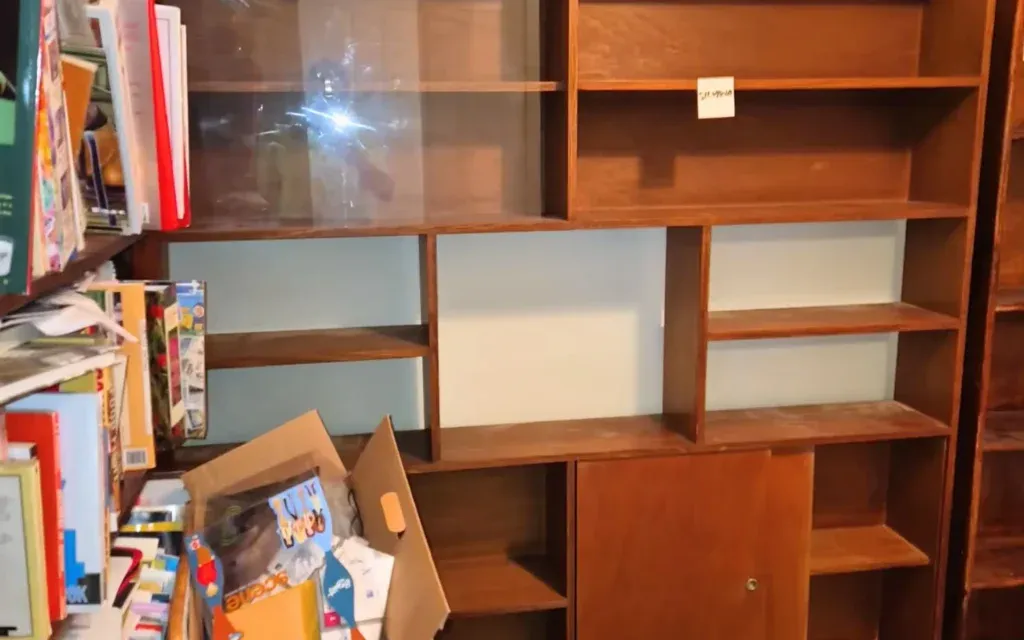
Most families clearing out a deceased estate have never done it before. The hardest part is often working out who should do what, not the lifting itself.
This guide compares the five ways deceased estate house clearing usually gets done in Australia: what each one costs, how long it takes, and what it leaves undone.
Key takeaways
- There's no single right way. Most families combine two or three of the options below.
- A skip bin is cheapest on paper but the slowest, and plenty of items can't go in one.
- Charities and auction houses are selective. They take the good pieces, not the whole house.
- A full-service crew costs more up front but sorts, removes and cleans in one visit.
- Check with the executor before anything leaves the house.
What deceased estate house clearing involves
Deceased estate house clearing means emptying a property after someone dies: sorting what the family wants to keep, selling or donating what has value, and disposing of the rest so the house can be sold, leased or handed back.
It’s a different job from the cleaning that follows. Clearing gets the contents out. Cleaning deals with what’s left behind: dust, stains, odour and anything hazardous. Our guide to what’s included in a deceased estate clean up covers that second stage task by task.
Before you start: settle three things
1. Who has authority
The executor, or an administrator if there's no will, decides what happens to the contents. Get their sign-off before anything is sold, donated or thrown out.
2. What has to be found first
Wills, bank statements, titles, keys, jewellery and cash turn up in odd places. Search before you clear, not after.
3. What the family wants
Let relatives choose keepsakes before any of the options below begin. Disputes start when items disappear before everyone has had a say.
Our deceased estate checklist covers probate and the order to do things in.
Your 5 options for clearing out a deceased estate
1. Family clearing with a skip bin
The family does the sorting and lifting, and a skip takes the rubbish.
- Rough cost: a 6 m³ general waste skip typically costs $480 to $900, around $650 on average. Smaller skips start from about $190 in Melbourne, $200 in Brisbane and $260 in Sydney.
- Time: usually several weekends for a full house.
- Suits: a small, tidy home with family nearby and fit to lift.
- Won’t handle: mattresses, e-waste, tyres, paint and chemicals often can’t go in a standard skip. Medicines go back to a pharmacy through the RUM project.
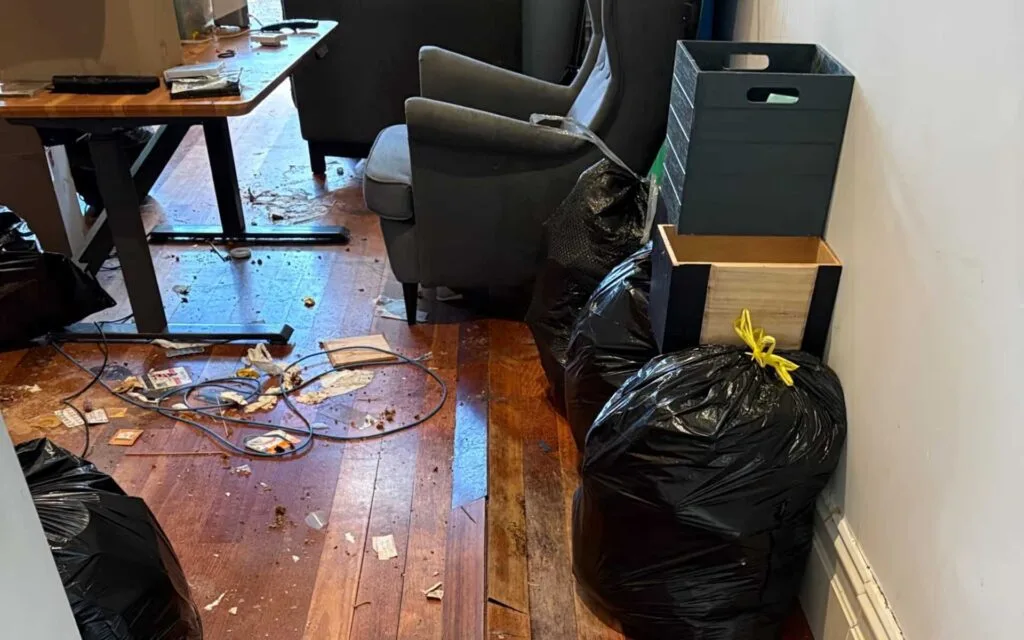
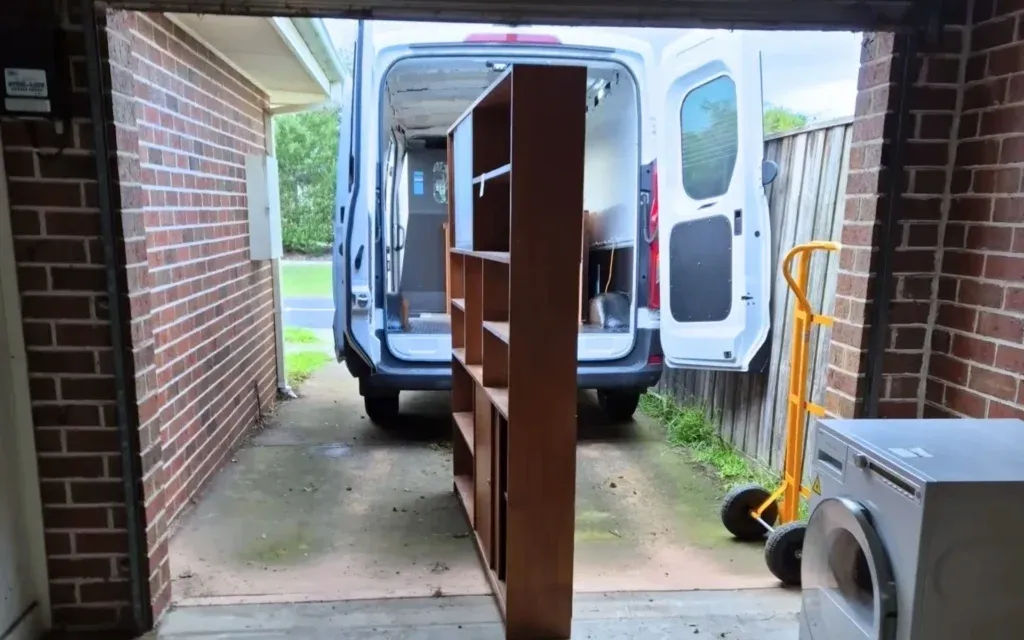
2. Rubbish removal by the load
A rubbish removal company sends a truck and crew, loads what you point to and takes it away.
- Rough cost: a quarter van load can start around $90 and a full van around $450. Some operators advertise from about $75 per cubic metre.
- Time: a few hours per load.
- Suits: bulky furniture and garage or shed junk once the family has finished sorting.
- Won’t handle: sorting, searching for documents, or cleaning. Most crews take what they’re shown and nothing else.
3. Charity collection and donation
Charities and community groups collect furniture and household goods in good condition.
- Rough cost: often nothing for good-quality items, though some charge for collection.
- Time: pick-up dates can be a week or more out, so book early.
- Suits: clean furniture, working appliances, linen and kitchenware.
- Won’t handle: anything worn, stained or broken. Ring first, because each charity has its own list.
4. Auction house, estate sale or second-hand dealer
An auctioneer, estate sale company or dealer sells the contents with value.
- Rough cost: usually a commission on what sells, agreed before the sale.
- Time: from a few days to several weeks, depending on the sale method.
- Suits: antiques, collections, tools, quality furniture and anything a valuer flags.
- Won’t handle: the leftovers. After the sale, whatever didn’t sell still has to go.
5. Full-service clearing and cleaning crew
One team sorts to the family’s instructions, removes everything, arranges donation and recycling, and cleans the house afterwards. If you’d rather hand the whole job to one team, our deceased estate cleaning services cover sorting, removal and the final clean.
- Rough cost: priced on volume, condition and access, with a written quote after photos or an inspection. At AllAces, inspections start from $120 and minimum work orders from $440.
- Time: a tidy one or two-bedroom home is often done in one to two days. A larger family home with decades of contents usually takes several days.
- Suits: families who live interstate, large or hoarded homes, and properties with odour, mould or hazards.
- Won’t handle: the family’s decisions. A good crew works to your instructions and sets aside anything that looks important.
If you’re weighing up providers, our guide to the estate clean out process lists the questions to ask before you book.
The five options side by side
Prices are indicative ranges from published Australian cost guides and operators (skip bins verified October 2026, van loads April 2025). Your quote will depend on volume, access and location.
What house clearing alone won't fix
Once the contents are gone, families often find the problems the furniture was hiding:
- Odour in carpets, curtains and plasterboard, especially after an unattended death or years of smoking.
- Mould behind wardrobes and under beds in rooms that were shut up.
- Sharps and medication in drawers, handbags and bathroom cabinets.
- Stains and pest damage under rugs and in the kitchen.
A skip and a removal truck don’t deal with any of these. Our guide to deceased estate hazards explains what to look for before anyone starts lifting.
How long does deceased estate house clearing take?
Most of the time goes on sorting, not removal. If the family has already taken what it wants, the clearing itself moves quickly. If every drawer needs checking for papers and valuables, it takes longer, and it should.
As a guide for a professional crew, a tidy one or two-bedroom home is often done in one to two days, and a larger family home with decades of contents usually takes several days. A family working weekends with a skip should allow several weeks for the same house.
If the property is sitting empty while you decide, read about leaving a deceased estate house empty before the delay costs more than the clearing.
How most families mix the options
In practice, few estates use only one option. A common order looks like this:
- Family takes keepsakes and important papers.
- A valuer or auction house takes anything with resale value.
- Charities collect the good furniture and household goods.
- A crew clears the rest, handles anything hazardous, and cleans the house.
Each step shrinks the next, which brings the final clearing cost down. If you are comparing estate cleanout services, our guide lists the questions to ask before you book.
Frequently asked questions
Can you clear a deceased estate house before probate?
Sorting and removing rubbish can often begin before probate is granted, but the contents belong to the estate until it’s settled. The executor should agree the plan first, and check with the estate’s solicitor before anything of value is sold or given away.
Who pays for deceased estate house clearing?
Reasonable clearing and cleaning costs are commonly paid from the estate. The executor should keep every invoice and receipt, and confirm with the solicitor if accounts are frozen while probate is pending.
What can't go in a skip bin?
Mattresses, e-waste, tyres, paint, gas bottles, asbestos and chemicals usually can’t go in a standard general waste skip, or attract extra fees. Recycling Near You, run by Planet Ark, lists local drop-off points.
Can we organise house clearing from interstate?
Yes. Many families never visit. Photos or a video walk-through let a crew quote, and the executor can sign off on what to keep, donate and remove before the team starts.
Where do you start when cleaning out the house of a deceased person?
Start with paperwork and valuables, not furniture. Confirm who has authority to act, usually the executor. Search the house for the will, financial papers, keys and jewellery, let family take keepsakes, then book donations and removal. Our deceased estate checklist sets out the full order.
Where to go next
- Deceased estate checklist: what to do with the house and belongings, in order
- Deceased estate cleaning cost: what moves the price
- Our deceased estate clear out service: sorting, clearing and cleaning with one team
How this guide was put together
Written by Joe Toghian, AllAces’ hoarding and squalor clean-up expert (VIC), who has completed IICRC training and works on estate and hoarded properties across QLD, NSW and VIC. AllAces is an IICRC Certified Firm. Meet the AllAces experts.
General information only, not legal or financial advice. Prices are indicative ranges from published Australian cost guides and operators, checked October 2026. Last reviewed October 2026. Next review April 2027.