
Most people picture meth decontamination as an intense clean. Stronger chemicals, more scrubbing, people in suits. That is the smallest part of it.
The work is closer to a controlled demolition with a laboratory attached. Things come out of the building, the shell gets treated, and an independent test decides whether it worked. Understanding that order is what lets you read a scope of works and tell whether it makes sense.
This covers what actually happens on site. What you should do before the crew arrives is a separate job, set out in preparing your property for meth removal.
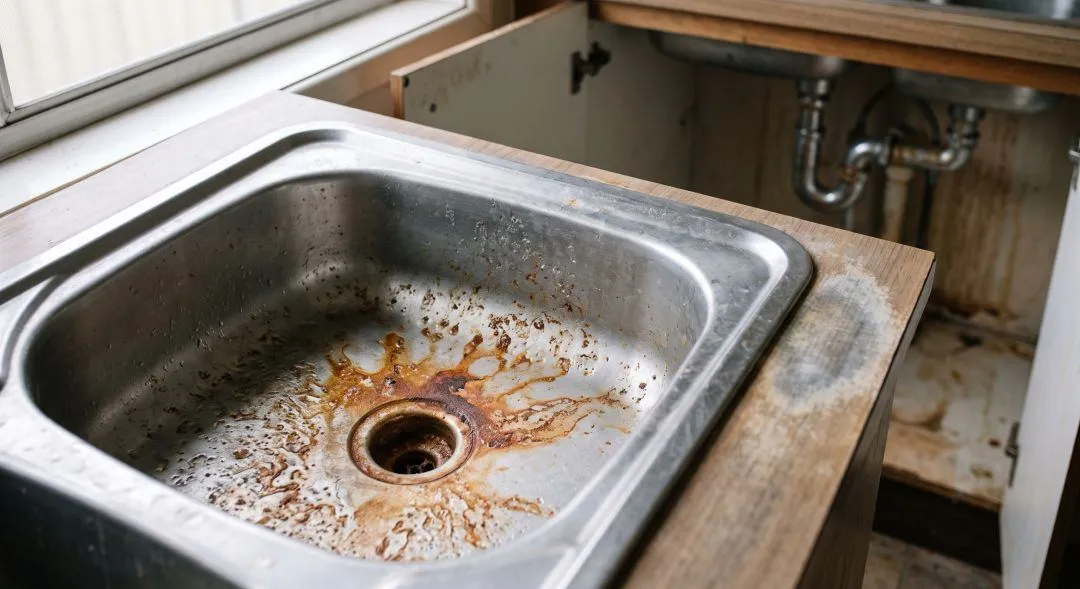
Visible staining is the easy part. Most of what a crew treats leaves no mark at all.
What decontamination removes, and what it cannot
Meth residue is removed two ways: porous materials that have absorbed it are cut out and disposed of, and non porous surfaces are washed with a chemical protocol and verified. There is no third option. Residue in porous material cannot be reliably washed out, which is why demolition is usually the biggest line on the invoice.
That single fact explains almost every decision a crew makes on site.
Porous means it goes
Gyprock, carpet and underlay, curtains, mattresses, upholstered furniture, unsealed timber, plasterboard ceilings. Residue moves into the material rather than sitting on it, and no wash reaches it consistently enough to pass a clearance test.
Non porous means it gets treated
Tile, glass, sealed timber, metal, laminate, painted and sealed surfaces. These hold residue on the surface where a chemical wash can lift it, and where a swab can confirm afterwards that it is gone.
The grey area is sealed surfaces that are not as sealed as they look. Painted gyprock, ageing polyurethane, grout lines, scuffed laminate. A good assessment tests those rather than assuming, because getting this call wrong is the most common reason a clearance test fails and the whole job gets repeated.
The sequence, start to finish
Containment goes up first
Affected zones are sealed with plastic and taped. Negative air pressure is established with scrubbers venting through HEPA filtration, so air moves into the work area and not out of it. Nothing else starts until this is in place.
Contents are triaged and removed
Everything moveable is sorted into salvage, launder or dispose, recorded as it goes. Disposal items leave as regulated waste with documentation, not in a skip.
Strip out
Carpet, underlay, curtains and the linings the assessment flagged come out. On heavier jobs this includes gyprock to a set height or in full, cornice, skirting and sometimes ceiling sheets.
HEPA vacuuming
Every remaining surface, including framing, is vacuumed with HEPA filtration to lift loose particulate before anything wet touches it. Washing first just turns dust into slurry.
Chemical wash
The triple wash protocol below. Applied to structural framing, remaining linings and every hard surface in scope.
HVAC and cavities
Ductwork, returns, registers and filters are cleaned or replaced. Wall and ceiling cavities are treated where the assessment calls for it, often with a dwell time foam that holds the neutralising agent against an overhead surface long enough to work.
Dry down and final HEPA pass
The structure is dried, then vacuumed again. Containment stays up through this stage.
Independent clearance testing
Fresh samples go to a laboratory. Only when readings come back below 0.5 µg/100cm² does containment come down and reinstatement begin.
Steps 1 and 8 are the ones people try to skip on price, and they are the two that make the rest of it defensible.
The triple wash, and why one pass is not enough
A triple wash is not three passes with the same bucket. Each stage does a different job.
| Pass | What it does | Why it is separate |
|---|---|---|
| First: detergent | Lifts surface soil, oils and film so the treatment can reach the substrate. | Residue sits under grime. Treating over the top of it wastes the chemistry. |
| Second: neutralising agent | Breaks down methylamphetamine residue on and just below the surface, held for a stated dwell time. | Dwell time is the active ingredient. Wiping it straight off does very little. |
| Third: rinse | Removes the spent solution and whatever it has mobilised. | Leaving it in place can redeposit residue as it dries, which shows up on clearance. |
Watch for dwell time in a scope of works. If a quote describes a chemical wash but never states how long the agent stays on the surface, you are being quoted a wipe down. On a positive property that is the difference between passing clearance and paying for the job twice.
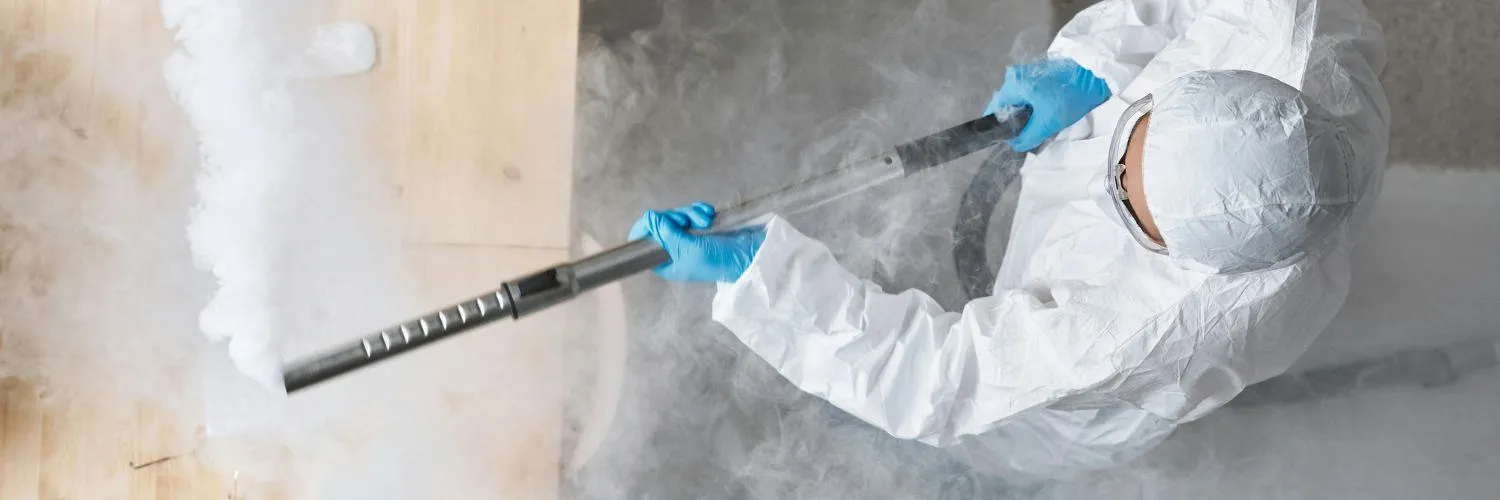
Framing washdown under containment. On a heavy job this is the stage that takes the longest.
Where residue hides that people forget
Return air grilles
Air is pulled through them continuously. They are frequently the highest reading in a house and the last place anyone thinks to sample.
Ceiling above a favoured seat
Smoke rises and settles. The ceiling directly above where someone sat night after night often reads higher than the walls around it.
Wardrobe and cupboard interiors
Enclosed, unventilated, rarely wiped. Residue concentrates and stays.
Exhaust fans and rangehoods
Both draw contaminated air through a motor housing that is almost never cleaned.
Cavity slider pockets
A sealed void with an air path through it. Easy to miss on a walk through, hard to treat afterwards.
Roof space and subfloor
On clandestine laboratory jobs especially, venting and spills put residue well outside the rooms that look affected.
None of this is exotic. It is simply where air went, and air is what moved the residue in the first place. A scope that only addresses the rooms with visible signs is a scope that will fail clearance.
What gets removed and what gets washed
| Material | Usual treatment | Why |
|---|---|---|
| Carpet and underlay | Removed | Deeply porous, and underlay holds residue even when the carpet reads low. |
| Gyprock linings | Removed on moderate and heavy jobs | Paper face and plaster core both absorb. Partial height removal is common on lighter jobs. |
| Structural framing | Washed, sometimes sealed | Timber can usually be treated and verified. Sealing is a decision the assessor makes, not a default. |
| Ceilings | Case by case | Sheet ceilings often come out. Concrete and hard set ceilings are treated in place. |
| Tile, glass, metal, laminate | Washed | Non porous, and straightforward to clear on a swab. |
| Kitchen and bathroom cabinetry | Depends on construction | Sealed carcasses can be treated. Raw chipboard and MDF edges usually cannot. |
| HVAC ductwork | Cleaned, filters replaced | Leaving it is the most reliable way to re-contaminate a property you just cleared. |
| Soft furnishings | Removed | Foam and fabric cannot be verified to a standard anyone will sign off on. |
The split between these two columns is what drives your invoice far more than the hourly rate does. Costs by contamination level are worked through in what meth decontamination costs.
How the work gets verified
A job that will hold up
- Containment and negative pressure documented, with photographs
- A scope tied to a named site characterisation report
- Waste disposal dockets for regulated material
- Clearance sampling arranged independently of the remediator
- Results reported in µg/100cm² from a NATA accredited laboratory
- A written clearance certificate naming the areas cleared
Warning signs
- No containment, or containment taken down before clearance results arrive
- A wash described with no dwell time
- Clearance testing signed by the same crew that did the cleaning
- Reinstatement started before the clearance result came back
- “Passed” with no number attached
- HVAC quoted as optional on a property with ducted air
How to read the clearance number when it arrives is covered in meth testing levels explained, and how the sampling itself is run in the meth testing process.
How long each stage takes
| Stage | Light contamination | Moderate | Clandestine laboratory |
|---|---|---|---|
| Containment setup | Half a day | Half to one day | One to two days |
| Contents and strip out | Half a day | One to three days | Three days to two weeks |
| Wash and treatment | One day | One to three days | Three days to two weeks |
| HVAC | Often none | Half to one day | One to two days |
| Dry down and final HEPA | Half a day | One day | One to three days |
| Clearance laboratory turnaround | 3 to 5 business days | 3 to 5 business days | 3 to 5 business days |
Which is why a job people describe as “a couple of days’ work” still takes two to three weeks end to end. The crew is quick. The laboratory is not, and there are two rounds of it.
Frequently asked questions
Can a property be decontaminated without removing gyprock?
On light contamination, often yes. Readings just above the threshold on a small number of surfaces can sometimes be resolved with washing and contents removal alone. Once residue has moved into linings across multiple rooms, washing stops being reliable and removal becomes the only route that clears a laboratory test.
What chemicals are used?
Australian remediators generally use a detergent stage followed by a proprietary neutralising or oxidising agent, then a rinse. What matters more than the brand is the protocol: the number of passes, the stated dwell time and whether the surface is verified afterwards. A product name on a quote with no method behind it tells you very little.
How is the rest of the building protected?
Sealed containment with negative air pressure, so air flows into the work zone and out through HEPA filtration rather than into clean areas. On unit blocks this extends to protecting common property, lift access and shared ductwork, which usually needs to be agreed with the body corporate before works start.
Does the roof space or subfloor need doing?
Only if the assessment says so. On smoking contamination it is often unnecessary. On a clandestine laboratory, where venting and spills are involved, it frequently is. This is a decision that should come from sampling, not from a contractor’s preference.
What happens if the clearance test fails?
A failed clearance almost always means the scope was drawn too narrowly, not that the cleaning was poor. The honest response is to re-sample, work out which areas were missed and extend the scope. Paying for an identical second pass over the same rooms rarely changes the result.
Who puts the property back together afterwards?
Usually a builder, not the remediation crew. Decontamination finishes at the clearance certificate. New linings, cornice, paint and flooring are a separate trade and a separate budget, and plenty of quotes stop before them. Confirm where the line sits before you sign.
The short version
Containment first, then contents, then strip out, then vacuum, then wash, then the air system, then dry down, then an independent test. Porous materials leave the building. Non porous surfaces get treated and verified. Everything else is detail.
When you read a scope of works, look for three things: containment with negative pressure, a wash protocol with a stated dwell time, and clearance testing arranged by someone other than the people doing the cleaning. A scope missing any of those is not cheaper. It is just less finished.
Need the work done properly? AllAces has been doing decontamination in Australia for more than 35 years across more than 65,000 jobs as an IICRC Certified Firm, with 24/7 response in Brisbane, Sydney, Melbourne and Ballarat. Call 1800 00 10 10, or get in touch here.
Stage durations above are typical across AllAces jobs and vary with property size, contamination level and access. The 0.5 µg/100cm² clearance figure is the national remediation trigger drawn from enHealth guidance. Last updated September 2026.
This is what happens on site. It is one part of meth contamination in Australian property, which covers the signs, the threshold and where owners stand legally.
There is work to do before the crew arrives, and a short list of things not to do: the owner’s checklist before meth removal.
Get a scope and a clearance report from one team: meth decontamination services. Call 1800 00 10 10.