

Safe soot disposal in Australia runs in a fixed order: assess for asbestos and treated timber residues, put on proper PPE, dampen and contain rather than sweep, double bag the fine material, separate salvageable contents from unsalvageable, classify the waste stream, then take it to a facility licensed to receive it.
The part most people get wrong sits in the middle. Soot is disturbed far more easily than it is captured, so disposal has to start with containment, not with a bin bag.
This page covers what soot legally is once a house has burnt, what you can put in a bin, what you cannot, and where the line falls between a job you can do yourself and one that has to go to a licensed operator. For fire affected properties with any real volume, professional soot cleaning handles remediation and compliant waste removal in one pass, which is usually why insurers prefer it.
Key Takeaways
- Soot is not ordinary dust. It is unburnt carbon plus acids, heavy metals and combustion by-products, and some of it is classified as hazardous waste.
- Never dry sweep and never use a household vacuum. Both aerosolise the fine fraction. Damp methods and HEPA filtration only.
- P2 respirators are the Australian minimum, alongside gloves, hooded coveralls and sealed eye protection.
- Do not spread ash around the property. SafeWork NSW and the Queensland Government both advise against it where CCA treated timber or asbestos may have burnt.
- Waste classification is a legal step, not a formality. NSW alone has six waste classes, and a misclassified load can be refused at the gate.
- Anything suspected of containing asbestos stops the job. That work goes to a licensed removalist, with no exceptions.
- Photograph and itemise before you dispose of anything. Throwing out damaged contents before the assessor sees them is one of the more expensive mistakes after a fire.
What Soot Actually Is
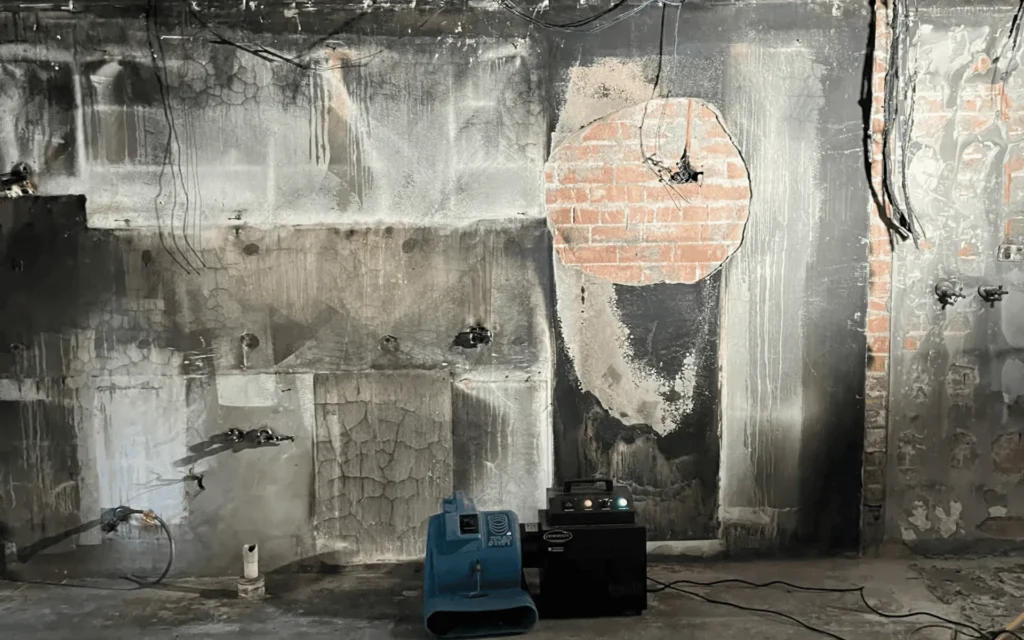
Soot looks like black powder and behaves more like a gas. Particles routinely sit below 2.5 micrometres, which means they travel, re-suspend and turn up in rooms the fire never reached. That is why disposal is a containment problem before it is a rubbish problem.
A structure fire burns a mixed fuel load. Timber, synthetic upholstery, PVC cabling, plastics, paint, foam, electronics, food. What settles afterwards is a composite of elemental carbon, polycyclic aromatic hydrocarbons formed by incomplete combustion, acidic chlorides and sulphates that keep corroding metal and etching glass long after the flames are out, heavy metals depending on what burned, and char that can carry arsenic and chromium where CCA treated timber was involved.
That last one is the part Australian homeowners underestimate. SafeWork NSW’s property hazards following a bushfire fact sheet lists ash from CCA treated timber alongside asbestos as a primary hazard, and advises against spreading ash around a property at all.
On the particle size question, Better Health Channel’s guidance on air pollution covers why material in that range matters for the lungs. The practical consequence for a clean up is simple: if you can see it moving, you have already lost control of it.
Before You Touch Anything: The Asbestos Question
If the building predates the mid 1980s, treat asbestos as present until proven otherwise. Fire damages asbestos containing material in the worst possible way. Sheeting cracks, becomes friable and mixes into the ash bed, and you cannot tell contaminated ash from clean ash by looking at it.
Queensland Government advice on returning home safely after a fire is direct: where asbestos is involved, a licensed asbestos removalist performs the clean up. Not the owner, not a general cleaner.
This matters for disposal in particular, because asbestos contaminated waste has its own transport rules, its own packaging requirements and its own approved receiving facilities. Putting it into the general fire waste stream is both illegal and dangerous.
Stop and get an assessment if you see fibrous cement sheeting in the debris, textured ceiling coatings, old vinyl floor backing, or corrugated fencing that has burnt.
Personal Protective Equipment: The Australian Baseline
| Item | Specification | Why it matters |
|---|---|---|
| Respirator | P2 minimum, fit tested | Filters fine particulate. A paper dust mask does not. |
| Coveralls | Disposable, long sleeve, hooded | Soot bonds to fabric and travels home with you |
| Gloves | Heavy duty, chemical resistant | Alkaline residues irritate and burn skin |
| Eye protection | Sealed goggles, not safety glasses | Airborne fines get behind open frames |
| Footwear | Sturdy and closed, with disposable covers | Sharp debris, and cross contamination on the way out |
Two additions from the field. Change gloves more often than feels necessary, because contaminated gloves are the main way soot ends up on clean surfaces. And bag your coveralls on site rather than wearing them to the car, which defeats the whole point of containment.
Better Health Channel’s page on chemicals in the home makes the same general point about ventilation and following product instructions, which applies to anything you use during the clean rather than just the residue itself.
How to Contain and Bag Soot
Close internal doors, seal unaffected rooms with plastic sheeting, and shut down the HVAC system so it stops distributing particles through the building.
An air conditioning system running during a soot clean up will spread contamination faster than any amount of sweeping.
EPA Victoria’s ash fact sheet recommends gentle sweeping of hard surfaces before wet mopping, and damp cloth work on lightly dusted areas.
SafeWork NSW adds the qualifier that matters: moisten ash to suppress dust, but do not use high pressure water sprays. Pressure washing an ash bed aerosolises exactly what you are trying to contain.
A commercial HEPA unit captures the fine fraction. A domestic vacuum passes it straight through the filter and exhausts it back into the room, which is worse than doing nothing.
Slow passes, no beater bar on soft surfaces, and empty the unit outside.
Ceilings, then walls, then horizontal surfaces, then floors. Anything else means cleaning the same floor twice and re-contaminating what you have already done.
This sounds obvious and is the step most commonly skipped, usually because the floor looks worst.
Heavy duty polyethylene. Gooseneck tie the inner bag, then bag it again. Fine soot escapes single bags through the tie itself, which is how a tidy job still leaves a black smear in the boot of a car.
Wipe the outside of each bag before it leaves the containment zone.
Contents and origin on every bag. If the load is later assessed as hazardous, unlabelled bags become a problem at the gate and you will be sorting them in a car park.
Keep a simple written log. It costs ten minutes and it is what an assessor or a waste facility will ask for.
Classification happens before the load moves, not when it arrives. That is the legal order and it is also the practical one, because a rejected load has to go somewhere.
The next section covers how the classes work.
Classifying Fire Waste
Waste from a fire is not automatically general waste. In NSW the EPA requires waste generators to classify material into one of six waste classes before it is transported or disposed of, and other states run comparable frameworks. What burned decides the class.
| Material | Likely stream | Notes |
|---|---|---|
| Untreated timber ash | General solid waste | Confirm there was no CCA timber in the load |
| Ash from CCA treated timber | Hazardous or special waste | Arsenic and chromium residues |
| Soot contaminated soft furnishings | General solid waste, usually | Bulk volume, book a skip |
| Fire damaged electronics | E-waste stream | Many landfills refuse these outright |
| Burnt paint residues, pre-1970s buildings | Hazardous, lead risk | Test before assuming |
| Asbestos containing debris | Regulated asbestos waste | Licensed removalist and licensed facility only |
| Extinguisher residue and chemicals | Hazardous waste | Never bag with general debris |
The NSW framework is set out on the EPA’s classifying waste page, and the responsibility sits with whoever generated the waste, which after a house fire means the owner.
Do not guess. Council transfer stations reject unclassified hazardous loads, and you will end up storing it on site while you sort it out. Where volume is large, rubbish removal that includes classification and licensed disposal takes that risk off you entirely.
Contents: What Goes and What Stays
Dispose without debate
All food, including sealed packaging and anything in a fridge that lost power. Cosmetics, medicines and baby products exposed to smoke. Mattresses and pillows with soot penetration, because foam keeps off-gassing.
Usually salvageable
Hard non-porous items, glass, ceramics, metals and sealed timber. Clothing and linen via specialist laundering rather than a home wash. Documents and photographs through specialist treatment.
The variable is time
Acidic residues corrode continuously. A chrome fitting cleaned in week one polishes up. The same fitting left a month pits permanently. Porosity and delay decide almost everything.
Document before you bin
Photograph and itemise everything with brand, model and serial where possible. Disposing of damaged contents before the assessor documents them is a common and expensive mistake.
For surface by surface technique on what stays in the building, our breakdown of soot removal from different surfaces is the companion to this page, and the timing argument is set out in the first 48 hours after a fire.
Health Risks, Stated Plainly
Soot exposure is not just unpleasant. The particulate fraction is respirable, the PAH fraction includes known carcinogens, and the alkaline residues are irritants on skin and eyes.
Short term effects reported after fire clean ups include coughing, headache, throat and eye irritation and skin rash. People with asthma or existing respiratory conditions are more susceptible, and children and older adults should be kept out of the area entirely while work is happening. We cover this in more depth in the health impacts of soot exposure.
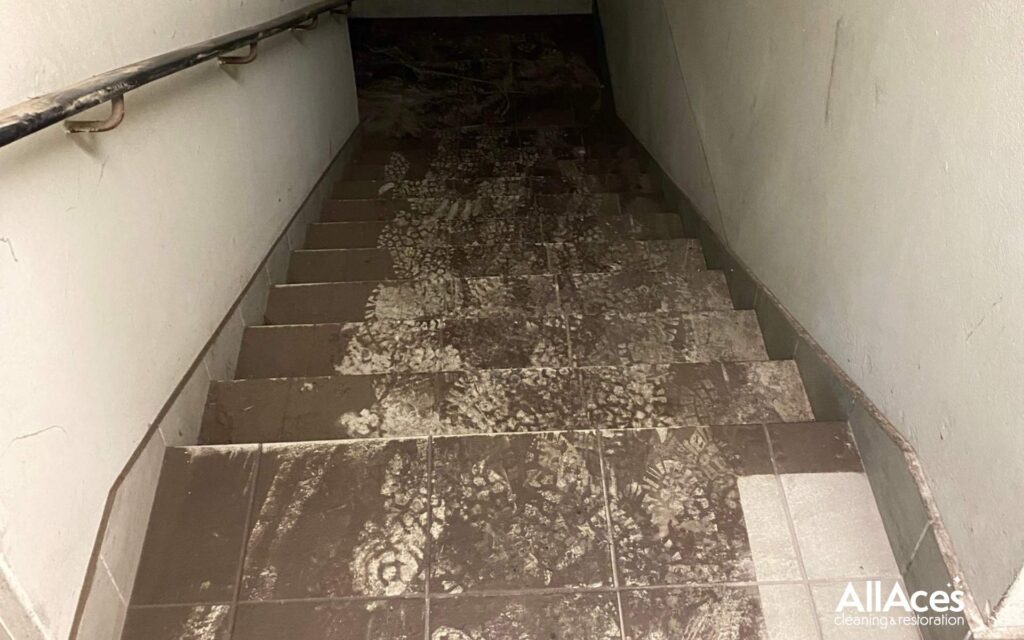
The practical takeaway is blunt. If you are not going to wear the PPE properly, do not do the work. Half protected is not partly safe, because the exposure that matters is the fraction you cannot see.
DIY Versus Professional Disposal
| Factor | DIY | Professional restoration |
|---|---|---|
| Small, contained, non-structural fire | Feasible with correct PPE | Often unnecessary |
| Asbestos suspected | Not permitted | Licensed removalist required |
| Insurance claim in progress | Risk of prejudicing the claim | Documented, itemised, insurer accepted |
| Waste classification | Owner's legal responsibility | Handled and documented |
| HEPA and negative air equipment | Hire cost and a learning curve | Standard kit |
| Contents triage | Emotional and inconsistent | Assessed against restorability |
| Time | Weeks of evenings | Days |
Commercial premises carry an extra compliance layer, which we cover in the soot cleaning guide for businesses.
Preventing Everyday Soot Build-Up
Not all soot comes from a fire. A surprising share of the deposits we are called to look at come from ordinary appliances running badly, and that kind is preventable.
Candles are the usual culprit in homes. A wick left long produces an incomplete burn and a fine black film that settles on cornices and above door frames, often mistaken for mould. Unflued gas heaters, poorly maintained wood heaters and blocked flues do the same thing at a larger scale.
Keep wicks trimmed, service heaters and flues before winter, and make sure combustion appliances are actually venting where they are meant to. If a room is developing black staining above heat sources and nothing has burned, that is an appliance problem and worth having checked rather than repainted.
Why Delay Costs More Than Anything Else
- Hours: acidic residues begin etching soft metals, and fingerprints in soot become permanent marks on painted surfaces.
- Days: glass, chrome and appliance finishes start to pit. Grout and unsealed stone take up staining that will not come back out.
- Two to three weeks: plastics yellow, porous materials stain permanently, and the odour bonds into structure rather than sitting on it.
- Any time: do not restore power to a fire affected circuit or appliance until a licensed electrician has tested it, regardless of how the soot looks.
- Throughout: keep a written waste log. It supports the claim and it is what a licensed facility will ask for at the gate.
Frequently Asked Questions
Can I put soot and ash in my household bin in Australia?
Small quantities of cool, untreated timber ash can generally go into general waste, bagged so it does not become airborne. Soot from a structure fire is different, because it may contain treated timber residues, lead or asbestos, and needs classification before disposal.
Is soot classified as hazardous waste?
It depends on what burned. Soot from a clean timber fire is usually general solid waste. Residues involving CCA treated timber, lead paint, chemicals or asbestos fall into hazardous or regulated waste streams under state EPA frameworks.
Can I vacuum soot with a normal vacuum cleaner?
No. Standard domestic vacuums pass fine soot particles through the filter and exhaust them back into the room, spreading contamination. Only HEPA filtered equipment is suitable, and damp methods come first.
How long can soot sit before it causes permanent damage?
Acidic residues begin etching within hours on soft metals and within days on glass, chrome and painted surfaces. Yellowing of plastics and permanent staining of porous materials typically sets in within two to three weeks.
Why Australians Choose AllAces After a Fire
IICRC-certified technicians
Trained in fire and smoke restoration, not general cleaning.
Classified, licensed disposal
Waste streams identified and documented, with disposal at facilities licensed to receive them.
24/7 emergency response
Because the first days after a fire decide what can be saved.
35+ years, 65,000+ jobs
Across Brisbane, Sydney, Melbourne and surrounds.
Where the fire has affected structure, contents and air handling together, disposal is only one part of the work. Fire damage restoration covers the sequence from make safe through to reinstatement, with the waste stream documented for the insurer along the way. You can meet the technicians who run these jobs.
Contact the AllAces team on 1800 00 10 10.
More on soot and fire damage. This page covers disposal and waste handling. For technique on walls and ceilings, read soot cleaning on walls and ceilings, and for surface by surface method see soot removal from different surfaces.
For the health side, see the health impacts of soot exposure. Commercial premises are covered in the soot cleaning guide for businesses, and the wider clean up sequence in the smoke damage cleanup process.
Soot cleaning, fire damage restoration and licensed rubbish removal. Call 1800 00 10 10.