Odour removal and smell removal can be a tricky task when not knowing where to start or where exactly these odours are coming from. The odour neutralisation process can involve numerous steps and assessment to fully deal with the source and remnants of many odours and unwanted smells.
There are a range of treatments for odour removal, dependent on the source of the smell including urine odour removal, smoke removal, pet odour removal, carpet odour removal and standard home odour removal.
There are a wide range of causes for unwanted smells in the home and business. As much as we love our furry friends, pets can be a major cause of odours in the home. Pet oils, urine and messes are often the cause of lingering odours, especially within carpeted homes and rooms. High traffic areas in the home, such as kitchens and bathrooms, also accumulate dirt and grime that emit unpleasant smells. Especially when taking a closer look inside the dishwasher or shower drain. Mould and dampness are another common cause of odour in an enclosed area, causing a musty smell with released fungi spores contaminating the air quality.
AllAces Cleaning & Restoration technicians have over 30 years’ experience when dealing with odour removal and formulating a complete odour elimination plan. We work specifically for each individual job and the best possible outcomes for each customer.
For more on this: Top 5 Vehicle Odour Removal Techniques and The Pros & Cons of DIY Vs Professional Carpet Odour Removal.

Key takeaways
- Neutralising destroys the odour. Masking just covers it, and the smell comes back.
- Find the source before treating anything. Most persistent smells have a physical cause.
- Four steps: assess, remove the source, treat the air and surfaces, then check it's gone.
- Ozone needs an empty space. Hydroxyl generators are designed to run with people around.
What is odour neutralisation?
Odour neutralisation is breaking down the molecules that cause a smell, so the smell is gone rather than covered up. It only lasts when the source of the smell has been found and removed first.
That’s the line between neutralising and masking odours with sprays and fresheners. Masking puts a stronger, nicer smell on top. Once it fades, the original is still there.
The odour neutralisation process at a glance
1. Assess
Find where the smell is coming from and how far it has spread.
2. Remove the source
Clean out or take out whatever is causing it. Usually the biggest part of the job.
3. Treat
Neutralise what's left in the air, the fabrics and the surfaces.
4. Follow up
Check the smell is gone, not just faded, before calling it done.
Step one: the assessment
Inside a home, the odour neutralisation process starts with finding the source, not covering it up. For odours that travel beyond the property, EPA Victoria publishes guidance for assessing odour.
The professional technicians of AllAces administer a tailored remediation strategy for each job, assessing your situation for all the variables that make each case unique. Often a multi-step process, you are kept appraised of each stage as it progresses and updated on any new developments. Each technician has access to a broad range of equipment and processes, adaptable to any source and space, allowing AllAces to offer you a vast range of odour removal solutions.
Step two: remove the source
No machine can out-run a source that’s still there. Depending on the job, that means extracting urine from carpet and underlay, cutting out mould-affected materials, cleaning off soot and smoke residue, or clearing out whatever has been left to rot.
It’s usually the biggest part of the job, and it’s what separates a lasting fix from a smell that creeps back once the treatment wears off.
Step three: the treatment
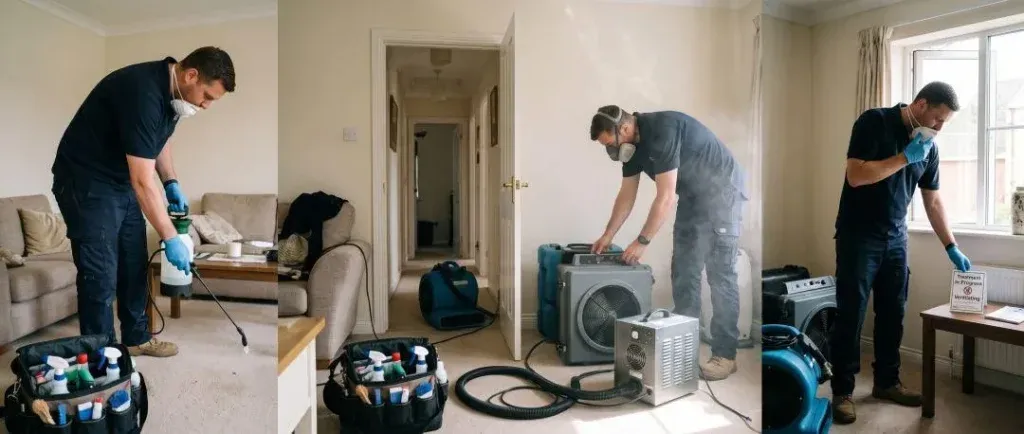
A selection of the most advanced and reliable equipment is utilised for odour elimination and multiple odour removal jobs. A range of treatment plans are devised to combat urine odour removal, smoke removal, pet odour removal and carpet odour removal. AllAces technicians also further specialise in the remediation of food odours, pesticide odours, mould odours, deceased site odours and pet oil odours.
A selection of AllAces’ most exciting equipment includes:
- Powerful and low material impact Hydroxyl generators
- Ozone generators for rapid odour removal
- VaporShark essential oil membranes
- Carbon and HEPA filtered air scrubbing
- Industry leading chemical and eco-friendly treatments
Hydroxyl generators
A hydroxyl generator is a device that uses UV-C to remove odours, volatile organic compounds (VOCs), virus particles, and bacteria particles from the air. This generator can be used for smoke removal, odours due to fire damage, water damage, mould, and pet odour removal. More on why we rely on hydroxyl generators.
Ozone generators
Ozone Generators are a type of air purification system that produces Ozone (O3) to help reduce the presence of airborne contaminants. Ozone is also used effectively in water purification, however, Ozone in air must reach high levels to remove air pollutants effectively. Therefore, professional use is highly recommended to ensure safe use of these generators. The US EPA warns that inhaled ozone can damage the lungs, so the space has to be empty while it runs.
VaporShark essential oil membranes
Primarily intended for delivering a fast, high-intensity treatment, VaporShark uses essential oil membranes to release an odour-neutralising dry vapor into the air. This vapor penetrates quickly to control and eliminate malodour caused by smoke, humidity, food, and biological odours.
Carbon and HEPA filtered air scrubbing
HEPA filtered air scrubbing is used to filter out gases, particles, or chemicals out of a particular area. It is generally used to improve indoor air quality by trapping airborne particles. A carbon filter can also be attached to end of the HEPA air scrubber, which is used to trap odours.
Step four: the follow-up
The AllAces approach is simple, if we say we can do it then we stand behind that commitment, every time, no question, until it’s done. We work closely with our clients to ensure satisfactory results in all odour removal situations and odour elimination.
Tending to odour removal requires access to specialised equipment and specific technical skill. Attempting to undertake odour removal measures yourself is often not only ineffective but could also compound the issue. Operating since 1988, AllAces Cleaning & Restoration can remediate even the most severe and stubborn of odours.
Frequently asked questions
How long does the odour neutralisation process take?
Anywhere from a single visit for a contained smell to several days when the source has soaked into carpet, underlay or building materials. The assessment sets the plan.
Is odour neutralisation the same as an air freshener?
No. An air freshener masks a smell with a stronger one. Neutralisation breaks the odour down, after what was causing it has been removed.
Will the smell come back after treatment?
Not if the source has been removed. A smell that returns usually means something is still there, like moisture feeding mould or urine in the underlay.
Can I neutralise odours myself?
Small, fresh smells, often yes: find the source, clean it out and ventilate. Ozone is the one to leave alone. It needs an empty space and trained handling.
Where to go next
Leave the job to the professionals and secure yourself an effective and long-lasting odour removal solution. Our professional odour removal team runs this process in homes and businesses, and our car odour removal service does the same for vehicles. Contact AllAces Cleaning & Restoration today on 1800 00 10 10.
How this guide was put together
Written by David Spencer from the odour jobs our team handles. AllAces is an IICRC Certified Firm working since 1988. Ozone safety: US EPA. Meet the AllAces experts.