Key Takeaways
- Buy protection before you buy cleaners. The gear that stops you getting hurt costs less than the gear that makes the house look better, and you need it first.
- A surgical mask does nothing here. You want a P2 respirator certified to AS/NZS 1716, and it only works if it seals to bare skin.
- Wear two gloves on each hand. A cut-resistant liner under a nitrile glove. Nitrile alone stops bacteria and stops nothing sharp.
- Hospital-grade disinfectant is a regulated claim in Australia. Look for an ARTG number on the label. No number, no claim you can rely on.
- Never take bleach into a house with animal urine. Urine is ammonia-rich, and bleach plus ammonia produces chloramine gas.
- Sharps go in an AS 4031 container, nothing else. Pharmacies sell them, and hospitals, community health centres and council bins take them back.
- Fire risk is the reason to start with a clear corridor. Fire and Rescue NSW links around 12% of NSW fire fatalities to properties affected by hoarding and squalor.
The Full Hoarder Cleaning Supplies List
Here is the whole kit in one table. The rest of this guide explains the choices that matter and the ones people get wrong.
Two things separate this from a generic shopping list. The protective equipment comes first, not last. And several items are tied to an Australian standard, because the version sold overseas is not always the version that protects you here.
| Category | What you need | Priority |
|---|---|---|
| Respiratory | P2 disposable respirators (AS/NZS 1716), plus spare filters if you are using a reusable half-face respirator | Buy first |
| Hands | Cut-resistant glove liners, 8 mil nitrile disposable gloves, one pair of leather rigger gloves for timber and metal | Buy first |
| Eyes | Sealed or indirectly vented goggles, anti-fog, not open safety glasses | Buy first |
| Body and feet | Type 5/6 disposable coveralls with hood, disposable overshoes, safety boots with a penetration-resistant midsole | Buy first |
| Sharps | AS 4031 compliant sharps container, long-handled tongs, a torch bright enough to see into a pile | Buy first |
| Access and reach | Extendable grabber, box cutter with a retracting blade, hand truck or sack trolley, moving straps | Second |
| Containment | Heavy-duty 200 micron rubble bags, builder's bags, lidded crates for sorting, painter's tape and a marker for labelling | Second |
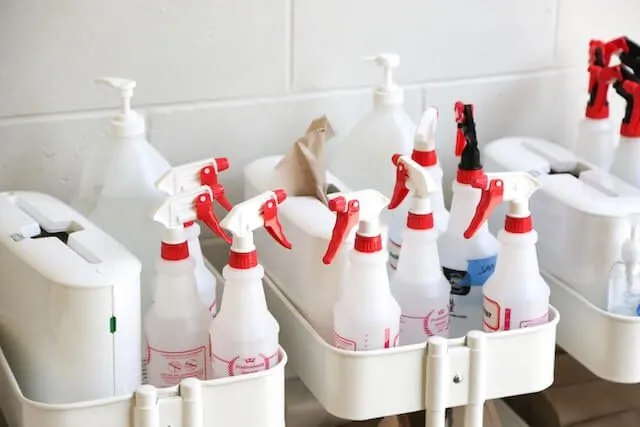
| Cleaning agents | Heavy-duty degreaser, ARTG listed hospital-grade disinfectant, enzyme cleaner, mould treatment, odour neutraliser | Third |
| Equipment | HEPA H13 vacuum, portable work lights, box fans for cross-ventilation, mop and two buckets, stiff broom, dustpan | Third |
| Welfare | First aid kit with waterproof dressings, alcohol hand rub, drinking water, a clean change of clothes in a sealed bag | Third |
Buy in This Order, and Here Is Why
Most supply lists are alphabetical or random. That is not how you should spend the money.
Safe Work Australia is blunt about where protective equipment sits in the pecking order. PPE is one of the least effective control measures, to be used after you have removed or reduced the hazard itself.
In a hoarded home you usually cannot remove the hazard first, because the hazard is the contents and removing it is the job. That inverts the normal logic. PPE stops being the last line of defence and becomes the first thing you buy.
1. Protect the person
Respirator, gloves, goggles, coveralls, boots. This is roughly two thirds of what you will spend and it is the part that cannot be improvised. Nothing else goes in the trolley until this is covered.
2. Create safe access
Lighting, a grabber, bags, crates and a sharps container. These let you cut a walkable path and open the room up before anything gets scrubbed. Cleaning a room you cannot safely stand in is pointless.
3. Clean the surfaces
Degreaser, disinfectant, enzyme cleaner and equipment. Buying a carton of disinfectant before you own a respirator is the most common mistake in DIY hoarder cleanup, and the least useful.
Respiratory Protection: What to Buy and What Will Not Do
A P2 disposable respirator certified to AS/NZS 1716 is the minimum. A surgical mask, a dust mask from the two dollar shop, or a fabric mask offers no meaningful protection against the mould spores, dried faecal dust and fine debris that a hoarded property throws into the air the moment you disturb a pile.
Check the mask itself, not the box. Australian-certified respirators carry the standard number printed on the mask, along with a licence number.
P2 disposable, AS/NZS 1716 marked. Buy a box, not a single mask. On a full day you will get through two or three, because a respirator that gets wet, crushed or clogged is finished.
If the job runs over several days, a reusable half-face respirator with P2 cartridges is cheaper and seals better. Buy spare cartridges at the same time, because running out mid-job ends the day.
Facial hair. A respirator seals against skin. Any stubble along the seal line breaks that seal, and the air takes the easy path around the edge rather than through the filter. A trimmed beard is not a solution.
The wrong shape. P2 respirators come in shapes, not just sizes. Do a seal check every time you put one on: cover the filter surface with both hands, breathe out, and feel for air escaping around the nose bridge or cheeks.
Step away and call someone licensed if you find any of the following.
- Suspected asbestos. Older sheds, garages, fibro linings, vinyl tile backing and old fencing in pre-1990 properties can contain it, and hoarded properties are full of stored building offcuts.
- Large-area mould. Widespread growth across walls and ceilings needs containment and negative air pressure, not a mask. That is professional mould removal territory.
- Dead animals, or decomposition odour. That means aerosolised biological material and requires biohazard decontamination.

Hands: The Two-Glove System
This is the single most useful thing on the page, and almost no supplies list mentions it.
Wear a cut-resistant glove liner with a nitrile disposable glove over the top.
The nitrile stops biological contamination and chemicals. It stops nothing sharp. A needle, a broken jar, a can lid or a nail goes through 8 mil nitrile as if it were not there.
The cut-resistant liner stops the sharp. It is porous, so it will absorb anything wet, which is why the nitrile goes over the top rather than under.
Buy nitrile at 8 mil or heavier. The 3 mil boxes sold for food handling tear on the first rough surface, and a torn glove you did not notice is worse than no glove, because it holds contaminated material against your skin.
Keep a pair of leather rigger gloves aside for moving timber, metal, whitegoods and furniture. Leather is wrong for anything wet or contaminated, and right for splinters and sheet metal edges.
Never put a hand into a pile you cannot see the bottom of
Use the grabber first. Move the top layer off, look, then reach.
Every hoarder cleanup injury story starts the same way, with someone reaching into a bag or a box blind. Needles, broken glass, corroded aerosol cans and rusted metal all sit under the surface layer, and none of them are visible from above.
The same rule applies to lifting. Do not pick up a bag by squeezing it to find a grip. Support it from underneath.
Eyes, Body and Feet
Three items where the cheap version and the correct version look almost identical on the shelf, and behave very differently on site.
Goggles, not safety glasses
Open-sided safety glasses stop something coming at you head on. They do nothing about dust falling from above when you shift a stack, which is the actual exposure in this work. Use sealed or indirectly vented goggles, and buy the anti-fog version, because you will be wearing them with a respirator.
Type 5/6 disposable coveralls
Hooded, and taped at the wrists and ankles. The point is not that they are tough. The point is that they come off at the door and go straight into a bag, so contamination does not leave the site on your own clothes.
Penetration-resistant midsole
Standard steel-cap work boots protect your toes from a dropped weight. They do not stop a nail or a needle coming up through the sole. In a hoarded property the floor is the hazard. Add disposable overshoes over the top in the worst rooms and change them at the room boundary.
Cleaning Chemicals: What Each One Is Actually For
Buy four categories, not fifteen products. Most of the cupboard at the hardware store is a variation on the same four jobs.
| Product | The job it does | Where it belongs | Watch out for |
|---|---|---|---|
| Heavy-duty degreaser | Cuts through the greasy film on kitchen surfaces, benches, walls and appliances | First pass on hard surfaces, before disinfecting | Alkaline. Gloves and goggles, and it dulls some finishes |
| Hospital-grade disinfectant (ARTG listed) | Kills bacteria and viruses on surfaces that have had contact with faeces, urine, blood or food waste | Second pass, after the surface is physically clean | Only works on a clean surface. Disinfecting over grime does nothing |
| Enzyme cleaner | Digests the organic residue behind urine and faecal odour in carpet, timber and porous surfaces | Odour sources and pet accident zones | Not a disinfectant and not a stain remover. Needs dwell time, often hours |
| Mould treatment | Kills and removes surface mould growth | Bathrooms, behind furniture, on stored fabric | Bleach whitens mould without killing the root. Use a proper fungicidal product |
| Odour neutraliser | Deals with airborne odour once the source is gone | Last, never first | Masking odour before removing the source just gives you a scented hoarded house |
What "Hospital-Grade" Means in Australia
This is the detail that separates an informed shopper from a marketing target.
In Australia, disinfectants are regulated by the Therapeutic Goods Administration, and products making specific claims must be included in the Australian Register of Therapeutic Goods before they can be supplied.
Practically, that means look for an AUST L or AUST R number on the label. A supermarket spray that says “kills 99.9% of germs” without one is a household-grade cleaner making a household-grade claim, and it is not what you want on a surface that has had faecal contact.
The rule people skip: clean, then disinfect. Disinfectant applied to a dirty surface is wasted, because organic material soaks up the active ingredient before it reaches anything living. Degrease, rinse, then disinfect and let it sit for the contact time printed on the label. That contact time is the whole product.
Bleach and animal urine
Bleach and ammonia produce chloramine gas. Everyone knows this in the abstract, and it still happens in hoarded properties more than anywhere else, because of one thing people forget.
Animal urine is ammonia-rich. A property with long-standing cat or rodent urine saturation has ammonia in the carpet, the underlay and the timber. Spraying bleach onto that is mixing the two, whether or not you meant to.
If you have used bleach in a urine-affected room and you can smell something sharp and chlorine-like, leave the room, open everything, and ring the Poisons Information Centre on 13 11 26. The same warning applies to any chlorinated bathroom cleaner, so read the label rather than trusting the colour of the bottle.

Waste, Containment and Sharps
The part of the kit that decides whether the job finishes in one go or stalls halfway with a skip the driver will not lift.
Heavy-duty rubble bags at 200 micron, not kitchen tidy bags. Hoarded contents are heavy, sharp and wet. A supermarket bin liner splits halfway to the skip and you clean the same floor twice.
Builder’s bags for bulky non-hazardous material.
Lidded crates for the keep pile. Cardboard boxes are the wrong tool, because they wick moisture and because they look like the clutter you are removing, which matters more than it sounds when the resident is watching.
Painter’s tape and a marker on every crate. Sorting decisions made at 9am are forgotten by 3pm.
Buy a sharps container that complies with AS 4031: rigid, yellow, black lettering, one-way opening. Pharmacies stock them and they cost a few dollars. Improvising with a drink bottle or a paint tin is a bad idea on a cleanup job, because you are carrying it through a house rather than storing it on a shelf, and a lid that pops is the injury.
NSW Health’s community sharps management program lists where full containers can be dropped off: hospitals, some pharmacies and medical centres, community health centres and council-provided public sharps bins. There is also a Needle Clean Up Hotline on 1800 633 353. Other states run equivalent schemes through their health departments and councils.
Pick sharps up with long-handled tongs, never gloved fingers. Point the sharp end away, drop it in, do not push it in, and never fill past the line on the container.
This catches people out at the worst possible moment, with a full skip and a driver refusing to lift it.
Skip operators will generally not accept contaminated waste: faecal material, needles, deceased animals, asbestos, chemicals, gas cylinders or paint. Those streams need separate handling and, in most cases, a licensed contractor.
If most of what you are removing is ordinary household contents, a skip works. If it is contaminated, it does not, and full contents removal through an operator licensed for that waste is the path. For the detail on separating and disposing of what comes out, our guide to responsible disposal during hoarder cleanup works through the streams.

Equipment Worth Hiring Rather Than Buying
HEPA H13 vacuum
The item people substitute and should not. A domestic vacuum without true HEPA filtration takes fine dust in through the head and blows it back out through the exhaust as an aerosol, which is worse than not vacuuming at all. Hire one.
Portable work lights
Hoarded properties are dark. Windows are blocked, bulbs are dead, and in many cases the power has been disconnected. You cannot see a needle on a floor you cannot see. Add a headlamp so your hands stay free.
Hand truck and moving straps
Furniture in these properties is often water damaged and much heavier than it looks. Box fans belong here too, one pushing air out a window rather than circulating it inside the room. Moving contaminated air around a house is not ventilation.
Where there are droppings, do not dry sweep and do not vacuum
NSW Health's guidance for cleaning up after rodents is to mop and clean surfaces with disinfectant or a bleach solution, wear gloves and waterproof protective clothing, and cover any cuts with a waterproof dressing.
Wet methods keep the material down. Dry methods put it into the air you are breathing. A domestic vacuum is the worst option of all, because it aerosolises the dust and distributes it through the room.
What the Standard Checklists Leave Out
Everything above appears somewhere on the internet. These do not, and they come out of actual job sites.
- A decant caddy. A small tote carrying the four chemicals decanted into labelled spray bottles. Carting five-litre drums up a cluttered hallway is how people fall.
- Spare respirator filters, or a second respirator. A P2 that gets wet or crushed is finished, and running out at lunchtime ends the day.
- Your phone in a resealable bag. It comes out of your pocket a hundred times with contaminated gloves on.
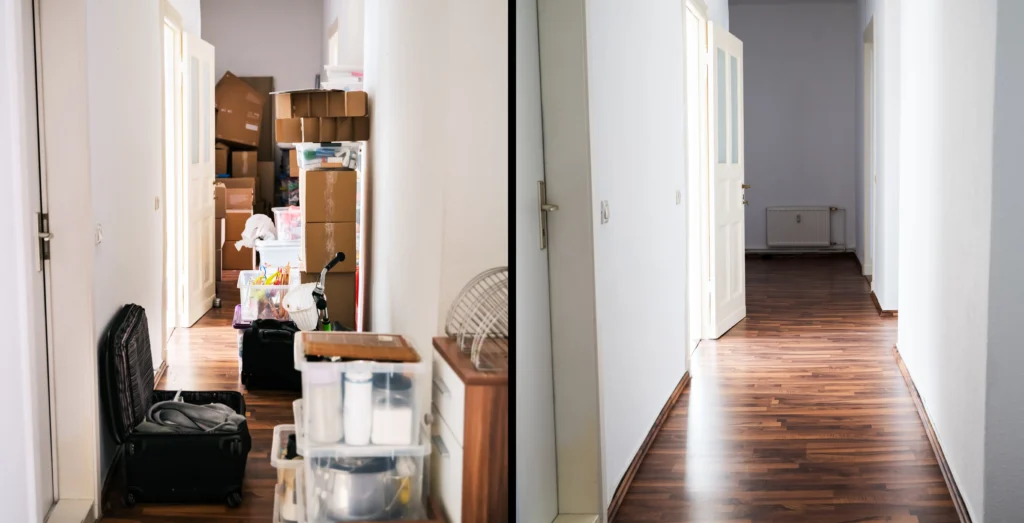
- A clear corridor before anything else. Cut a walkable path from the front door to the back door and keep it clear all day. This is a fire safety decision as much as a workflow one.
- A photo log. Photograph each room before you start. It matters for insurance, for property managers, and for the resident, who will often want evidence that possessions were handled with care.
- Drinking water and a clean change of clothes in the car. You should not eat, drink or touch your face inside the property, and you should not drive home in the clothes you worked in.
- Something to sit on outside. Breaks happen away from the building. If there is nowhere to sit, people stop taking them.
The corridor point is worth dwelling on. Fire and Rescue NSW attributes around 12% of NSW fire fatalities to properties affected by hoarding and squalor, and blocked exits are a large part of why. Your escape route matters on the day you are working there, not just for the people who live there.
DIY Kit Versus Professional Kit
A fair comparison, because the honest answer is that the gap is in equipment, not effort.
| DIY kit | Professional kit | |
|---|---|---|
| Respiratory | Disposable P2 | Fit-tested half or full-face respirator with changeable cartridges |
| Airborne control | Box fans, open windows | Negative air machines, HEPA air scrubbers, containment barriers |
| Vacuum | Hired HEPA vacuum | HEPA vacuums plus truck-mounted extraction |
| Chemicals | Retail ARTG listed products | Commercial concentrates, thermal fogging, ozone and hydroxyl treatment |
| Waste | Skip bin, general waste only | Licensed transport for contaminated and clinical waste streams |
| Sharps | Community sharps container | Clinical waste contract with tracked disposal |
| Indicative cost | Roughly $250 to $600 to assemble, plus hire | Included in the job |
Costs are indicative Australian retail as at September 2026 and vary by state and supplier.
The DIY kit handles a Level 1 or 2 property: cluttered, unpleasant, but structurally sound and biologically ordinary. It does not handle contamination, and no amount of buying more product changes that. For where the severity line sits, our breakdown of Level 4 hoarding clean up sets out what each level involves.

When Supplies Are Not the Answer
Buying better gear does not change the category of the job. Stop and get professional hoarding clean up services involved if any of these are present.
- Human or animal faecal contamination beyond an isolated spot. This is a squalor cleaning job with a different method and different waste handling.
- Needles in any quantity, or any evidence of drug use or manufacture.
- A deceased animal, or an odour you cannot account for.
- Mould across more than about a square metre, or mould you can smell but not see.
- Floors you are not confident will hold. Stacked paper and books are extraordinarily heavy, and water damage underneath them is common.
- An active infestation. Rodents and cockroaches need pest control treatment before or alongside the clean, not after.
- The resident is present and distressed. Sorting under duress damages both the relationship and the outcome.
Contamination rather than clutter is squalor cleaning work, and an active infestation needs pest control in the same visit rather than a follow-up. On the support side, our FAQ guide for families covers how to approach the conversation, and healthdirect has plain-language information on hoarding disorder and its treatment, where cognitive behavioural therapy is the recommended approach.
Animal hoarding sits in its own category, with both welfare and contamination dimensions, and we handle it separately in how hoarder cleaning services help animal hoarding situations.

Frequently Asked Questions
What cleaning supplies do you need to clean a hoarder house?
At minimum: P2 respirators certified to AS/NZS 1716, cut-resistant glove liners with 8 mil nitrile gloves over them, sealed goggles, disposable coveralls, boots with a penetration-resistant midsole, an AS 4031 sharps container, 200 micron rubble bags, a heavy-duty degreaser, an ARTG listed hospital-grade disinfectant, an enzyme cleaner and portable lighting. Buy the protective equipment before the cleaning products.
Is bleach good for cleaning a hoarder house?
Usually not, and in some rooms it is dangerous. Bleach whitens mould without killing it below the surface, and it reacts with the ammonia in animal urine to produce chloramine gas, which is a real risk in properties with long-standing pet or rodent contamination. An ARTG listed hospital-grade disinfectant used after degreasing does the job bleach is being asked to do, more safely.
What mask should I wear for hoarder cleaning in Australia?
A P2 disposable respirator carrying the AS/NZS 1716 marking. Surgical masks and fabric masks do not filter the mould spores and dried faecal dust involved. The respirator must seal against bare skin, so facial hair along the seal line stops it working, and you should do a seal check every time you put one on.
How much does a hoarder cleaning supplies kit cost?
Assembling a reasonable DIY kit in Australia typically runs somewhere between $250 and $600 at retail as at September 2026, with most of that in the protective equipment rather than the chemicals. HEPA vacuums and air movers are usually hired rather than bought. Costs vary by state and supplier.
Can I put hoarder cleanup waste in a skip bin?
Ordinary household contents, yes. Contaminated waste, no. Skip operators generally will not accept faecal material, sharps, deceased animals, asbestos, chemicals, gas cylinders or paint, and finding that out on collection day is expensive. If a meaningful share of the load is contaminated, it needs a contractor licensed for that waste stream.
Bringing It Together
The kit is not complicated. Protection, access, containment, then chemicals, in that order.
The two decisions that carry the most weight are the ones that cost the least: a properly sealed P2 respirator, and a cut-resistant liner under your nitrile gloves.
The one that carries the most risk is the chemical cupboard. Know what is ammonia-rich in the property before you spray anything chlorine-based, and check the label for an ARTG number before you trust a disinfectant claim.
And if the job turns out to involve contamination rather than clutter, no shopping list closes that gap.