
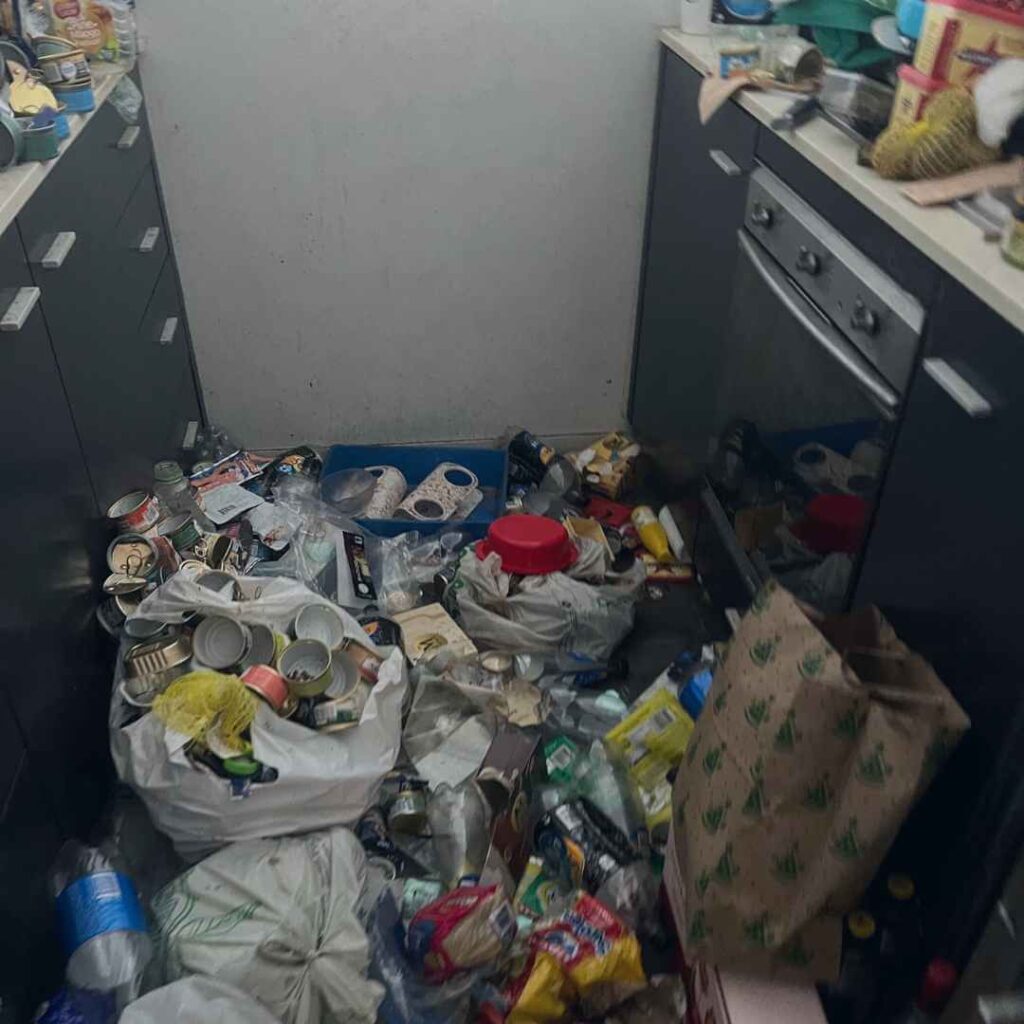
When someone you care about begins to hoard, the home environment often becomes a source of significant distress for everyone involved. To navigate these challenges, it is helpful to look beyond the physical clutter and understand the psychological drivers and hoarding mindset behind the behaviour.
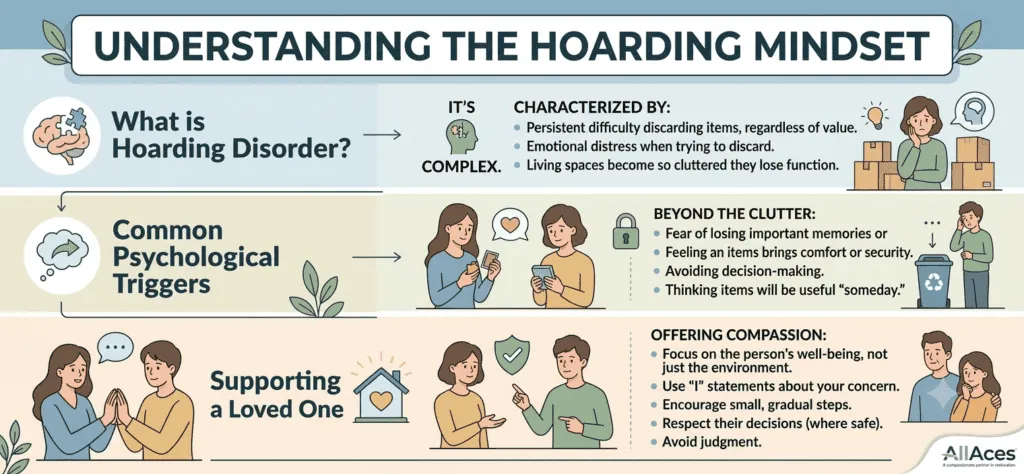
1. What are the common psychological triggers?
Hoarding is frequently linked to trauma, grief, or an intense fear of losing something that feels essential to one’s identity. Understanding that the items often represent a perceived safety net helps frame the conversation around the person’s well-being rather than just the objects in the room.
2. Why is ‘logical’ decluttering often ineffective?
For an individual with a hoarding disorder, discarding items triggers genuine neurological distress. Simply removing belongings without addressing the underlying attachment can cause the person to feel a deep sense of loss, which is why a professional hoarding cleaning process must always be rooted in psychological sensitivity.
3. How can families approach the conversation?
Focus on ‘I’ statements, such as “I am worried about your safety,” rather than focusing on the mess. Avoiding shame is crucial, as is listening more than you speak. If the environment has reached a state of extreme disrepair, it is often a sign that the individual needs support to manage a complex hoarder clean up.
4. What is the family’s role in the recovery process?
Families often feel pressured to be the primary organisers, but this can damage the relationship. A healthier role for families is to act as a supportive partner, helping the person identify their own goals for the home, even if the actual hoarder cleanup requirements are handled by those with the necessary emotional distance and expertise.
5. How does hoarding affect family dynamics?
It often leads to isolation and conflict, as family members may feel rejected when their help is refused. Recognising that the hoarding is a symptom of an internal struggle and not a reflection of the person’s love for their family can help reduce resentment.
6. Can hoarding be linked to other mental health conditions?
Yes, it is often comorbid with anxiety, depression, or executive function challenges. This means that a hoarding clean up services approach must prioritise the individual’s mental health state alongside the physical restoration of the property.
7. What if the person refuses help?
Forcing a change can sometimes lead to increased hoarding as a coping mechanism. Patience is vital. Often, the best path is to stay connected and emphasize that professional, commercial hoarder cleaning is about reclaiming the home’s safety and functionality for the occupant’s benefit.
8. How can we maintain progress once the home is clear?
The focus should be on creating small, manageable habits rather than a “clean house” mandate. Celebrate tiny victories, like clearing one small surface, to build confidence and reduce the anxiety associated with maintaining a living space.
9. Where can I find more information on the professional process?
While this guide focuses on the psychological aspects, we understand that questions often arise regarding the logistical side of property restoration. For a detailed breakdown of safety standards, remediation protocols, and technical assessments, please refer to our Hoarding Clean-Up Services page.
Need Further Guidance?
While this guide explores the complexities of hoarding, our professional team is available to provide expert support, confidential assessments, and tailored restoration solutions.
Murarrie, QLD 4172
Chatswood, NSW 2067
Dandenong South, VIC 3175