

Search for what fire damage cleanup costs in Australia and you will find plenty of numbers. Almost all of them come from restoration companies, and none of them come from a source you can check.
I went looking for a published Australian benchmark: a government figure, an insurance body average, a standards reference, anything. There isn’t one. The Insurance Council publishes catastrophe averages but nothing fire-specific. Rawlinsons and Cordell sit behind paywalls. No regulator tracks it.
So the useful version of this article is not a price list. It is the list of variables that decide your number, the cost lines that get left out of sums insured, and the parts of the process where a decision in the first 48 hours changes the total by a lot.
Key takeaways
- Nobody publishes a fire restoration price in Australia. Any quote given before an inspection is a guess, and a guess is always cheaper than a measurement.
- Underinsurance is the bigger financial risk than the quote. ASIC found structures destroyed in the 2003 ACT bushfires were underinsured on average by 40% of replacement cost.
- Smoke damage may be excluded. ASIC's MoneySmart lists smoke among possible home insurance exclusions. Read the wording before you assume.
- Asbestos is the single biggest unbudgeted driver. In buildings built or renovated before 1990 it is likely present, and heat causes it to crack and spall.
- Rebuild costs have moved fast. ABS data puts the average cost of a new house at $474,939 in 2024-25, up 37.8% in three years. A sum insured set in 2021 is badly short.
- Your insurer has deadlines. Under the General Insurance Code of Practice, a decision within 10 business days of having the information, and within 4 months of the claim regardless.
- Do not throw anything out. Fire and Rescue NSW is explicit: not until the assessor's inventory is done.
How much does fire damage cleanup cost in Australia?
There is no published Australian benchmark for fire damage cleanup cost. Price is set by scope, and scope is set by an inspection: how far smoke travelled, how many porous materials are affected, whether firefighting water caused secondary damage, whether asbestos is present, and whether contents can be restored or must be replaced. A credible quote follows an assessment, never precedes one.

Why there is no price list, and why that is the honest answer
Two kitchen fires of identical size can be an order of magnitude apart in cost. The variable is not the fire. It is where the smoke went.
Australia’s Productivity Commission reports that in 2024-25, 76.4% of structure fires were confined to the room or object of origin. Which means close to a quarter were not, and that is the population where restoration bills get serious, because smoke residue does not respect the boundary of the burnt room. It moves through cavities, ducting and doorways and deposits on every cool surface it reaches.
Then there is water. Fire suppression puts a large volume of water into a building in a short time, and that creates a second, simultaneous job. If it is not dried properly you have a mould claim on top of a fire claim within a fortnight.
So a company that quotes a flat figure over the phone is either guessing high to protect themselves or guessing low to win the job, and both cost you money later. Ask for the scope of works, not the number.
The seven things that actually move the number
1. What burned, not how much
Protein fires from cooking leave a thin, greasy, ferociously persistent film that coats everything and smells for months. Synthetic materials leave acidic, corrosive soot that etches metal and plastic. Natural timber leaves a drier residue that is comparatively easy. The material determines the cleaning method, and the method determines the labour hours.
2. How far the smoke travelled
This is the single biggest multiplier. A contained fire with sealed doors might affect two rooms. The same fire with the air conditioning running distributes residue through the whole building via ducting, and the HVAC system then needs assessment and cleaning in its own right.
3. Porous materials
Carpet, underlay, insulation, plasterboard, curtains, mattresses and upholstery hold residue in a way hard surfaces do not. Queensland Health's guidance on cleaning a smoke-affected home concedes the point: it is almost impossible to get the smell of smoke out of feather pillows or foam. That is a government department telling you some contents are a replacement line, not a cleaning line.
4. Firefighting water
Extraction, structural drying, moisture monitoring and the risk of mould if any of it is skipped. On most jobs of any size this is a parallel workstream, not an afterthought.
5. Asbestos, in anything built before 1990
The cost driver nobody budgets for. Asbestos Queensland notes asbestos products are likely to be found in buildings constructed or renovated before 1990, and that asbestos-containing materials can crack or spall from the heat of a fire. The risk is low unless the debris is significantly disturbed, and clean-up is exactly when that happens. Where present, a licensed asbestos removalist is required.
6. Contents, and whether they get restored or replaced
Contents restoration is often cheaper than replacement and often not. It depends on the item and the residue. This is also where claims stall, because the inventory takes time and the settlement depends on it.
7. Access, height and occupancy
Multi-storey, strata, commercial premises that need to keep trading, heritage constraints, restricted street access. All of it turns into hours.
Our guide to preventing secondary damage covers where the water side goes wrong.
The cost lines people forget to insure
ASIC’s MoneySmart names the usual omissions directly: demolition, site clean-up, temporary accommodation, council fees and professional services. Here is the fuller version for a fire.
| Line item | Why it gets missed | Why it matters |
|---|---|---|
| Make safe and site security | People assume the insurer handles it automatically | The owner is responsible for securing the site. Boarding up, tarping and temporary fencing are real costs from day one |
| Debris removal and disposal | Treated as part of the rebuild | Fire waste is not general waste. Volume and classification both drive the price |
| Licensed asbestos removal | Owners of pre-1990 homes rarely know it is there | Adds a licensed trade, containment and a separate waste stream to the job |
| HVAC assessment and cleaning | Reads like an upsell on the quote | Ducting distributes residue. Skipping it is the most common reason odour returns after a clean |
| Contents restoration and storage | Assumed to be covered by contents cover alone | Packing, off-site cleaning and storage are their own scope, and take weeks |
| Temporary accommodation | Assumed unlimited | MoneySmart notes these benefits are typically limited to a percentage of your sum insured or a set period |
| Code and compliance upgrades | Nobody expects to rebuild to current code | A rebuild must meet today's requirements, not the ones from when the house was built |
| Professional fees | Invisible until the invoice | Hygienist, engineer, building certifier, council approvals |
Worth checking your policy for specifically: MoneySmart lists smoke among possible home insurance exclusions, alongside damage caused by the sea, landslides and power failures. Fire in a neighbouring property, or a smouldering appliance that never ignites, can leave you with genuine smoke contamination and a contested claim. It is one line in a PDS and almost nobody reads it before they need it.
Underinsurance is the real financial risk, not the quote
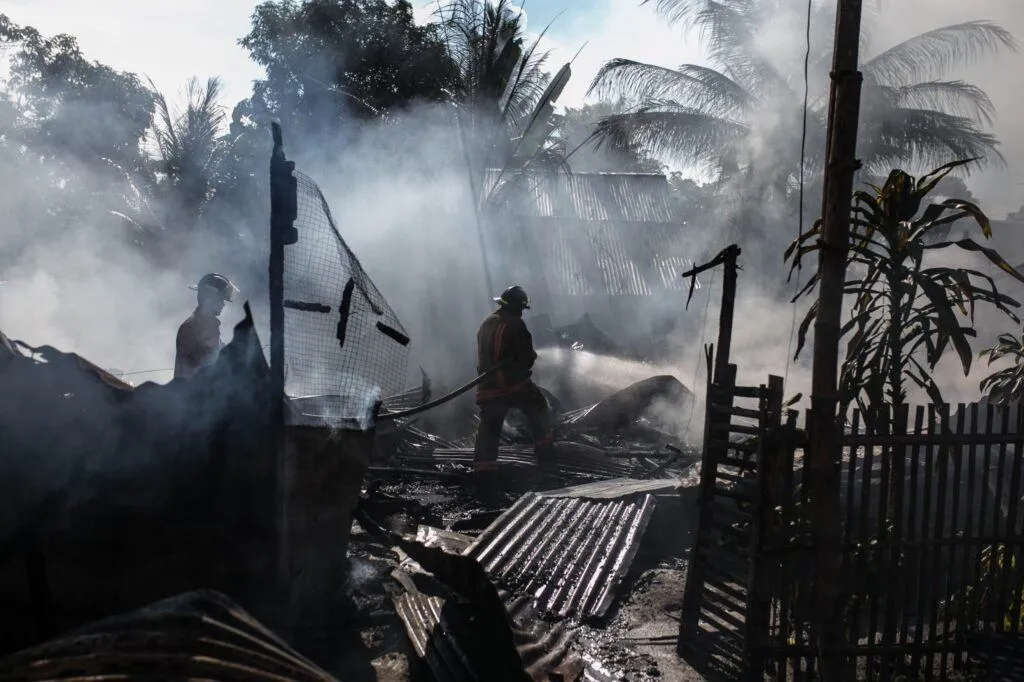
Most people worry about the restoration invoice. The bigger exposure is usually the gap between what your building is insured for and what it costs to put back.
ASIC’s landmark report on home building underinsurance found that structures destroyed in the 2003 ACT bushfires were underinsured, on average, by 40% of replacement cost. That report is from 2005 and the surveys behind it are older still, so treat it as historical rather than current. What has not aged is the mechanism.
Here is the current pressure on that mechanism. ABS Building Activity data puts the average cost of a new house in Australia at $474,939 in 2024-25, up from $344,656 in 2021-22. That is a 37.8% increase in three years. If you set your sum insured in 2021 and have been rolling it over with a small CPI bump, you are not close.
Two caveats I want to be straight about. That ABS figure is the value of building work for new houses and excludes land. It also excludes demolition, site clearance, debris removal, asbestos removal, professional fees and council approvals, all of which a post-fire rebuild needs. So a rebuild costs meaningfully more per square metre than a new build on a clear block, not less.
The clause that catches people: MoneySmart notes most policies contain a coinsurance clause that applies whenever there is underinsurance below roughly 80% to 90% of replacement value. Averaging clauses limit the insurer’s liability to the proportion of the replacement value that was actually insured. In plain terms, a partial loss on an underinsured building can be settled at a proportion, not in full.
What your insurer owes you, and by when
These come from the 2020 General Insurance Code of Practice, which subscribing insurers are bound by. Knowing the timeframes is the cheapest leverage you have.
10 business days
To decide on your claim, once the insurer has all relevant information and has completed its enquiries.
4 months
The outer limit for a claim decision, regardless. It extends to 12 months for an Extraordinary Catastrophe.
20 business days
The maximum interval between progress updates on your claim.
5 business days
To tell you a loss assessor has been appointed and what their role is. Also the window for an advance payment where you demonstrate urgent financial need.
12 months
After a declared Catastrophe, you can request a review of your claim if the assessment was not complete or accurate. Twelve months from finalisation.
30 calendar days
For the insurer to decide on a complaint. After that, AFCA.
One correction, because it is repeated everywhere: the Code does not set a make-safe timeframe. The words “make safe” do not appear in it. The Insurance Council defines a make safe as immediate rectification works to prevent further damage or make the site safe to visit, but there is no Code-mandated deadline attached. Do not plan around one that does not exist.
The independent review of the Code, reporting in December 2024, recommended that cash settlement offers should provide actionable quotes and should compensate for the transfer of risk to the consumer. That phrase is worth remembering if you are offered a cash settlement. Taking the money means taking on the risk of variations, and the panel that reviewed the Code thinks that should be priced in.
The first 48 hours decide a chunk of your budget

Soot is not inert. The Canadian Conservation Institute documents it discolouring porous surfaces and accelerating metal corrosion, and notes that soot entrenched in cracks often cannot be removed at all. Every day it sits, more of the job moves from cleaning to replacement.
Do this
- Notify your insurer immediately. Fire Rescue Victoria and Queensland Fire both say to do this before anything else.
- Photograph and video everything before it is touched.
- Make an inventory of damaged goods.
- Secure the site against weather, theft and vandalism. That obligation sits with the owner.
- Have gas, electricity and water checked by a licensed tradesperson before reconnection.
- Ventilate where it is safe to do so.
Not this
- Do not throw anything away before the assessor's inventory. Fire and Rescue NSW is explicit about it.
- Do not hire cleaners or trades before speaking to your insurer. Queensland Fire says the same.
- Do not re-enter until the officer in charge says it is safe. Fires restart from smouldering remains.
- Do not scrub soot. Blot. Rubbing drives residue further into porous material.
- Do not disturb suspected asbestos debris. Keep it wet and call a licensed removalist.
- Do not reconnect appliances that were near smoke or water.
A health note that is also a budget note: Safe Work Australia identifies polycyclic aromatic hydrocarbons as products of combustion of organic material, with several classified as carcinogenic, and notes they enter the body through inhalation and skin absorption. NSW Health also warns about ash from burnt copper chrome arsenate treated timber. This is why PPE and controlled handling are line items rather than optional extras.
Our breakdown of the first 48 hours after a fire goes through the sequence in detail, and the DIY dos and don’ts covers the expensive mistakes.
Five questions to ask before you sign anything
1. Is this quote based on an inspection?
If it arrived before anyone walked the building, it is an estimate of an unknown. Expect variations.
2. What standard do you work to?
ANSI/IICRC S700, the standard for professional fire and smoke damage restoration, was published in January 2025. There is no Australian Standard for fire and smoke work, so a contractor's adherence to S700 is the only benchmark available.
3. What is your scope for the HVAC?
ANSI/IICRC S590 covers assessment of HVAC systems after a water, fire or mould event. If ducting is not in the scope, ask why.
4. Who is drying the building?
Australia does have a national standard for the water half: AS-IICRC S500, published by Standards Australia on 1 April 2025. Ask whether the drying scope is written to it.
5. What happens to contents?
Restored, replaced, stored, or written off. Get it in the scope of works, because it is where settlements stall.
And one for your insurer
Ask for the scope of works in writing. The Code requires the insurer to explain how a scope of works operates on a home building claim.
Frequently asked questions
How much does fire damage cleanup cost in Australia?
No Australian government, regulator or standards body publishes a benchmark, and every figure circulating online traces back to restoration company marketing. Cost is driven by how far smoke travelled, what burned, how much porous material is affected, firefighting water damage, whether asbestos is present, and the contents scope. A credible quote follows an inspection.
Does home insurance cover smoke damage without a fire?
Not always. ASIC’s MoneySmart lists smoke among possible exclusions in home insurance policies. Damage from a neighbouring fire, a smouldering appliance or bushfire smoke ingress may be treated differently to damage from a fire at the insured property. Check the exclusions section of your product disclosure statement rather than assuming.
How long does an insurer have to decide on a fire claim?
Under the 2020 General Insurance Code of Practice, the insurer must decide within 10 business days of having all relevant information and completing its enquiries, and within 4 months of receiving the claim in any case. That extends to 12 months where the claim arises from an Extraordinary Catastrophe. Progress updates are required at least every 20 business days.
Why does asbestos make fire cleanup so much more expensive?
Asbestos products are likely present in Australian buildings constructed or renovated before 1990, and heat causes asbestos-containing materials to crack and spall. Queensland Government guidance notes the risk is low unless debris is disturbed, and that clean-up and demolition are exactly when that happens. Where present, a licensed asbestos removalist, containment and a separate hazardous waste stream are required.
Should I clean up soot myself to save money?
Generally no, and it can cost you more. Soot is abrasive and acidic, and rubbing drives residue deeper into porous materials, which converts a cleaning line into a replacement line. Safe Work Australia notes combustion produces polycyclic aromatic hydrocarbons, several classified as carcinogenic and absorbed through skin as well as lungs. Fire services also advise not discarding anything before the assessor completes an inventory.
Am I likely to be underinsured?
Possibly, particularly if the sum insured has not been reviewed recently. ABS data shows the average cost of a new house rose 37.8% in the three years to 2024-25. Sums insured also frequently omit demolition, site clean-up, debris removal, asbestos removal, council fees and professional services, all of which a post-fire rebuild requires. Most policies also carry a coinsurance clause below roughly 80% to 90% of replacement value.
The bottom line
Budgeting for fire damage cleanup is not really about finding a price. It is about controlling the two things that decide the price.
The first is time. Every day soot sits, more material moves from the cleanable column to the replaceable one. The second is scope. A written scope of works based on an inspection is the document your whole claim runs on, and it is the one people never ask to see.
Do those two, read your exclusions before you need them, and review your sum insured against what building work actually costs now rather than what it cost when you took the policy out.
Dealing with a fire right now? AllAces has run fire and smoke restoration across Brisbane, Sydney and Melbourne for more than 35 years, with IICRC-certified technicians, 24/7 response and direct insurer liaison.
Where to go next
This article covers the money. The rest of the cluster covers the work.
- The first 48 hours after a fire: why this window changes the restoration outcome.
- Timeline of a fire damage clean: where the weeks actually go.
- Soot cleaning on walls and ceilings: usually the largest single line item.
- Fire damage cleaning methods: what each technique is for, and what it costs in labour.
- Fire damage restoration services: assessment, make safe, structural cleaning and reinstatement.
- Water damage restoration: firefighting water is half the job on most fires.
Sources: Productivity Commission, Report on Government Services 2026; Insurance Council of Australia, 2020 General Insurance Code of Practice (October 2023 update) and post-disaster guidance; Independent Review of the 2020 General Insurance Code of Practice, Final Report (December 2024); ASIC Report 54, Getting home insurance right (2005); ASIC MoneySmart; Australian Bureau of Statistics, Building Activity, Australia (December 2025 quarter); Asbestos Queensland; Emergency Management Victoria; NSW Health; Queensland Health; Safe Work Australia; Queensland Fire Department; Fire and Rescue NSW; Fire Rescue Victoria; Canadian Conservation Institute; IICRC. Last reviewed September 2026.