
Key takeaways
- The five signs of mould in your car are a musty smell, visible spots, allergy symptoms while driving, fogged windows or damp carpet, and water stains or leaks.
- Almost all car mould starts with trapped water: a blocked drain, a tired door seal, wet gear left inside, or flood water.
- A smell that gets worse when the air conditioning is on usually means mould in the AC system, not just the cabin.
- Small spots on hard trim can be cleaned at home. Mould in seat foam, carpet underlay or the AC needs professional vehicle decontamination.
- After a flood, treat the car as contaminated until it’s been checked.
The 5 Signs of Mould in Your Car
Cars are sealed boxes that trap moisture, so they can grow mould just like a damp bathroom. Here are the signs of mould in your car, in the order most people notice them.
1. A musty smell that won’t go away
An earthy, stale smell is usually the first warning. It means mould spores are already in the air you’re breathing on every drive.
If it gets stronger with the air conditioning on, the mould is probably on the AC evaporator or in the ducts.
2. Visible spots on seats, carpet or the roof lining
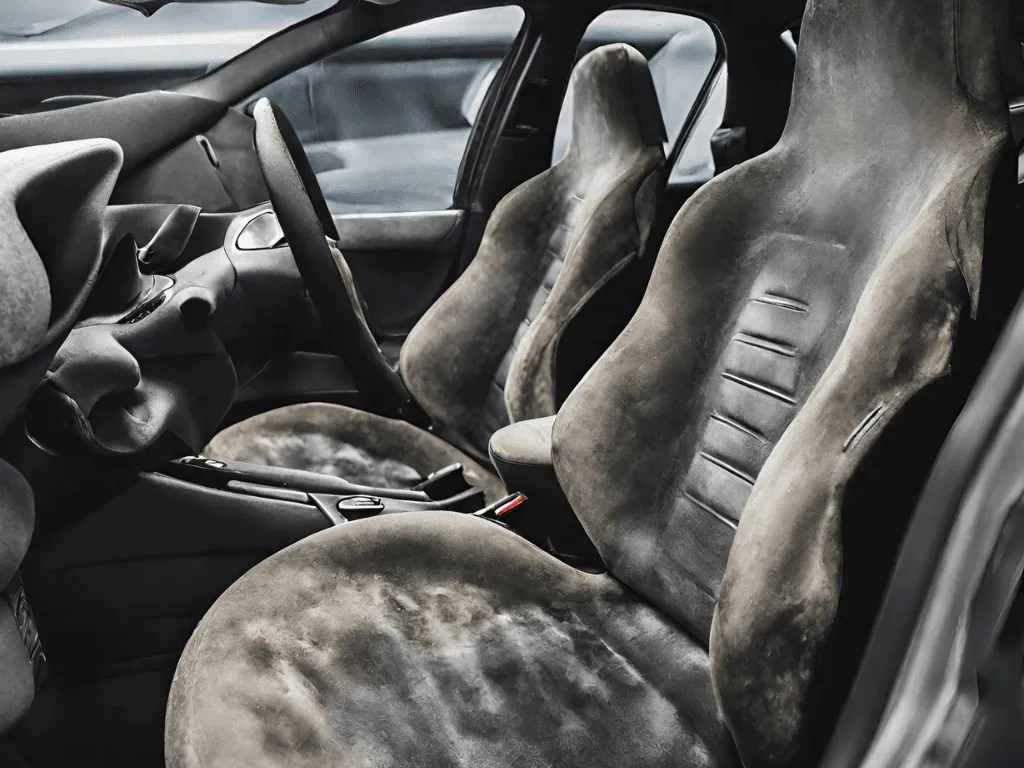
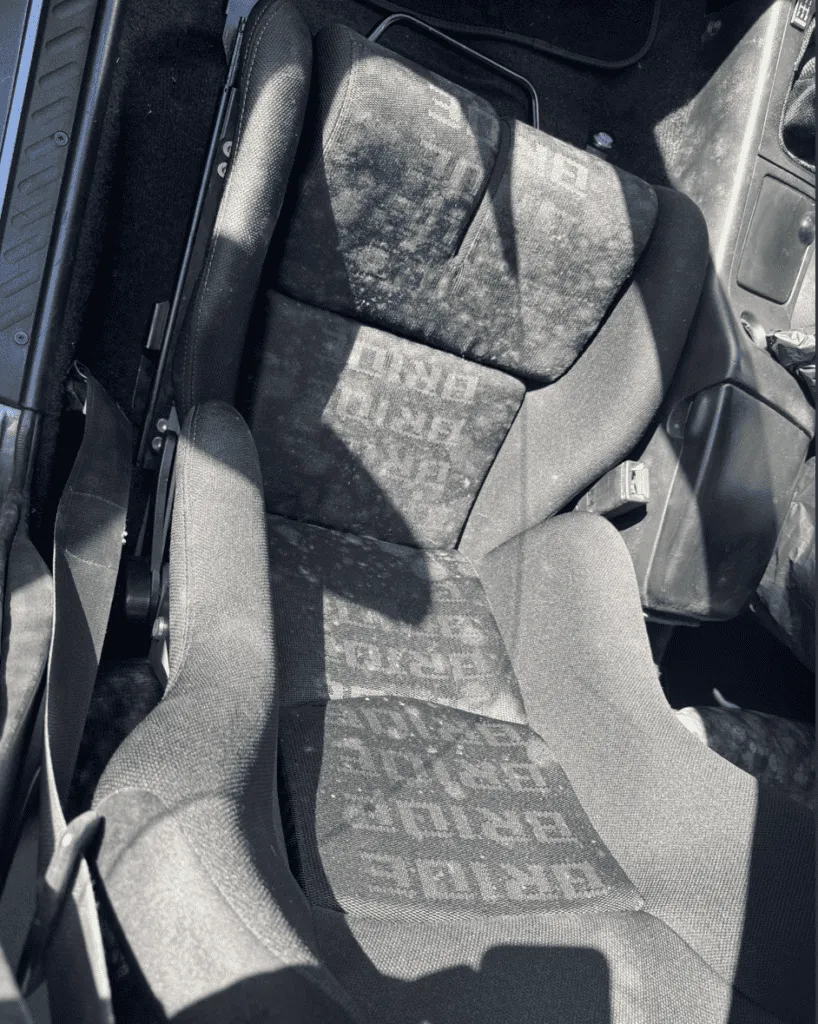
Look for black, white or green spots, or a fuzzy patch, on upholstery, seatbelts, carpet or the headliner.
Small spots spread quickly. Mould is much easier to deal with when it’s caught early.
3. Allergy symptoms that only happen in the car
Sneezing, itchy eyes, a runny nose or a tight chest while driving, which ease once you get out, is a red flag.
Mould spores are potent allergens, and ongoing exposure can make asthma worse.
4. Fogged windows and damp mats
Windows that fog up on dry days, damp floor mats or a muggy feel when you open the door all point to excess moisture.
Cars left unused for weeks, or with poor ventilation, are most at risk.
5. Water stains or leaks
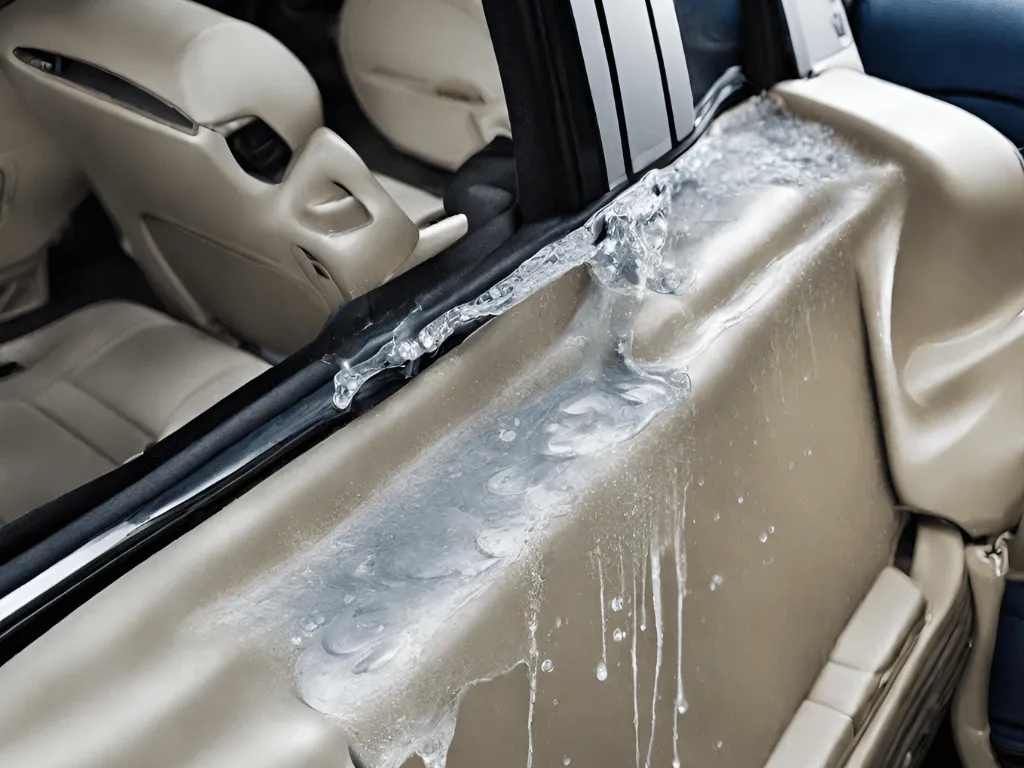
Stains on the roof lining, wet carpet in the footwells or water in the spare wheel well mean water is getting in.
Common entry points are door and window seals, sunroof drains and the windscreen seal.
Why Australian Cars Get Mouldy
Most signs of mould in your car trace back to moisture. Mould needs moisture, warmth and something organic to feed on, and a parked car in an Australian summer has all three.
- Humidity. Coastal Queensland and NSW stay humid for months, so a closed car rarely dries out on its own.
- Wet gear. Towels, wetsuits, gym bags, umbrellas and wet dogs leave water in the carpet and seats.
- Blocked drains and tired seals. Leaves block sunroof and scuttle drains, and old rubber seals let rain in slowly.
- Storms and floods. Even a few centimetres of flood water soaks carpet underlay and seat foam.
- Long periods unused. A car that sits for weeks with the windows up has no airflow at all.
How to Check Your Car for Mould
A ten-minute check will tell you whether the signs of mould in your car are a surface problem or something deeper. Wear a P2 mask and do it outside with the doors open.
- Smell test. Sit in the car with the AC off, then on. A stronger smell with the AC running points to the evaporator or ducts.
- Lift the floor mats. Press the carpet with your hand. Damp or cold carpet means water is sitting in the underlay.
- Open the boot. Lift the boot floor and check the spare wheel well for water or growth.
- Check the seats. Look along seams, under headrests and on the seatbelts.
- Look up. Check the roof lining around the sunroof, grab handles and door frames for stains.
- Check the cabin air filter. A grey, damp or mouldy filter is a common source of AC smell.
Where Car Mould Hides, and What It Takes to Fix
| Where | Usual cause | DIY or professional? |
|---|---|---|
| Hard trim, dashboard, plastics | Condensation, spills | DIY if it’s a few small spots |
| Seat fabric | Wet clothing, spills | DIY for light surface growth only |
| Seat foam | Soaking from spills, leaks or floods | Professional. Foam holds water deep inside |
| Carpet and underlay | Leaking seals, blocked drains, floods | Professional. Underlay usually needs lifting or replacing |
| Roof lining | Sunroof or seal leaks | Professional. Headliners stain and sag easily |
| AC evaporator and ducts | Moisture in the AC system | Professional AC treatment |
Is Mould in a Car Dangerous?
It can be. In a small, closed cabin you breathe the spores at close range, often with the AC blowing them at you.
Mould can trigger allergy and asthma symptoms. Children, older people and anyone with a weakened immune system or lung condition are most at risk, according to the NSW Health mould fact sheet.
Victoria’s Better Health Channel also explains the common symptoms of mould exposure. If you notice them mainly in the car, take the car seriously.
DIY Clean or Professional Car Mould Removal?
Clean it yourself only if the signs of mould in your car are limited to a few small spots on hard trim or the surface of the fabric, and you’ve already found and fixed where the water came from.
- Work outside with the doors open, wearing a P2 mask and gloves.
- Use a mild detergent or diluted white vinegar, not bleach.
- Dry the car completely in the sun before closing it up.
Anything in seat foam, underlay, the roof lining or the AC needs a full car mould removal service. Seat foam soaks up water and holds it, so mould on car seats usually goes deeper than the fabric. Our guide to mould on car seats covers what works and what spreads it.
Flood-Affected and Second-Hand Cars
If flood water got into the cabin, assume the carpet, underlay and lower seat foam are contaminated, even after they look dry.
The Queensland Government’s advice on mould after a disaster applies to cars as much as homes. Talk to your insurer before you start cleaning.
Buying second-hand? A musty smell, new carpet in an older car, or rust under the seats can all point to past water damage. If the history has gaps, mould may not be the only thing in the seat foam and vents. Our guide to vehicle decontamination in Australia explains the other contaminants worth checking for.
Why Car Owners Choose AllAces
Removing car mould properly means treating the source, the materials and the air, not just the stain.
- IICRC Certified Firm with more than 35 years of restoration experience.
- Whole-vehicle approach. Our vehicle decontamination covers seats, carpet, roof lining and the AC system, with HEPA filtration and hydroxyl treatment for the air.
- Odour sorted at the same time. Musty smells are treated as part of the job, alongside our odour removal service.
- Local teams in Sydney, Melbourne, Brisbane and Ballarat, and insurance work welcome.
Car Mould FAQs
What causes mould to grow in cars?
Moisture that can’t escape. Common causes are water leaks through seals or drains, high humidity, wet items left inside, flood water, and leaving the car unused with the windows up.
Is mould in my car dangerous?
It can be. Mould spores are allergens and can trigger or worsen asthma and other breathing problems, especially in a small closed cabin. Children, older people and anyone with a weakened immune system are most at risk.
Can car mould come back after removal?
Yes, if the moisture problem isn’t fixed. Removal has to go with finding the leak, clearing blocked drains or replacing soaked underlay, otherwise the mould grows back.
How long does car mould removal take?
It depends on how far the mould has spread. Surface treatment can take a few hours. Jobs involving seat foam, underlay or the AC system, and time to dry the car fully, usually take longer.
The Bottom Line
A musty smell, spots, allergy symptoms in the car, fogged windows or damp carpet, and water stains are the signs of mould in your car to act on. Find the water first. Then decide whether it’s a small surface clean or a job for professional vehicle decontamination.