
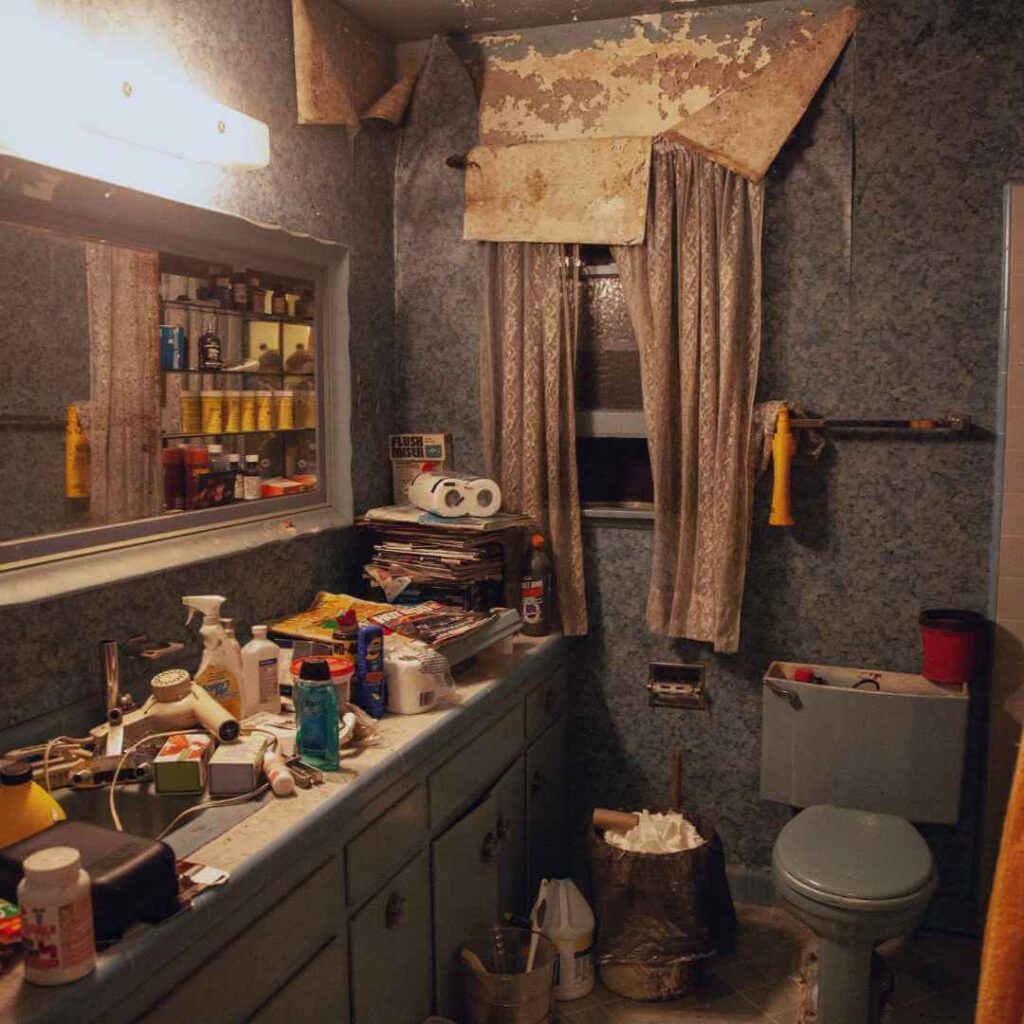
Most odour removal advice is a list of things that smell nicer than the problem. Bicarb in the fridge, a lemon down the disposal, a plug-in near the door. Some of it works. Most of it buys you about a week.
The reason has nothing to do with effort. A household smell is not a film sitting on top of a surface. It is a chemical being released from inside one, and until you deal with the reservoir, you are only changing how often it gets topped up.
Below: five odour removal methods that shift the source, three popular hacks that do not, and the point where DIY stops being the cheaper option.
Key takeaways
- Odours are volatile organic compounds. The ABCB defines VOCs as carbon-containing compounds that evaporate at room temperature and off-gas from materials into indoor air. That is what your nose is picking up.
- Soft materials store the smell and give it back. The ABCB describes soft furnishings adsorbing VOCs when concentrations are high, then re-emitting them later. This is why the smell returns two days after you cleaned.
- Bicarb does not absorb odours. It neutralises acidic odour molecules by reaction, and it needs a large exposed surface area to do anything at all. On ammonia it does close to nothing.
- Ozone generators are the worst thing you can buy. The ABCB lists them as not recommended. Part of how they appear to work is by deadening your sense of smell.
- A musty smell is a moisture reading, not a cleaning job. NSW Health is direct about it: mould returns unless you treat the cause.
- Waiting makes pet urine chemically worse. Peer-reviewed analysis found 21 odour compounds emitted from fresh cat urine and 34 from stale.
What actually works for odour removal?
Effective odour removal does one of three things: it physically removes the material holding the odour, it changes the odour molecule into something non-volatile, or it dilutes and exhausts the air faster than the source can refill it. Anything else, including fragrance, is masking. If a treatment does not touch the source material, the smell comes back.
Why the smell keeps coming back
This is the part almost nobody explains, and it is the single most useful thing to understand about odour removal in a home.
Your house is full of porous material. Carpet backing, underlay, curtains, couch foam, plasterboard, timber, grout, the inside of your air-conditioning ducting. When an odour source is active, those materials pull the compounds in. When the source stops, they release them back out.
The ABCB’s Handbook: Indoor air quality puts it plainly: soft materials and furnishings can adsorb VOCs from the air when local concentrations are high, and then re-emit them to indoor air at a later time.
So the smell is not coming from the room. It is coming from the furniture. Which explains three things at once. Why the smell is worse on hot days. Why it is worse in a closed-up house. And why cleaning the hard surfaces made no lasting difference: you cleaned the 10% and left the 90%.

Common belief: a lingering smell means the room is not clean enough.
Reality: it usually means a porous material somewhere is acting as a reservoir and off-gassing on a slow cycle.
Why it matters: more cleaner on the same surfaces will not fix it. Finding and treating the reservoir will.
The five odour removal hacks that actually work
Ranked by how much of the source they remove, not by how satisfying they feel.
1. Ventilate properly, not decoratively
Opening one window in a still room does almost nothing. Open windows on opposite sides of the house so air actually crosses, run the exhaust fans, and leave them running for ten minutes after you finish. Australia's National Construction Code requires habitable rooms to have a ventilating area of not less than 5% of the room's floor area, and exhaust fans are meant to discharge to outdoor air, not into the roof cavity. A fan venting into your ceiling is relocating the odour above your head, where it comes back through the downlights.
2. Bicarb soda, used the way the chemistry requires
It is not an absorbent. It is an alkali that reacts with acidic odour molecules and converts them into non-volatile salts, which cannot evaporate. McGill University's Office for Science and Society gives the worked example: bicarb reacts with butyric acid and turns it into sodium butyrate, which has no smell. Two consequences people miss. Surface area is everything, so a tray beats a box with one corner opened. And it only handles acidic odours, so ammonia is out.
3. Activated carbon, in a quantity that matters
Carbon works by adsorption, not absorption. The molecule sticks to the surface rather than soaking in. That mechanism has a hard limit called breakthrough: once loaded, the pollutant passes straight through, and the ABCB warns of contaminants off-gassing when a gas-phase filter is fully loaded. A saturated sachet is not neutral, it can become a small source. Use enough of it, put it where air moves, and replace it on a schedule.
4. Wash the reservoir, not the room
The highest-yield DIY move, and the one nobody wants to hear. Curtains, cushion covers, throw rugs, bedding, and pet bedding, which is usually the actual source in a house that smells of dog. Then vacuum upholstery and carpet properly. If the smell is in the couch foam or the carpet backing rather than the covers, a surface clean will not reach it, and that is where professional extraction earns its money. Do not forget the ducting.
5. Dry the place out
If the smell is musty, earthy or damp, stop treating it as an odour problem. NSW Health is unambiguous: mould is likely to return unless you also treat the cause. Fix the leak, improve airflow into the cupboard, run a dehumidifier in the room that smells rather than the room you sit in, and pull furniture off external walls. Mould does not wait for visible condensation, so a room can smell musty and look completely dry.
For the deeper treatments, see professional upholstery cleaning, deep carpet extraction, and if there is growth as well as smell, our guide to removing mould properly.
Three odour removal hacks that only mask the smell
I want to be careful here, because two of these three are harmless and one is not.
1. Air fresheners and plug-ins
They do not remove anything. They add a stronger, more pleasant VOC on top of the one you already had. The National Asthma Council Australia lists air fresheners as likely emitters of VOCs through their fragrances, and notes people with asthma, young children, older people and the chemically sensitive may be more susceptible to irritation. Use them if you like the smell, but do not count them as odour removal.
2. Simmering vinegar, citrus peel and essential oil sprays
Pleasant, cheap, harmless, and as far as I can tell entirely unsupported by any authoritative source as an odour removal mechanism. Bicarb has a documented chemistry. Vinegar, in this application, does not. What it reliably does is add water vapour and its own smell to the room. Keep doing it if you enjoy it, but do not expect it to survive the week.
3. Ozone generators
This one is not harmless. The ABCB's indoor air quality handbook lists ozone generators as not recommended, because they produce ozone by design, a lung irritant targeted by the NCC Verification Methods. The US EPA adds that no federal agency has approved them for occupied spaces, and that in one study the total concentration of organic chemicals in the air increased after ozone was introduced. The California Air Resources Board notes ozone deadens the sense of smell, so part of the reason a machine seems to work is that it damaged your ability to detect the problem. WorkSafe Victoria issued a safety alert in February 2025 after two aged care employees were overcome by a leaking generator.
Sources for the above: the National Asthma Council VOC fact sheet, the US EPA on ozone generators, and the WorkSafe Victoria ozone alert.
Removes the source
- Cross-ventilation and correctly ducted exhaust
- Bicarb on acidic odours, spread wide
- Activated carbon in real quantity, replaced on schedule
- Laundering and deep-cleaning soft furnishings
- Fixing the moisture behind a musty smell
- Removing material that cannot be brought back
Only covers it
- Plug-ins, sprays and scented candles
- Simmering vinegar or citrus peel
- Consumer ozone generators, which also carry real risk
- Carpet powders used without a proper vacuum pass
- Shampooing a couch whose foam is the actual source
- Painting over a smoke or nicotine wall without sealing it
Odour removal by source: what you are actually dealing with
The right treatment depends entirely on where the smell is coming from. This is the diagnostic table I would use.
| Smell | Likely source | What works | What will not |
|---|---|---|---|
| Musty, earthy, damp | Moisture and microbial growth in or behind a material | Find and fix the moisture, dry the structure, remove affected porous material | Any surface spray. It will be back within a fortnight |
| Ammonia, sharp, worse in humidity | Pet urine in carpet backing, underlay or subfloor | Full saturation treatment through to the underlay, or replacement | Bicarb. Ammonia is alkaline |
| Stale smoke or nicotine | Tar residue bonded to ceilings, walls, ducting and soft furnishings | Structural washing, then sealing, then air treatment | Painting straight over it. The residue bleeds back through |
| Sweet, rotting, intermittent | Organic matter somewhere out of sight, or a drain issue | Locate it. Check under and behind appliances, and in wall cavities | Masking. You are covering a decomposition process |
| Chemical or solvent | Off-gassing from new materials, or a spill into a porous substrate | Ventilation over time, or removal of the affected material | Fragrance. You are stacking VOCs on VOCs |
| Cooking, lingering days later | Grease film on surfaces plus residue in rangehood ducting | Degrease hard surfaces, clean or replace filters, launder textiles | A recirculating rangehood alone. It is not removing anything |
The pet odour problem gets worse while you wait
Most people treat a pet accident as a stain first and a smell second. That is backwards.
A 2021 peer-reviewed analysis using gas chromatography with olfactometry (Banik, Koziel & Li, Separations 8(2):15) identified 21 compounds emitted from fresh cat urine, rising to 34 from stale urine. The same paper notes a fishy trimethylamine odour appearing from carpet contaminated with cat urine after two weeks of ageing, which was absent from fresh urine on the same carpet.
Read that again. It is not the same smell getting stronger. It is a different, worse set of chemicals being produced by bacterial action over time.
So the practical rule is not “clean it when you get a chance.” It is: blot immediately, flood with plain water, blot again, and treat the same day. And accept that if it went through to the underlay, surface treatment will not reach it.
More in our guide to pet odour removal strategies, and specifically cat urine odour, which behaves differently again.
You cannot smell your own house
Worth saying out loud, because it is the reason people get blindsided by a real estate inspection or a visitor’s face.
Olfactory habituation is a documented effect: continuous exposure to an odour reduces your perceived intensity of it. Your nose stops reporting what has not changed.
The US Consumer Product Safety Commission’s indoor air guide gives the fix, and it costs nothing: step outside for a few minutes, then come back in and note whether odours are noticeable. Do it in the morning before you open anything up. That is your honest baseline.
A number worth keeping in mind: the Australian Academy of Science reports that people spend around 90% of their time indoors, including time in enclosed transport. Whatever your indoor air is doing, you are getting most of your daily dose of it.
When DIY odour removal stops being the cheaper option
There is a real threshold, and it is not about how bad the smell is. It is about whether the source is reachable.
You cannot find it
If two rounds of cleaning have not located the source, the source is inside something. That needs moisture mapping and thermal imaging, not another product.
Fire or smoke residue
Smoke bonds to surfaces and penetrates ducting and cavities. ANSI/IICRC S700, published in 2025, covers fire odour management specifically.
Anything biological
Sewage, decomposition or trauma odour is a contamination problem with a health dimension, not a cleaning problem.
It keeps coming back
Recurrence means the reservoir was never emptied. Repeating the same treatment produces the same result.
A deadline is attached
Sale, lease, handover or an insurance claim. The cost of getting it wrong twice exceeds the cost of getting it right once.
The HVAC is involved
If the smell arrives with the air conditioning, ducting is distributing it, and no amount of room-level work will help.
Professional odour removal services differ from DIY in one specific way that matters: the work starts with source identification rather than treatment. Our step-by-step odour removal process sets out what that looks like on a real job.
Vehicles are their own category, because a sealed cabin concentrates residue in a way a house does not. Vehicle odour removal and car odour removal services cover that side.
Frequently asked questions
What is the fastest way to remove odour from a room?
Ventilate hard while you remove the source. Open windows on opposite sides of the house, run the exhaust fans, and at the same time launder or bag every soft item in the room. Ventilation clears the air quickly but does not empty porous materials, so doing both at once is what produces a result that lasts past the afternoon.
Does baking soda actually absorb odours?
Not by absorption. Bicarbonate of soda neutralises acidic odour molecules by reacting with them to form non-volatile salts, which cannot evaporate and therefore cannot be smelled. It needs a large exposed surface area to work, and it has little effect on alkaline odours such as ammonia or on most smoke and solvent compounds.
Are ozone generators safe for odour removal at home?
The Australian Building Codes Board lists ozone generators as not recommended, because they produce ozone by design, a lung irritant targeted by the National Construction Code verification methods. The US EPA states no federal agency has approved them for use in occupied spaces. Ozone also deadens the sense of smell, which can make a machine appear to work when it has not.
Why does the smell come back a few days after cleaning?
Because the source was not removed. Porous materials such as carpet backing, upholstery foam, curtains, plasterboard and ducting adsorb odour compounds and re-emit them over time, particularly as temperature rises. Cleaning hard surfaces addresses a small fraction of the total reservoir, so the odour returns as the material off-gasses again.
What does a musty smell in a house mean?
It usually means moisture, and microbial growth somewhere you cannot see. NSW Health advises that mould will return unless the cause is treated, and mould does not require visible condensation to grow. Treat a persistent musty odour as a signal to find the water, not as a cue to clean harder.
When should I call a professional odour removal service?
When the source cannot be located after two attempts, when the odour comes from fire, smoke, sewage, decomposition or chemical contamination, when it returns after each treatment, when air conditioning is distributing it, or when a sale, lease or insurance deadline means a second failed attempt costs more than doing it correctly the first time.
The bottom line
Odour removal is a source problem wearing an air-quality costume.
If a treatment removes material, changes the chemistry, or moves enough air to outpace the source, it will work. If it adds a nicer smell to the same room, it will not, and the only thing you have bought is the delay before you notice again.
Start with the soft materials. Fix any moisture. Ventilate like you mean it. Use bicarb and carbon properly rather than symbolically. Skip the ozone machine entirely.
And if it keeps coming back, stop buying products and start looking for the reservoir.
Smell you cannot shift? AllAces has been handling complex odour work across Brisbane, Sydney and Melbourne for more than 35 years, with IICRC-certified technicians and source identification before treatment.
Where to go next
This article covers general DIY odour removal across a home. The rest of the cluster goes deeper on specific sources and rooms.
- Kitchen odour removal: the room that generates most household smells, and the ventilation numbers that apply to it.
- Carpet odour removal: why the backing and underlay matter more than the pile.
- Couch and upholstery odour: treating foam, which is the reservoir people forget.
- Cigarette smoke smell removal: tar residue, sealing, and why paint alone fails.
- Odour removal services: source identification, treatment and verification across QLD, NSW and VIC.
- Mould removal and remediation: for a musty smell rather than a household one.
Sources: Australian Building Codes Board, Handbook: Indoor air quality and NCC Housing Provisions Part 10.6; NSW Health; Better Health Channel (Victoria); National Asthma Council Australia; US Environmental Protection Agency; California Air Resources Board; WorkSafe Victoria; Australian Academy of Science, Indoor air (2025); McGill University Office for Science and Society; Banik, Koziel & Li, Separations 8(2):15 (2021). Last reviewed September 2026.