
A property can look clean, smell fine and have sat empty for a year, and still fail a meth test. How long meth residue lasts depends on how it got there, what it landed on and how much there was to begin with. This guide sets out what Australian and New Zealand research actually found, and what that means if you are buying, renting out or selling.
How long does meth residue last in a house? Months to years. Australian health guidance says methamphetamine “can persist as a surface residue for months or years”, and research in a former lab found contamination still present more than five years later. Smoking residue on open surfaces fades faster than lab residue, but time alone shouldn’t be relied on. A laboratory test is the only way to know.
Key takeaways
- Months or years. The national enHealth guidance says residue can persist on surfaces “for months or years”.
- Former labs last longest. A 2019 Flinders University study found lab contamination persisting for over five years without remediation.
- Some smoking residue fades fast. New Zealand research found surface residue from simulated smoking dropped markedly within days. Absorbed residue is a different story.
- Soft and hidden materials hold it. Carpet, curtains, ducting and plasterboard keep residue the longest.
- Airing out clears the smell, not the surfaces. Only cleaning, confirmed by a laboratory test, brings a property under 0.5 µg/100cm².
What the research actually says
Two things are true at once, and most articles only tell you one of them.
Residue can last for years. The national enHealth guidance (2017) says methamphetamine “can persist as a surface residue for months or years”. Where the original contamination was high, “contaminant levels of concern may potentially remain for many years”, and it records published cases of exposure from residue that “persisted for more than two to five years”. In 2019, Flinders University researchers tested a former lab and found contamination in walls, blinds and carpet, and in items brought in later such as rugs, toys and beds, persisting for over five years without remediation. It also moved from contaminated items to clean ones.
Some residue fades quickly. The 2018 report from New Zealand’s Prime Minister’s Chief Science Advisor reviewed simulated smoking experiments and found surface residue levels “decline markedly over a few days”. That fits what WA Health found in its smoke house research: most suspected smoking houses averaged 2.7 µg/100cm² (median 1.5), with hotspots of 10 to 15 in heavily used rooms.
Put together: light smoking residue on hard, exposed surfaces drops off early. What is left after the first days, anything absorbed into soft or porous materials, and anything from manufacture can stay for years. Australia’s guideline of 0.5 µg/100cm² is low enough that even “faded” residue can still be over it.
Why some residue lasts longer than others
Does meth residue go away if a house sits empty?
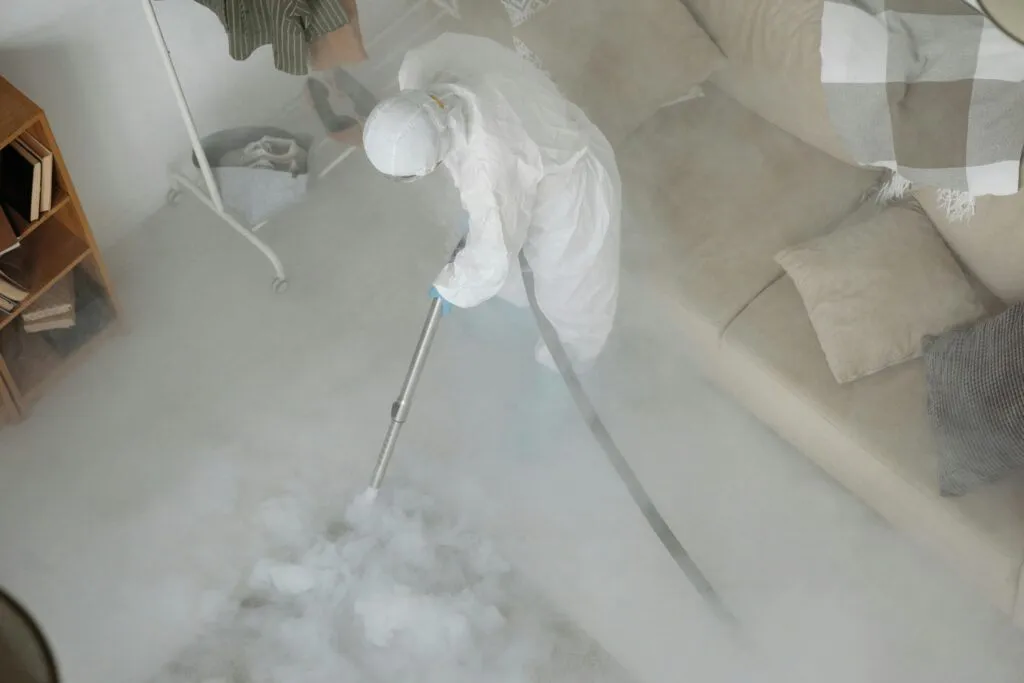
Not reliably. An empty house loses the smell and some residue on open surfaces, but nothing removes what has soaked into carpet, curtains or plasterboard. The Commonwealth remediation guidelines also warn that contamination embedded deep in porous materials can diffuse back to the surface after cleaning, which is why some properties pass a first test and fail a later one.
If you are buying a property that has been vacant for a year or two, assume nothing. The reading now is what matters, not how long ago anyone lived there.
Does airing out a house remove meth?
No. Ventilation clears the air, not the surfaces. A property can smell completely normal and still fail a swab test. Flinders University researchers measured methamphetamine in the air of a former lab where a family had lived for nine years, coming off contaminated surfaces and belongings. Opening windows doesn’t fix the source.
Can meth residue come back after cleaning?
A finished, verified clean doesn’t regrow. Readings go up again for one of three reasons:
- Contamination was missed, usually in ducting, the roof space or a wall cavity.
- Residue soaked into a porous material that should have been removed, then worked back to the surface. The Commonwealth guidelines describe this effect.
- Someone used meth in the property again.
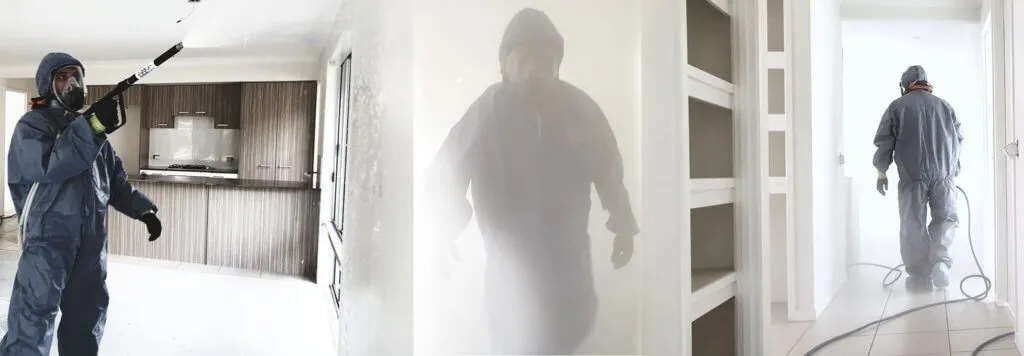
That is why clearance testing should be done by someone independent of the cleaner, with every sample under 0.5 µg/100cm² before anyone moves back in.
What this means if you are buying, renting or selling
- Buying: a property’s history isn’t a clean bill of health. Test before the cooling-off period ends (five business days in Queensland and NSW, three in Victoria). Results take three to five business days, so book early.
- Renting out: test between tenants rather than assuming time has fixed a past problem.
- Selling in NSW: use of a property for drug manufacture in the last two years is a prescribed material fact that must be disclosed. How long ago it happened changes the disclosure duty, not the residue.
How to find out where a property stands
- Screening: a home kit only tells you whether residue is present, not how much. See house drug testing.
- Laboratory test: a composite screen ($400 to $1,200) or room-by-room discrete sampling ($1,200 to $3,000), analysed by a NATA accredited laboratory. See meth testing in Australia.
- If it is over 0.5: a written scope, decontamination, then independent clearance testing ($800 to $2,500).
These are estimates. The real cost depends on how contaminated the property is.
Frequently asked questions
How long does meth residue last on walls?
Months to years. It sits in the paint film. Light residue on hard surfaces fades faster, but walls in rooms where meth was smoked regularly often still test over 0.5 µg/100cm² long after.
Does meth residue go away on its own?
Not reliably. Some surface residue declines over time, but residue in carpet, curtains, ducting and plasterboard can stay for years. Only a laboratory test tells you where a property stands.
How long does meth stay in carpet?
Years. Carpet and underlay absorb residue, which is why they are usually removed rather than cleaned during decontamination.
Can a house that was a meth lab years ago still be contaminated?
Yes. Australian guidance records exposure from residue that persisted for years, and Flinders University research found former-lab contamination persisting for over five years without remediation. Test it.
Will a property that was empty for a year pass a meth test?
Not necessarily. Time reduces some surface residue but doesn’t remove what is absorbed into materials.
How long after decontamination can I move back in?
Once independent clearance testing shows every sample under 0.5 µg/100cm².
Talk to an expert
Think a property has been empty long enough to be safe? Time doesn’t clear meth residue, but a test answers the question in three to five business days. If you are buying, book it before the cooling-off period runs out. Call 1800 00 10 10 or book a test. AllAces, an IICRC Certified Firm, 35+ years and 65,000+ jobs.
Sources
- enHealth, Guidance on Clandestine Drug Laboratories and Public Health Risks (January 2017), pp. 11, 15, 17.
- Commonwealth, Clandestine Drug Laboratory Remediation Guidelines (2011), sections 1.2, 5.2.3 and 5.2.4.
- WA Health, Methylamphetamine Smoke House Research Report.
- Wright J, Walker GS, Ross KE, “Contamination of Homes with Methamphetamine: Is Wipe Sampling Adequate to Determine Risk?”, IJERPH (2019).
- Office of the Prime Minister’s Chief Science Advisor (NZ), Methamphetamine contamination in residential properties (May 2018).
- Wright J et al., “Current practices underestimate environmental exposures to methamphetamine: inhalation exposures are important”, Journal of Exposure Science and Environmental Epidemiology (2021, online 2020).
- NSW Government, Misrepresentation: information for property agents (prescribed material facts).
How this guide was put together
Written by David Spencer, AllAces’ Methamphetamine Decontamination Technician. Reviewed by Marc Christie.
AllAces Cleaning & Restoration has operated in Australia for over 35 years as an IICRC Certified Firm, with more than 65,000 jobs completed. Last reviewed November 2026. Next review May 2027.