
A hoarding clean-up helps mental health when the person consents, has a say in the sorting, and has support in place afterwards. Done to someone rather than with them, it reliably backfires. Australian fire services put it plainly: one-off clean-ups are not effective on their own.
The instinct, when you finally see inside, is to clean.
It is almost always the wrong first move. Not because the house does not need it, but because a clear-out is a change to somebody’s environment, and if it happens without them, the house tends to fill back up faster than it emptied.
This page is about the clean-up that holds. What good practice looks like when hoarding disorder is part of the picture, what families can usefully do, and what happens in the weeks after the truck leaves. If you are still working out how to raise it at all, navigating the emotional challenges of hoarding is the better starting point.
Key Takeaways
- A skip bin is not a treatment. The Country Fire Authority states directly that one-off clean-ups are not effective. Without support alongside it, a cleared house tends to refill.
- The risk is measurable. Fire and Rescue NSW reports that around 12% of fire fatalities in NSW have been associated with properties affected by hoarding and squalor conditions.
- Speed is the enemy of a lasting result. Clean-ups that go too fast, or happen without the person's involvement, frequently make the hoarding worse.
- Harm reduction beats total clearance in most cases. Safe exits, working smoke alarms, a usable kitchen and bathroom, clear paths. That is the goal, not an empty house.
- Treatment exists and it works. Cognitive behavioural therapy adapted for hoarding is the approach recommended by Healthdirect, and the clean-up works best alongside it, not instead of it.
Does Cleaning Out the House Actually Help?
Sometimes. It helps when the person has agreed to it, understands what is happening, and has support for what comes after. It does harm when it is done to them rather than with them.
We will be blunt about this because most articles on the subject skip it. A forced clear-out can produce a spike in distress, a breakdown in family trust, and faster re-accumulation than before. Clinicians have been saying this for years. Fire services say it too. The CFA’s guidance on the fire risks of hoarding recommends long-term intervention involving health and human services agencies, not a single visit.
That does not mean nothing should happen. Sometimes a house is genuinely unsafe and something has to happen today. It means the clean-up needs to be built around the person, and there is a large difference between a crew that understands that and a crew that does not.
Why Clutter Weighs on the Mind, and Why It Compounds
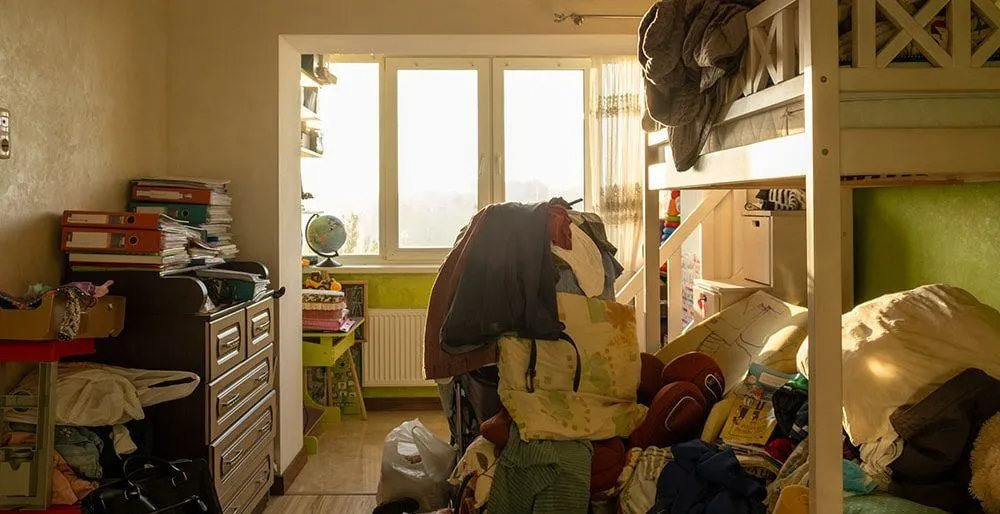
The link runs both ways, which is what makes it stubborn. The clutter creates stress and shame, the shame creates isolation, and the isolation removes the relationships that would otherwise interrupt the pattern.
The practical problems stack up alongside it. No working stove. A bathroom that cannot be used. A bed shared with possessions.
Then there is the anticipatory part, and this is the piece families most often misread. For someone with hoarding disorder, being asked to discard an item genuinely produces distress. It is not stubbornness. Healthdirect describes the core of the condition as finding it very hard to get rid of things even when they have little value, with real distress attached to discarding.
Understanding that one point changes how a family behaves. You stop reading refusal as defiance and start reading it as what it is.
The Four-Stage Model That Actually Holds
Not aesthetics. Safety. Five questions, and whichever one fails gets addressed before anything else is negotiated:
- Can the person get out, and can emergency services get in?
- Are the smoke alarms working, and audible from where they sleep?
- Is the cooking area clear of combustible material?
- Are electricity and gas connected and being used as intended? Fire and Rescue NSW flags disconnected or improvised utilities as a major ignition source in hoarded homes.
- Is there a biohazard present, meaning faecal matter, decomposition, sharps or animal waste?
The person decides what happens to their possessions wherever it is safe and lawful for them to do so. In practice that means sorting alongside them rather than around them, and a crew that asks rather than assumes.
It is slower. It is also the difference between a result that holds and a result that lasts six weeks.
A staged clean-up across several visits usually outperforms a single blitz. It gives the person time to adjust to a changed environment, which is a genuine adjustment and not a small one.
Where a landlord, council or court has set a deadline, the honest approach is to say what can be achieved in the time available, and be clear about what that will and will not fix.
This is the stage that gets cut for budget reasons, and it is the stage that determines the outcome. A maintenance plan, a follow-up visit, a support contact, a family member with a defined role.
Without it, the house is a snapshot rather than a change.
What Families and Neighbours Can Actually Do
Lead with the relationship
Not the mess. You need to still be welcome next month, and that matters more than any single visit.
Talk about safety, not tidiness
Exits, alarms, a clear path to the bed. It is a conversation people can accept without feeling judged.
Get a smoke alarm in and tested
Of everything on this page, this is the single highest-value thing you can do this week.
Offer one small, agreed win
One room. One corner. Something that gets finished, so the next conversation starts from a success.
| Do | Don't |
|---|---|
| Ask before touching anything, including things that look worthless to you | Throw things out while they are not home |
| Give notice, and agree the scope in advance | Frame it as an ultimatum or a surprise |
| Treat it as a recognised disorder, because it is one | Call the person lazy or dirty, to their face or otherwise |
| Plan for several visits and a follow-up | Assume one big weekend will resolve it |
| Bring in professionals where there is a health, safety or biohazard issue | Take on contamination with family goodwill and a ute |
For help in Australia, Healthdirect lists Beyond Blue on 1300 22 4636 and Medicare Mental Health on 1800 595 212. WayAhead also maintains a list of hoarding-specific programs, including the Catholic Healthcare Hoarding and Squalor Program and the UNSW Psychology Clinic’s adult hoarding treatment group.
Where a Professional Crew Fits, and Where It Doesn't
We are a restoration company, not a clinical service, and the line matters. A crew handles contamination, waste and structural cleaning. Nobody removes hoarding disorder with a truck. If someone tells you otherwise, they are selling.
| A specialist clean-up crew handles | It does not handle |
|---|---|
| Biohazard removal, sharps, decomposition, animal waste | The disorder itself |
| Pest and vermin contamination | Therapy, diagnosis or clinical assessment |
| Structural cleaning, mould, odour | Long-term behavioural change on its own |
| Waste classification and lawful disposal | Family decisions about what should go |
| Discretion, including unmarked vehicles | Deciding capacity or consent for someone else |
The best outcomes we see run in parallel. A clinician or case worker on one side, a clean-up crew on the other, and a family that has agreed in advance who is deciding what.
Our hoarding clean-up services are run on that basis. Where conditions have progressed to squalor, with biological contamination or vermin, that becomes squalor cleaning services, which is a different job with different controls. Where volume is the obstacle rather than contamination, rubbish removal services may be the cheaper and more appropriate route.
If you are still weighing up whether to bring anyone in at all, the pros and cons of professional hoarding cleanup services works through it.
After the Clean-Up: the Part Nobody Plans For
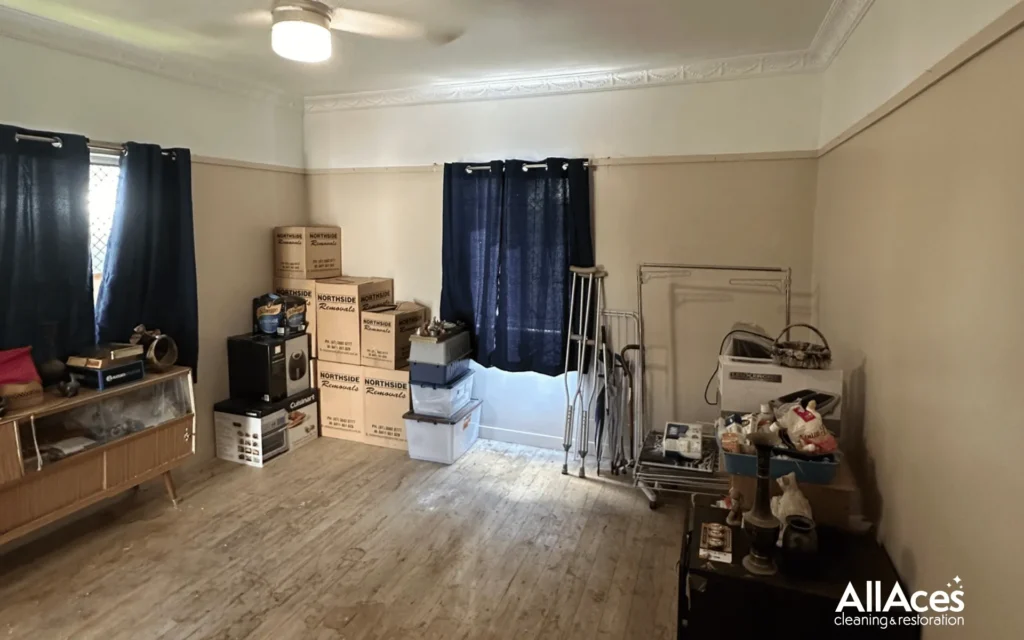
The days after a clean-up are frequently harder than the clean-up.
An empty room can feel exposing rather than freeing. Some people describe grief, and that is not an overreaction. They have lost things that meant something. Others feel enormous relief and then a wave of shame about how long it had gone on.
Two things help.
Give the space a use immediately. A room with a purpose refills far more slowly than a room that is simply empty. A reading chair, a desk, somewhere to sit with a cup of tea.
Set the return conditions together. Not rules imposed by someone else. An agreement, made by the person, about what comes into the house and where things go. It works better when it is theirs.
And expect some regression. It is normal, and it is not failure. The measure is whether the house stays safe, not whether it stays photogenic.
Frequently Asked Questions
Does cleaning a hoarder's house actually help their mental health?
It can, when the person consents and support is in place afterwards. On its own, a clear-out addresses the environment but not the condition, and homes often re-accumulate. Australian fire services are explicit that one-off clean-ups are not an effective long-term response.
How do I help someone who hoards without damaging the relationship?
Talk about safety rather than mess, ask before touching anything, agree on one small area to start, and get smoke alarms working. Avoid ultimatums and surprise clean-outs, which reliably increase distress and resistance.
Is hoarding disorder treatable?
Yes. Cognitive behavioural therapy adapted for hoarding is the treatment recommended by Healthdirect. Medication evidence is limited, though antidepressants are sometimes used where other conditions are present. Treatment works best alongside practical support in the home.
Are hoarding clean-ups confidential?
Reputable Australian providers work discreetly, including unmarked vehicles and out-of-hours scheduling where privacy is a concern. Ask about it directly when you book, because it varies between operators and it matters to most families.
Why Families Choose AllAces for Hoarding Clean-Ups
Consent-led sorting
We work alongside the person wherever it is safe and lawful to do so, not around them.
Discreet by default
Unmarked vehicles and out-of-hours scheduling where privacy matters to the household.
Biohazard trained
Sharps, decomposition, vermin and animal waste handled under proper controls and disposed of lawfully.
35+ years, staged where needed
Across Brisbane, Sydney, Melbourne and Ballarat, including multi-visit clean-ups rather than a single blitz.
Speak to the team about hoarding clean-up, squalor cleaning or deceased estate cleaning, and meet the people who run these jobs on our experts page.
Contact the AllAces team on 1800 00 10 10.
More on hoarding. This page covers the mental health side of a clean-up. To work out whether you are looking at a hoard or a collection, read hoarding vs collecting. For the warning signs, see the warning signs of hoarding.
For the severe end, level 4 hoarding clean-up services explains what changes. Where an estate is involved, see dealing with hoarding in deceased estate cleaning.
Hoarding clean-up services across Brisbane, Sydney, Melbourne and Ballarat. Call 1800 00 10 10.
If this is affecting you or someone close to you, Beyond Blue is available on 1300 22 4636 and Lifeline on 13 11 14.