Hoarding Clean up Services
We understand that hoarding goes beyond clutter. We deliver discreet and compassionate hoarding clean up and remediation in Brisbane, Sydney, and Melbourne, transforming congested environments into orderly, secure, and revitalised spaces.


Who We Help: Tailored Support for Families and Professionals
Coordinating a major property clearance requires professional hoarding and squalor cleaning services. We understand the emotional and logistical challenges involved, working seamlessly to manage the entire process from start to finish.
How can we assist you?
Our 4-Step Hoarding Cleanup Process
Compassionate Site Assessment
Before we start, our experts conduct a thorough walkthrough. We identify structural risks, biohazards, and most importantly protect your valuables and legal documents.

Strategic Sorting & Decluttering
Using a methodical process, our team separates debris from valuables while handling all heavy disposal and recycling. We deliver a comprehensive hoarding clean service that balances speed with meticulous care.

Deep Cleaning and Restoration
We go beyond the surface to treat mould, odours, and bacteria left behind by years of hoarding. Using industrial-grade equipment, we provide the deep-level cleaning required to make the air and surfaces safe for human habitation once again.

Final Review and Support
We perform a rigorous final inspection to ensure the property meets all health standards. Whether it’s preparing for a family move-in or a handover for a sale, we leave you with a completely clean, safe, and restored environment.

Hoarding Cleanup Hubs Across Australia
To ensure rapid response times, AllAces operates dedicated hoarding cleanup hubs, providing professional restoration and sanitisation services in these key regions:
We’re here to help. Contact our compassionate team today.
☎ 1800 00 10 10Before and After Hoarding Clean Up Transformation


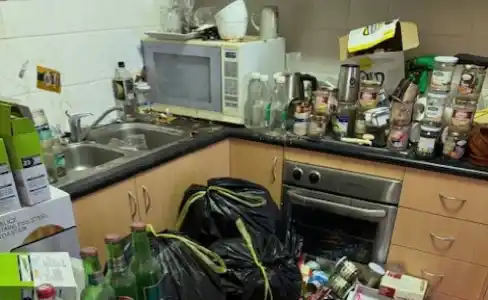
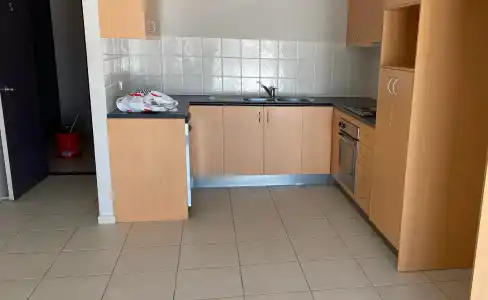
We provide professional hoarding and squalor services that transform overwhelmed environments into safe, habitable spaces through a clinical and compassionate framework.
The Decontamination Process
- Discreet Operation: Total privacy maintained by our expert technicians.
- Systematic De-cluttering: Safe, structured sorting of all environmental assets.
- Forensic Sanitisation: Industrial-grade biohazard removal and odour neutralisation.
Certified Standards
- IICRC Accredited: Methodology rooted in international restoration standards.
- National Presence: Expert hoarding support in Brisbane, Sydney, and Melbourne.
- Ecological Restoration: Mitigation of long-term property damage and contaminants.
From crisis to clarity: Providing property managers and families with complete confidence in a restored, functional environment.
Trusted by Our Clients
Certified & Accredited Professionals
Our IICRC-certified technicians provide sensitive, thorough hoarding cleanup services tailored for homes, businesses, and specialised spaces. Because we operate under strict global accreditation, every project is executed to the highest industry benchmarks for safety, deep sanitation, and efficiency.
- Certified Industry Standards: We strictly adhere to IICRC guidelines, deploying advanced decontamination methods that safely neutralise hidden biohazards and restore a healthy baseline.
Compassionate & Professional Care: We manage every stage of the clearance with total discretion and respect, minimising stress for families, residents, and property managers.
A Complete Environmental Renewal: We don’t just declutter; we deep-clean and sanitise the property to return your environment to a safe, organised, and functional state.

We are ready to respond
Reach out to our specialist team to schedule an urgent, discreet onsite assessment by a certified technician. We will provide a comprehensive, forensic action plan and a clear, transparent quote, giving you a definitive strategy to safely restore your property.
Contact Form
Frequently Asked Questions
Our team are just a phone call away if we haven’t answered all your questions here.
Hoarding clean up services involve clearing out the clutter and debris from a property, safely disposing of unwanted items, and sanitising the area to make it livable again. This can also include addressing biohazard situations like mould, pests, and decayed materials. The service aims to restore a safe, hygienic, and usable living space.
The duration of a hoarder cleanup depends on the severity of the situation and the size of the property. Minor cleanups can take as little as one day, while more severe cases may require several days or even weeks. Our technicians will assess the situation and provide an estimated timeline and quote based on the volume of clutter and the conditions of the premises.
Yes, professional hoarding cleaning services ensure confidentiality and discretion. Our team is trained to be non-judgmental and sensitive to the homeowner’s feelings, providing a respectful and private service.
Yes. We provide comprehensive commercial hoarder cleaning services for property managers, real estate agents, and government agencies. Whether it’s a warehouse, an office space, or a rental property, our commercial hoarder cleanup team works discreetly and efficiently to restore the asset to a safe, leasable condition.
Because every situation is unique, the cost of a hoarder cleaning depends on the volume of materials, the size of the property, and the level of sanitation required. We provide transparent quotes for hoarding cleaning services after an initial assessment to ensure there are no surprises during the hoarder cleanup process.
Hoarder cleaning can involve hidden dangers like mould, pest infestations, and structural instability. Choosing a professional hoarding cleanup ensures:
Safety: We use industrial PPE and specialized equipment.
Efficiency: A hoarding clean up services team can accomplish in days what might take an individual months.
Sanitisation: Beyond just a hoarding clean, we provide deep-cleaning and odour neutralisation to ensure the home is truly livable.
The first step is a simple phone call. We will discuss the scope of the hoarder clean up, answer any questions about our professional hoarding and squalor services, and schedule a site visit. Our goal is to make the transition to a clean environment as stress-free as possible.