Quick answer
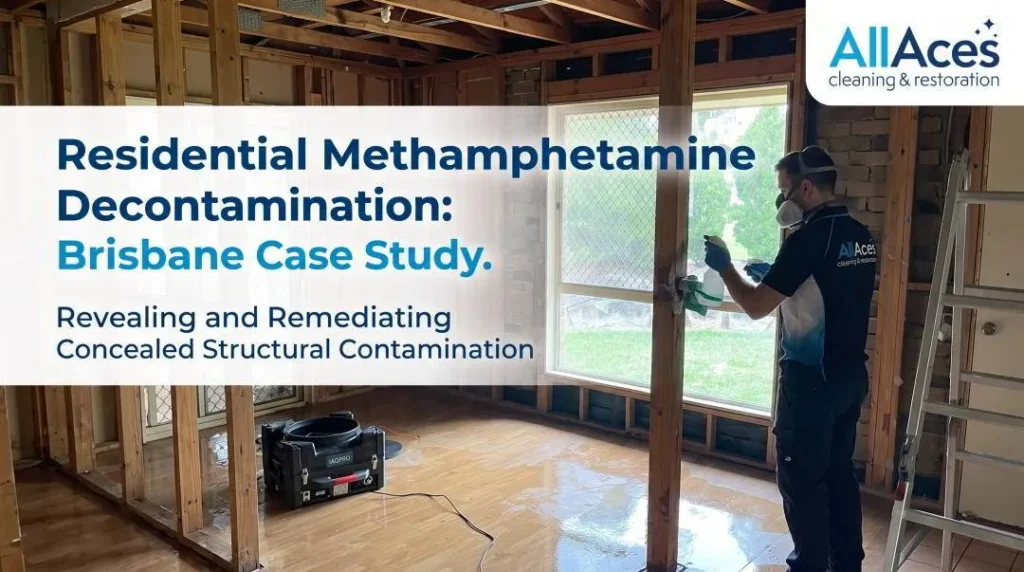
AllAces Cleaning & Restoration, an IICRC Certified Firm and home meth decontamination Brisbane specialist, remediated a privately owned residential property in Brisbane, Queensland, affected by high level methamphetamine contamination. Residues had penetrated beyond surface levels into walls, ceilings and structural framework, including hidden cavities and timber framing. Working to the Australian Government’s Clandestine Drug Laboratory Remediation Guidelines, the team carried out a structured decontamination involving removal of contaminated doors and internal linings, detailed wash down of affected structural points, targeted treatment of high risk surfaces, progressive wet wiping of internal framework, and safe disposal of contaminated materials under strict containment. The property was restored to a stabilised, compliant condition, ready for final verification and reinstatement works.
1. Project snapshot
2. The challenge
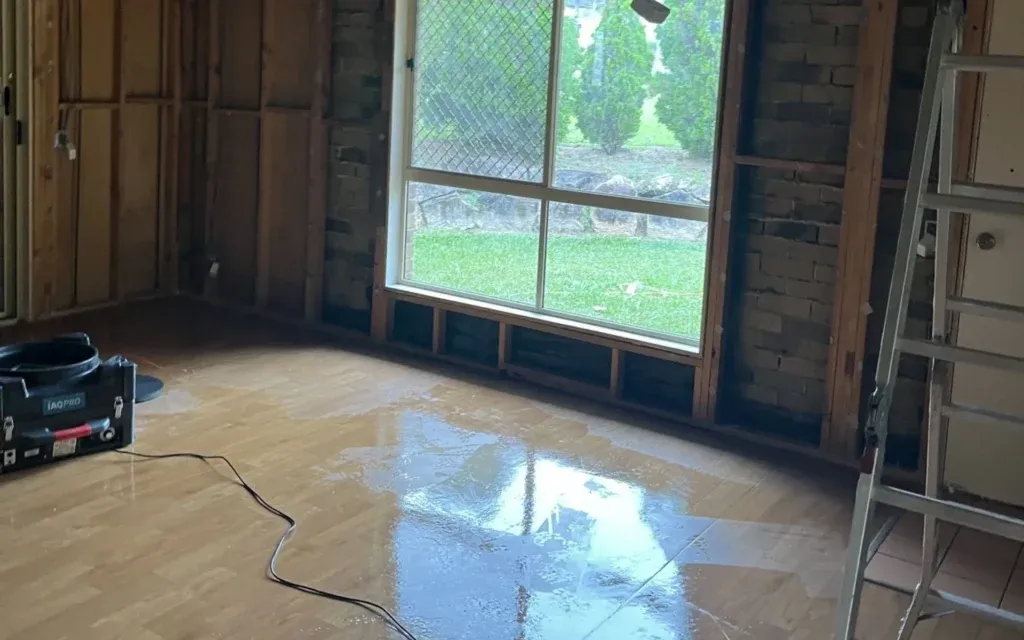
High level methamphetamine contamination was present throughout a residential property in Brisbane, with residues penetrating beyond surface levels into walls, ceilings and structural frameworks. The contamination was not isolated to visible surfaces. Affected material was embedded within hidden cavities, timber framing and concealed structural areas, which presented a significant health risk and required specialist remediation rather than a standard clean.
This extent of contamination raised several risks and requirements the team had to work through:
- Concealed contamination: because residue had settled inside wall cavities and timber framing rather than only on visible surfaces, the true extent of the problem could not be assessed from a surface inspection alone.
- Structural exposure required: simple surface cleaning was not sufficient. The works required controlled removal of internal linings to fully expose affected structural components before treatment could begin.
- Containment throughout: contaminated materials had to be appropriately contained at every stage of the process, from initial removal through to final disposal, to prevent cross contamination of unaffected areas.
- Health risk to future occupants: given the severity and depth of contamination, the property could not be considered safe for reinstatement or occupancy until the structural framework itself had been treated, not just the internal linings.
This combination of concealed, structural level contamination is why the job needed specialist meth decontamination, with the capability to open up and treat framing, rather than a surface level or partial response.
3. Assessment
Before remediation began, AllAces assessed the property to define the scope of works:
- Contamination assessment to establish that residue had penetrated beyond surface levels into walls, ceilings and structural framework, rather than remaining a surface issue.
- Structural assessment of affected components, identifying which internal linings and doors needed to be removed to expose contaminated framing for treatment.
- Risk assessment around hidden cavities and concealed structural areas, given that contamination in these zones is not visible without opening up the structure.
- Scope documentation setting out that controlled removal of internal linings would be required to fully expose affected structural components, and that contaminated materials would need to be contained throughout the process.
This assessment shaped a structural decontamination plan, rather than a surface clean of visible areas only.
4. The AllAces solution
AllAces carried out a structured methamphetamine decontamination program, moving from controlled removal through to structural treatment and safe disposal, under strict containment throughout.
1. Removal of contaminated doors and internal linings
This exposed the affected structural components that surface cleaning could not reach.
2. Detailed wash down of affected structural points
Once framing and structural surfaces were exposed, the team carried out a targeted wash down of the areas identified as contaminated.
3. Targeted treatment of high risk surfaces
Surfaces assessed as carrying the highest contamination risk received focused treatment, rather than a uniform pass across the whole structure.
4. Progressive wet wiping of internal framework
Internal timber framing and concealed structural areas were progressively wet wiped to address residue embedded in the material itself.
5. Safe disposal under strict containment
Contaminated materials, including removed linings and doors, were disposed of under strict containment and contamination control procedures.
This sequence reflects structural level meth decontamination practice: expose the framing, treat it directly rather than only the surfaces around it, and contain and dispose of contaminated material correctly at every step.
5. The complication
The core complication on this project was that the contamination was not confined to surfaces that could be seen or reached without opening up the property. Residue had moved into hidden cavities, timber framing and concealed structural areas, which meant the job could not be scoped, or completed, as a surface clean.
- Internal linings and doors had to be removed before the true extent of structural contamination could even be confirmed, which meant the scope of works grew as the job progressed, from a surface assessment to a full structural exposure and treatment.
- Treating timber framing required progressive wet wiping rather than a single pass, since embedded residue in porous structural material does not respond to a quick wipe down the way a painted or sealed surface might.
- Contaminated materials had to be contained throughout removal, treatment and disposal, not only at the point of final clean up, given the volume of internal linings and structural material involved.
6. Evidence of the work
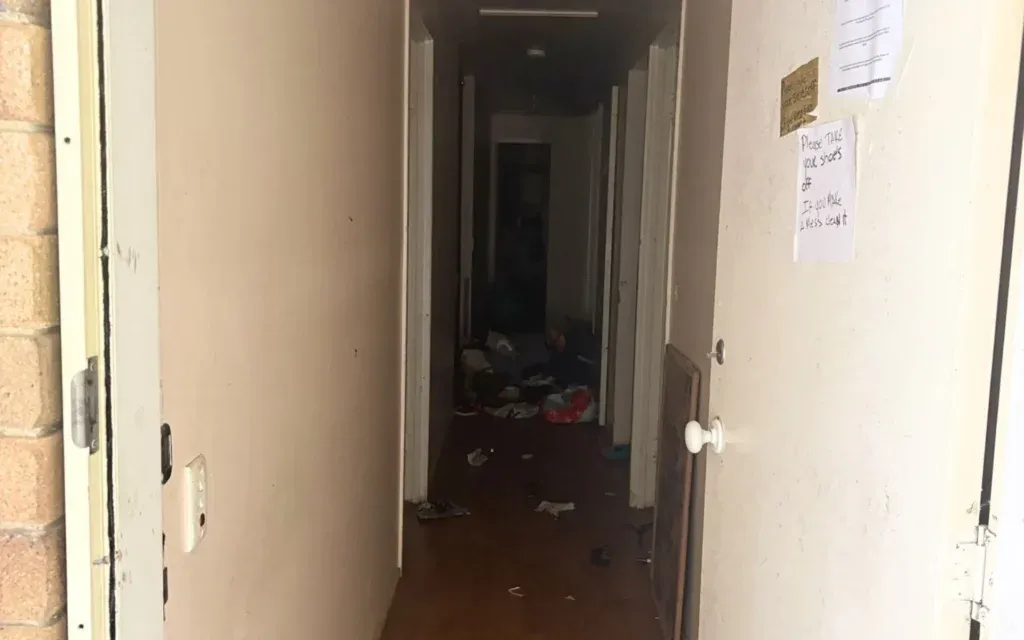
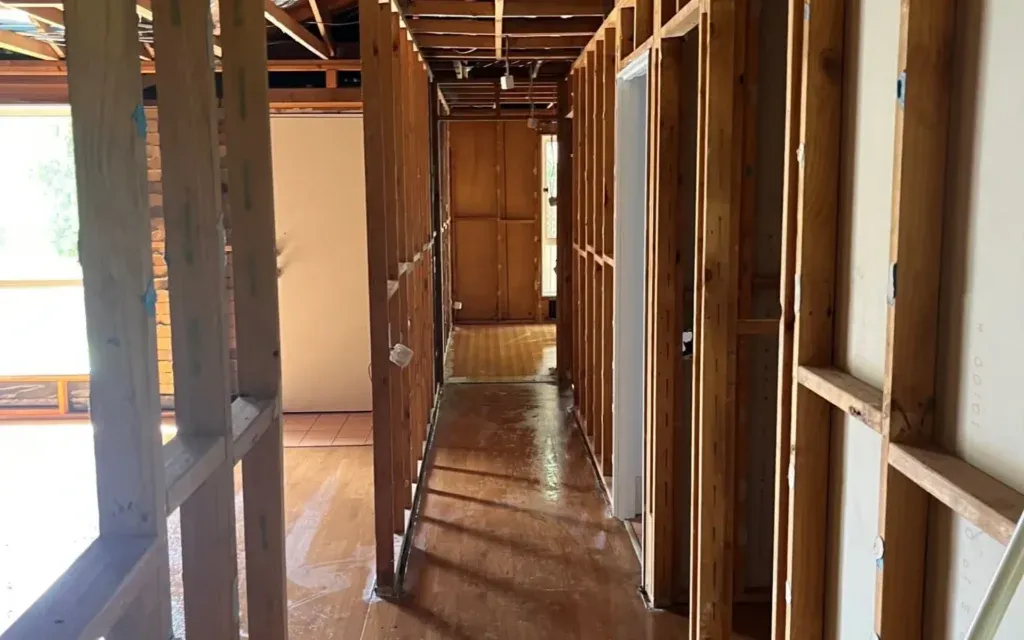
- Before and during photos showing the internal hallway and living areas prior to works, and the exposed timber framing and structural cavities once internal linings had been removed.
- Process documentation covering removal of contaminated doors and linings, structural wash down, targeted high risk surface treatment, and progressive wet wiping of framework.
- Equipment on site included IAQ air quality and drying equipment, consistent with maintaining controlled air conditions throughout a structural decontamination of this scale.
7. The outcome
- Scope treated: whole of property structural decontamination, including internal linings, doors, timber framing and concealed structural areas.
- Standard achieved: the property was successfully restored to a stabilised and compliant condition following comprehensive remediation works.
- Contamination sources: all identified contamination sources were removed or treated, with internal structural areas thoroughly cleaned and decontaminated.
- Handover status: the environment was left safe, controlled and suitable for final verification and reinstatement works, allowing the property to progress toward full restoration and future occupancy.
8. Why AllAces was the right specialist
- Certified Methamphetamine Decontamination Technicians, working to the Clandestine Drug Laboratory Remediation Guidelines rather than a surface level clean.
- Capability to work at structural level, removing internal linings and doors to expose and treat contaminated framing directly, not only the surfaces around it.
- Specialist equipment on site, including air quality and drying equipment, to help maintain controlled conditions during a structural scale decontamination.
- Strict containment and contamination control procedures maintained from initial removal through to final disposal of contaminated materials.
- Experience with concealed and high level contamination, where the true scope of the job is only confirmed once the structure has been opened up, requiring a methodical, staged approach rather than a fixed, upfront scope.
- Accreditations: IICRC Certified Firm, Strata Community Association, cm3 and the Restoration Industry Association, relevant to private home decontamination work across QLD.
FAQs
Can meth contamination get into the structure of a house, not just the surfaces?
Yes. In cases of high level or prolonged contamination, residue can penetrate beyond paint and linings into wall cavities and timber framing. Where this has occurred, internal linings and doors typically need to be removed so the structural framework itself can be treated, rather than relying on surface cleaning alone.
Why would a meth decontamination job require removing doors and internal linings?
Doors and linings are removed when contamination is assessed as extending into the structure behind them. Removing these materials exposes the framing and cavities underneath, allowing technicians to wash down, treat and wet wipe the actual contaminated surfaces rather than working around them.
How is contamination contained during a structural meth decontamination in Queensland?
Strict containment and contamination control procedures are maintained from the point contaminated materials are removed through to their disposal, to prevent residue spreading to unaffected areas of the property during the works.
Is this different from commercial meth cleaning?
The underlying principles, assessment, exposure of affected structure where needed, treatment and contained disposal, are similar, but residential jobs such as this Brisbane property typically involve a single dwelling, while commercial meth cleaning can involve larger sites or multiple tenancies, which AllAces also supports across QLD.