Quick answer
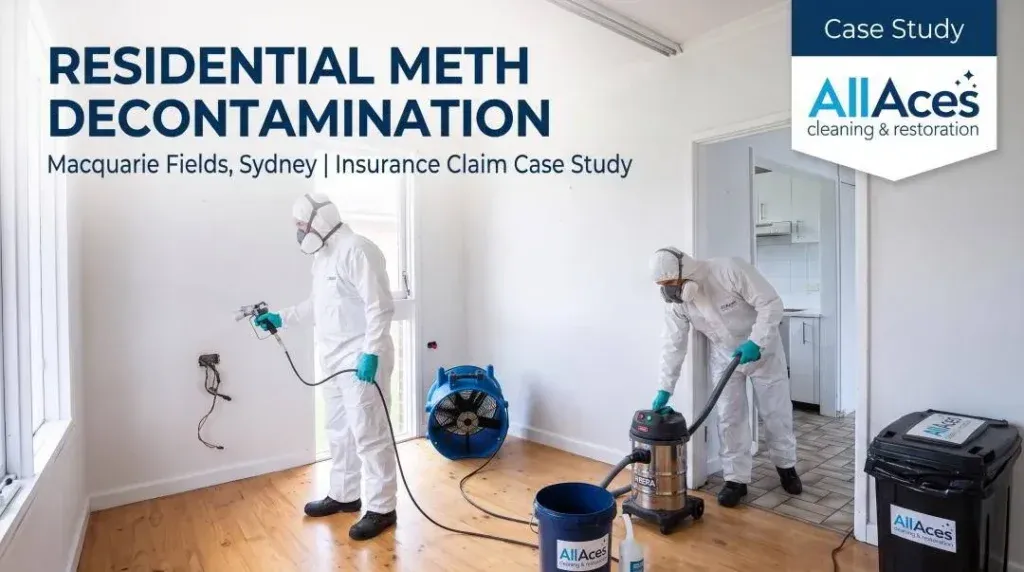
AllAces Cleaning & Restoration, an IICRC Certified Firm and residential meth decontamination specialist, carried out a full strip out and methamphetamine decontamination of a residential property in Macquarie Fields, in Sydney‘s south west, on behalf of Rent Cover and Crawford & Company. Working to the Australian Government’s Clandestine Drug Laboratory Remediation Guidelines, the team removed all contaminated soft furnishings, kitchen fittings and electrical fixtures, then applied a top down decontamination process using specialised methamphetamine neutralising chemicals and HEPA vacuuming. The property was decontaminated to the required specifications and handed back as a safe baseline for future reinstatement works.
1. Project snapshot
2. The challenge
A property required comprehensive meth cleaning in Macquarie Fields, in Sydney‘s south west, after contamination penetrated multiple layers of the internal environment. The residue affected all soft furnishings, electrical fittings, kitchen appliances and structural surfaces.
This was a complex and hazardous remediation environment, which brought several risks and requirements the team had to manage:
- Widespread contamination: residue had spread across furnishings, fittings, appliances and structural surfaces rather than sitting in one isolated area.
- Health and safety demands: the job required strict adherence to safety protocols, including full personal protective equipment at all times for every technician on site.
- Hazardous waste handling: contaminated contents had to be identified, secured and disposed of in line with hazardous waste regulations, not treated as standard rubbish removal.
- Client need: as the job was managed through Rent Cover and Crawford & Company on behalf of the property owner, the client needed a defined scope of works, clear safety parameters and a property returned to a condition ready for reinstatement by other trades.
This combination of widespread contamination, insurance and claims management involvement, and strict safety requirements meant the property needed specialist meth decontamination rather than general cleaning or a partial strip out.
3. Assessment
Before decontamination began, AllAces assessed the property to define the scope of works:
- Contamination assessment across the property, identifying that residue affected soft furnishings, electrical fittings, kitchen appliances and structural surfaces rather than a single room or zone.
- Material assessment, distinguishing between contents that needed to be wrapped, bagged and disposed of as hazardous waste, and structural or fixed elements that could be decontaminated in place.
- Risk assessment, confirming the need for full PPE for all technicians throughout the job given the extent of the contamination.
- Scope and safety documentation, setting clear parameters with Rent Cover and Crawford & Company around what the works would cover, and flagging upfront that some interior surfaces might show minor damage from chemical application.
This assessment shaped a whole of property decontamination plan, rather than a targeted, single room treatment.
4. The AllAces solution
AllAces was engaged to carry out a complete strip out and decontamination of the premises. The process moved from removal through to decontamination and drying, with transparency around potential outcomes built in from the start.
1. Strip out of contaminated contents
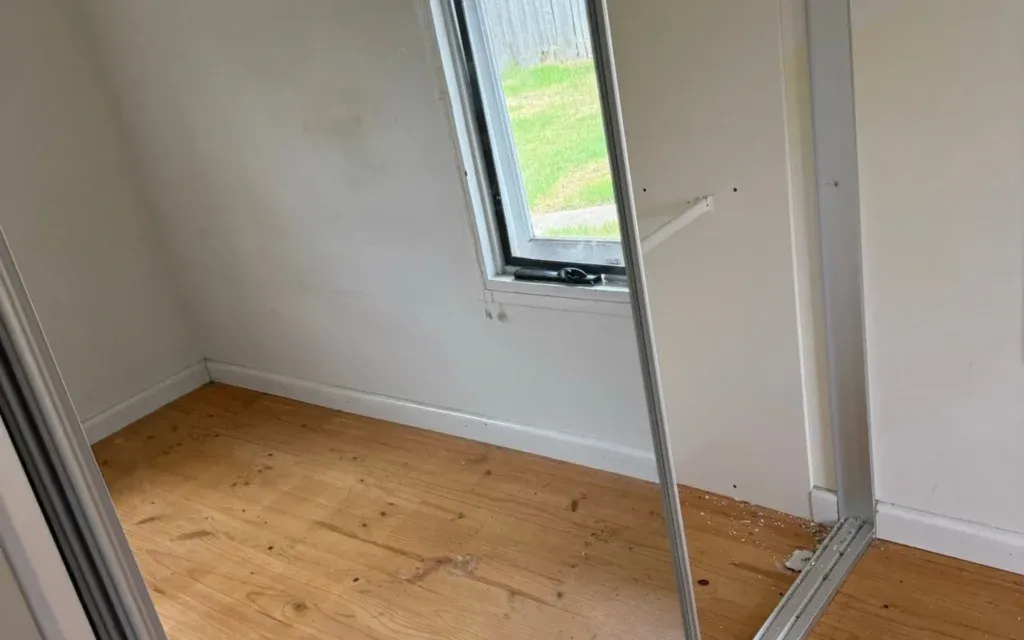
The team removed all window furnishings, internal contents, kitchen fittings and electrical fixtures, including light fittings and power points.
2. Secure handling and disposal
Each item was wrapped or bagged securely and disposed of in compliance with hazardous waste regulations.
3. Top down decontamination
A top down decontamination process was carried out throughout the home using specialised methamphetamine neutralising chemicals, combined with HEPA vacuuming.
4. Drying technology
Drying technology was installed where necessary to prevent moisture retention after chemical treatment.
5. Transparent client communication
The works were conducted with full transparency around potential outcomes, including recommendations for future reinstatement works and the possibility of further material removal if any areas failed remediation standards.
This sequence reflects standard practice for structural meth decontamination: remove and safely dispose of contaminated contents first, then decontaminate fixed surfaces from the top of the property down, and manage moisture so treated surfaces do not retain residual dampness.
5. The complication
The main complexity on this project was the breadth of the contamination. Because residue had penetrated soft furnishings, electrical fittings, kitchen appliances and structural surfaces, rather than being confined to a single area, the job required a full strip out rather than a partial or spot treatment.
- Electrical fixtures, including light fittings and power points, needed to be treated as part of the contamination footprint, not left in place as standard fittings.
- Some interior surfaces were expected to show minor damage as a result of the chemical application process itself. This was anticipated and communicated to the client in advance, rather than discovered partway through the job.
- Because the job was being managed through an insurance and claims process, the client needed clear communication about the possibility of additional re-attendance if any areas did not pass retesting, so expectations around scope and next steps stayed clear throughout.
6. Evidence of the work
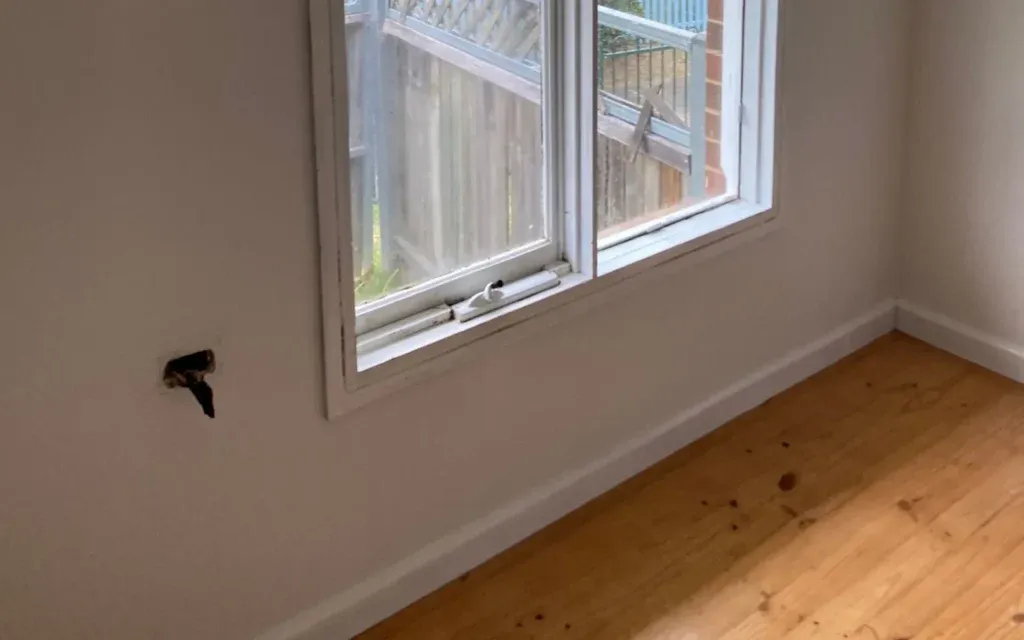
- Photographic evidence of key areas following the strip out and decontamination process, including window and door surfaces cleared of internal fittings.
- Process documentation covering each stage: strip out of contents, secure disposal, top down chemical decontamination, HEPA vacuuming and drying works.
- Scope and safety documentation shared with Rent Cover and Crawford & Company, setting out the defined scope of works and safety parameters for the job.
7. The outcome
- Scope treated: whole of property decontamination, covering soft furnishings, kitchen fittings, electrical fixtures and structural surfaces.
- Standard achieved: the property was successfully decontaminated to the required specifications, providing a safe baseline for future reinstatement works by relevant trades.
- Cosmetic note: some interior surfaces exhibited minor damage due to chemical application, as anticipated and communicated in advance. This is an expected outcome of a thorough decontamination process, not a shortfall in the works.
- Client communication: the client was informed about the potential need for additional re-attendance should any areas fail upon retesting, so expectations remained clear throughout.
- Handover status: the job was completed within the defined scope and safety parameters, restoring the property to a condition suitable for next stage restoration.
8. Why AllAces was the right specialist

- Certified Methamphetamine Decontamination Technicians, working to the Clandestine Drug Laboratory Remediation Guidelines rather than a general clean.
- Experience working with insurance and claims managers, delivering a defined scope of works and clear safety parameters for a client managing the job through Rent Cover and Crawford & Company.
- Full PPE and safety protocols maintained throughout a hazardous remediation environment, protecting both technicians and the property.
- Compliant, secure handling of hazardous waste, from contaminated soft furnishings through to electrical fixtures, disposed of in line with hazardous waste regulations.
- Transparent, proactive client communication, flagging the possibility of minor surface damage and further re-attendance needs upfront rather than after the fact.
- Accreditations: IICRC Certified Firm, Strata Community Association, cm3 and the Restoration Industry Association, relevant to residential, landlord and insurance managed decontamination work across New South Wales.
FAQs
What does a full meth decontamination strip out involve?
A full strip out removes contaminated soft furnishings, internal contents, kitchen fittings and electrical fixtures such as light fittings and power points. Each item is wrapped or bagged securely and disposed of in line with hazardous waste regulations, before the fixed surfaces of the property are decontaminated.
Why can meth decontamination leave minor surface damage?
The specialised chemicals used to neutralise methamphetamine residue can cause minor cosmetic effects on some interior surfaces. Reputable providers flag this possibility before works begin, so property owners and managers understand it is an expected part of thorough decontamination rather than an unexpected outcome.
How does meth decontamination work for insurance and landlord claims in NSW?
Where a job is managed through an insurance provider or claims manager, decontamination specialists typically agree a defined scope of works and safety parameters upfront, then keep the client informed throughout, including flagging any areas that may need further attention if they do not pass post works testing.
Is residential meth decontamination different from commercial meth cleaning?
The core process of contamination assessment, strip out, decontamination and verification is similar, but scale and access requirements differ. Residential jobs requiring meth cleaning in Macquarie Fields, NSW, focus on a single dwelling, while commercial remediation often covers larger footprints, multiple tenancies or occupied workplaces.
Dealing with a contaminated rental or an insurance managed claim? AllAces provides meth decontamination services with testing and clearance reporting, and works directly with insurers and claims managers on scope.
Local teams: Sydney, Central Coast and across New South Wales. Call 1800 00 10 10.