
Spilled milk in a car is a protein problem, not a stain. Blot and extract straight away, flush with cool water rather than hot, dry hard with airflow, then use an enzyme cleaner that digests the milk proteins. Once it has gone sour, the bacteria are in the foam or the underlay, and surface cleaning will not reach them.
A bottle tips over in the rear footwell on a Friday. Nobody notices. By Monday the car smells like something died in it.
That is the job we see most often, and the frustrating part is how avoidable it is. Milk spills are cheap to fix in the first two hours and genuinely expensive to fix after a week, and almost nothing in between changes that. It is not about the product you buy. It is about where the milk went and how fast you got it out.
This page covers what actually happens to milk inside a car interior, what works, what only appears to work, and where the line sits between a DIY clean and a job for professional car odour removal. If the smell has already turned sour, skip to the section on what happens after 24 hours.
Key Takeaways
- You have roughly two hours. Above 5 degrees, bacteria multiply fast, and an Australian car park in summer sits well inside the danger zone.
- Milk is casein, lactose and butterfat. Bacteria turn the lactose into lactic acid, then butyric acid, which is the compound your nose reads as vomit.
- The milk is rarely where you can see it. It runs through seat foam, under carpet backing, into seatbelt webbing and down into the floor pan.
- Cool water only. Heat sets protein into fibre, the same way it sets a blood stain on a shirt.
- Bicarb and air freshener do not remove milk odour. They absorb or cover it while the source keeps producing.
- If the smell is worse when the air conditioning runs, the odour has reached the evaporator and cabin filter. Cleaning the seat will not fix that.
- Expect roughly $180 to $600 for professional vehicle odour work, depending on saturation and whether foam has to come out.
Why Milk Is Worse Than Almost Any Other Car Spill
Coffee stains. Milk rots. Milk is about 87 per cent water, and the rest is protein, sugar and fat, which is a complete food source for bacteria. That is why a milk spill gets worse over time while most other spills only get drier.
When milk warms up, bacteria already present start feeding on the lactose. They produce lactic acid first, then butyric acid, then a family of volatile sulphur compounds. Butyric acid is the one your nose recognises as vomit. That is not a figure of speech, it is the same compound.
The Australian climate accelerates every part of it. NSW Food Authority guidance identifies 5°C to 60°C as the temperature danger zone for bacterial growth in potentially hazardous foods, and a closed car in Brisbane or Perth can pass 50°C within half an hour. Your car is, briefly, an incubator.
Two more things make it stubborn. Car interiors are absorbent by design, since seat foam, carpet, jute underlay and sound deadening all hold liquid the way a sponge does. And cars are sealed and dark, so drying is slow. Warm, damp, organic and dark is the classic recipe for microbial growth and eventually mould. Better Health Channel puts the principle simply: controlling indoor mould comes down to controlling the moisture source, which is exactly the problem inside a wet cabin.
Where the Milk Actually Goes
| Location | How milk gets there | Can you clean it yourself? |
|---|---|---|
| Seat fabric or leather | Direct spill | Yes, usually |
| Seat foam | Wicks down through stitching and seams | Rarely, needs extraction |
| Seatbelt webbing | Splash, then wicks along the fibres | Partly, needs a full soak and dry |
| Carpet pile | Direct spill | Yes |
| Jute or foam underlay | Gravity, within minutes | No, needs lifting or deep extraction |
| Floor pan and seat rails | Pools in the lowest point | No |
| Under child seats and boosters | Trapped in the base | Yes, if you remove the seat |
| Boot spare wheel well | Bottles tip over in transit | Yes, but people forget to look |
| HVAC evaporator and cabin filter | Vapour recirculates and condenses | No |
That last row explains the most common complaint we hear: “I cleaned the seat and it still smells when I turn the air conditioning on.” The odour molecules were drawn into the ventilation system and settled on a cold, damp evaporator core. No amount of seat cleaning touches that.
The First Two Hours, Step by Step
Rubbing pushes milk deeper into the foam and spreads the contaminated area sideways. You want to lift liquid straight up, not work it around.
Press dry towels into the spill and use your body weight. Standing on a folded towel over the carpet is not elegant and it is the most effective extraction most people have access to.
Not hot. Heat sets protein into fibre, exactly the way it sets a blood stain on a shirt, and once that happens the residue is far harder to remove.
A light mist of cool water, then blot again. You are diluting what is left so the next blot carries more of it away.
Usually three or four cycles of mist and blot. The test is the towel: keep going until it comes up without discolouration and without smell.
Most people stop after one pass. That is the single most common reason a spill comes back a week later.
Remove floor mats entirely and wash them separately. Take out child seats and boosters, because the base traps liquid and hides it. Pull the boot liner if the spill happened back there.
Anything that can leave the car should leave the car. It dries faster outside and you can see what you are doing.
Windows down, fans on, car parked in the shade. A household pedestal fan pointed into the footwell overnight does more for a milk spill than any spray on the shelf.
Do not shut the car up in the sun to “dry it out”. Heat without airflow accelerates bacterial growth and bakes the odour into the trim.
Only now. An enzyme product formulated for protein and dairy breaks casein and lactose into fragments that do not smell, which is a different mechanism to masking or absorbing.
Work it into the fibre rather than spraying the surface, and leave it for the full dwell time on the label. Enzymes need contact time. Wiping it off after two minutes wastes the product.
Complete drying is not optional. Any moisture left in foam or underlay becomes the next problem, and in an Australian summer that problem is mould.
Then shut the car up for 24 hours, park it in the sun, and open it from outside with a clear nose. If the smell is back, the source is still in there.
After 24 Hours It Is a Different Job
Once milk has sat overnight, you are no longer cleaning a spill. You are remediating a bacterial colony, and the signs are easy to read.
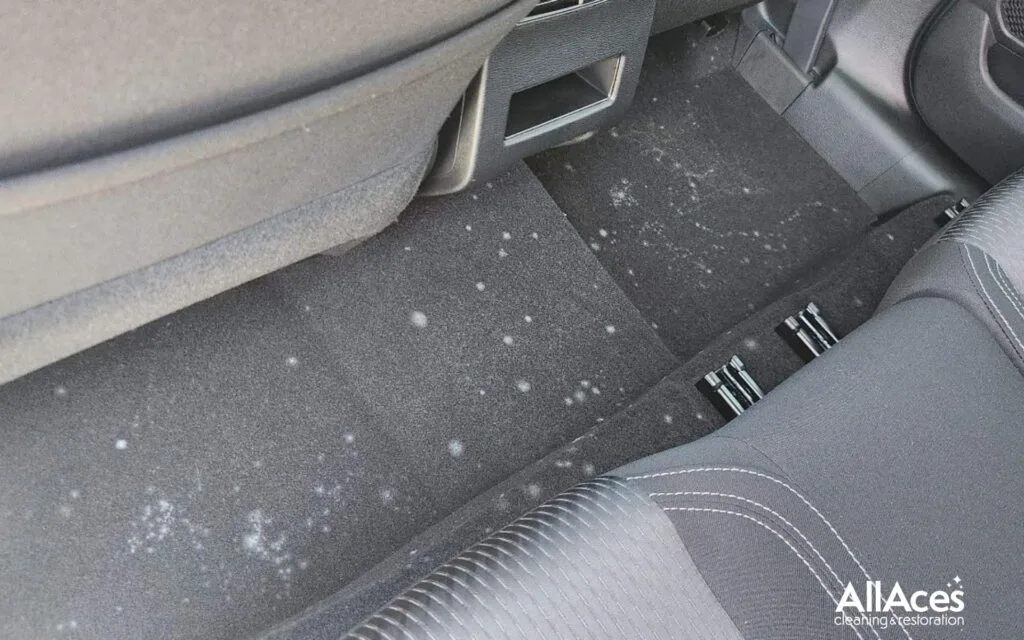
The smell is worse in the morning and worse on hot days. It gets stronger when the air conditioning runs. There is a tacky feel to the carpet or a stiff patch in the seat fabric. Sometimes there is dark or greenish spotting on the underside of a floor mat.
At this stage surface cleaning buys two or three days and then the smell returns. That is the most common reason people call us after trying three or four products. Nothing they used was fake. The products just could not reach the source.
Worth saying plainly. Heavy saturation sometimes means the seat comes out and the foam is flushed or replaced. That is normal, it is not a sign anyone did anything wrong, and it is usually cheaper than three more failed attempts. Foam holds an enormous volume of liquid.
DIY Methods, Honestly Rated
| Method | What it actually does | Verdict |
|---|---|---|
| Bicarbonate of soda | Absorbs moisture and buffers acidic odour compounds at the surface | Useful first aid, not a cure |
| White vinegar solution | Mild acid, kills some surface bacteria, leaves its own smell | Mediocre, and can set some dyes |
| Enzyme cleaner | Breaks casein and lactose into non-odorous fragments | Best DIY option by a wide margin |
| Wet and dry vacuum | Genuine mechanical extraction, the step most people skip | Very effective if you have one |
| Carpet shampoo | Adds water and detergent residue, extracts very little | Often makes the smell worse |
| Steam mop | Heat sets protein, adds moisture, no extraction | Avoid |
| Air freshener or odour bomb | Adds fragrance on top of the odour | Cosmetic only |
| Charcoal or zeolite bags | Adsorb airborne molecules, do nothing at the source | Helpful alongside real cleaning |
| Ozone generator | Oxidises odour molecules in air, poor penetration into foam | Risky and often oversold |
On ozone specifically, since it is sold hard to car owners. The US Environmental Protection Agency’s assessment of ozone generators sold as air cleaners found that at concentrations within public health standards, ozone “is not effective at removing many odor-causing chemicals”. NSW Health goes further and advises simply not to use ozone generators for indoor odour problems.
Plenty of mobile operators still sell an ozone blast as a milk fix. The car smells different afterwards. The milk is still in the foam. For the full picture on why that pattern repeats, read masking odours versus true odour removal.
A Job From Our Own Workshop
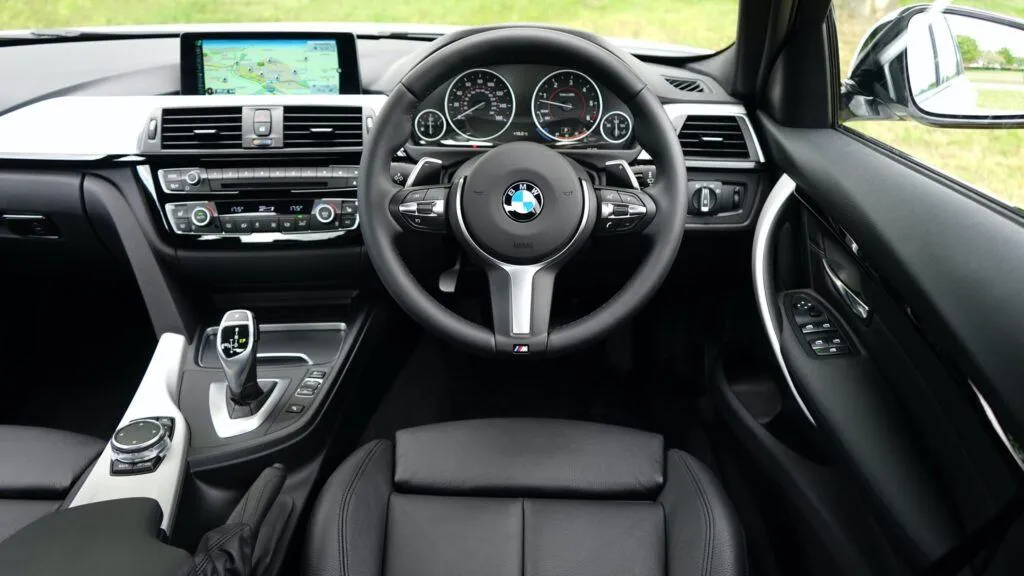
A customer brought us a BMW with a smell under the front passenger seat. Spilled milk, left too long.
We inspected it on arrival at our Murarrie factory. The milk had run onto the speaker under the passenger seat, which was ruined and had to be replaced. There were maggots between the metal subfloor and the foam underlay. We applied insecticide to deal with those and the residue they had left behind.
The metal subfloor and foam underlay were both cleaned with an active enzyme cleaner. We ran hot water extraction through the foam three separate times to make sure the milk was actually gone rather than diluted. The car then went into our drying chamber with a hydroxyl unit and air movers running over the weekend.
It went back to its owner dry, clean and neutral. The speaker was the only permanent loss, and that was decided in the first ten minutes of the inspection rather than after three attempts at cleaning it.
Two things worth taking from that job. Three extraction passes, not one. And the drying stage took longer than the cleaning stage, which is true of almost every odour job we do.
What a Professional Milk Odour Job Involves
1. Locate the contamination
Moisture meters, a thermal camera and a trained nose. Technicians map how far the milk travelled, which usually surprises the owner. A bottle tipped in the rear footwell often ends up under the driver's seat.
2. Extract
Hot water extraction with an upholstery tool, in overlapping passes, repeated until the recovery runs clean. This is where the bulk of the organic load leaves the car.
3. Treat the source
Enzyme or oxidising agent at the correct dilution with proper dwell time. On heavy jobs seats come out and foam is flushed, and occasionally replaced, because there is a point where flushing costs more than a new pad.
4. Treat the air and the HVAC
Hydroxyl generation or vapour phase treatment to reach residual molecules in vents, headlining and the evaporator, plus a cabin filter change. Then complete drying, which takes longer than the cleaning.
The order is the method. Skip the drying stage and a car released damp will smell again within a fortnight regardless of how good the cleaning was. Our team explains the air treatment stage in why we use hydroxyl generators.
When It Stops Being Milk and Starts Being Mould
Give a wet car interior a week of Australian humidity and you get fungal growth. That turns a comfort problem into a health question.
Watch for a musty smell layered under the sour one, speckling on seatbelt webbing or the underside of mats, fogging on the inside of the windscreen that will not clear, and symptoms that flare in the car and settle outside it.
ASCIA’s allergen minimisation guidance makes the point that indoor mould control depends on removing visible growth and fixing the moisture behind it, not on sprays. In a car, that means the wet material comes out or gets dried properly. Our guide to mould on car seats covers what works and what just spreads spores around.
If anyone in the household has asthma or hay fever, treat this as urgent rather than annoying.
What It Costs in Australia
| Option | Typical cost | Best for | Limitation |
|---|---|---|---|
| DIY, enzyme plus wet vacuum | $30 to $90 | Fresh spill caught within hours | No reach into foam or underlay |
| Mobile detailer, interior shampoo | $120 to $250 | Cosmetic cleaning, light spills | Adds water, limited extraction |
| Restoration grade odour removal | $180 to $450 | Sour milk, dried spills, recurring smell | Vehicle usually needed for a day |
| Full decontamination with seat removal | $450 to $900+ | Saturated foam, mould, long neglect | May need a trim specialist |
Prices vary by state, vehicle size and how long the spill sat. Get the diagnosis before the quote. Any operator who quotes a milk job over the phone without asking how long ago it happened is guessing.
One more thing worth knowing. Most Australian comprehensive policies exclude spills by the owner or passengers, treating them as wear and tear rather than accidental damage. Check your product disclosure statement, but assume this is out of pocket.
Preventing the Next One
- Use a spill-proof bottle rather than a screw top for anything travelling in a car seat. Screw tops fail on corners.
- Carry milk in a crate or a lined cooler bag in the boot, not loose on the seat. Most boot spills are a bottle that rolled.
- Rubber moulded floor mats in the rear footwells instead of carpet mats. They contain a spill instead of absorbing it.
- A washable waterproof protector under child seats and boosters, since the base is where liquid hides.
- Keep a microfibre towel and wet wipes in the door pocket. Two minutes of blotting at the time saves the entire job.
Frequently Asked Questions
How long does spilled milk take to smell in a car?
Usually 12 to 24 hours in mild weather, and as little as four to six hours in an Australian summer. Once you can smell it, bacteria have already broken the lactose down into acids, so the source needs removing rather than deodorising.
Will bicarb soda get sour milk smell out of a car?
Not on its own. Bicarbonate of soda absorbs moisture and neutralises some acidic odour compounds at the surface, which is why it seems to help at first. It cannot reach milk that has soaked into seat foam or carpet underlay, so the smell returns as the material warms.
Can a car detailer fix sour milk odour?
Sometimes, for fresh and shallow spills. Standard detailing shampoos the surface and adds water, which can make a deep spill worse. Sour milk odour that has been present for more than a day generally needs extraction and enzyme treatment rather than detailing.
Does car insurance cover a milk spill?
Comprehensive policies in Australia usually exclude damage from spills by the owner or passengers, treating it as wear and tear rather than accidental damage. It is worth checking your product disclosure statement, but most milk spills are an out of pocket cost.
Why Australians Choose AllAces for Vehicle Odour
IICRC-certified technicians
Method chosen from an inspection, not from what happened to be in the van.
Purpose-built drying chamber
Vehicles dried under controlled conditions rather than left with the windows down and hoped for.
Hydroxyl, not ozone
Safer for trim and occupants, and effective on residual molecules that survive extraction.
35+ years, 65,000+ jobs
Across Queensland, New South Wales and Victoria.
For heavily affected vehicles, look at full vehicle decontamination. For fabric seats and boot linings specifically, upholstery cleaning is the relevant service. You can also meet the technicians who run these jobs.
Contact the AllAces team on 1800 00 10 10.
More on vehicle odour and decontamination. This page covers dairy spills specifically. For the techniques that work across every kind of car smell, read vehicle odour removal in Australia.
Wondering whether you need a detail or something deeper? See vehicle decontamination versus car detailing. For fungal growth after a wet interior, read mould on car seats, and for a full pre-purchase or post-incident check, the vehicle decontamination checklist.
Car odour removal and vehicle decontamination across Brisbane, Sydney and Melbourne. Call 1800 00 10 10.